The Instep That Pierced Immortality
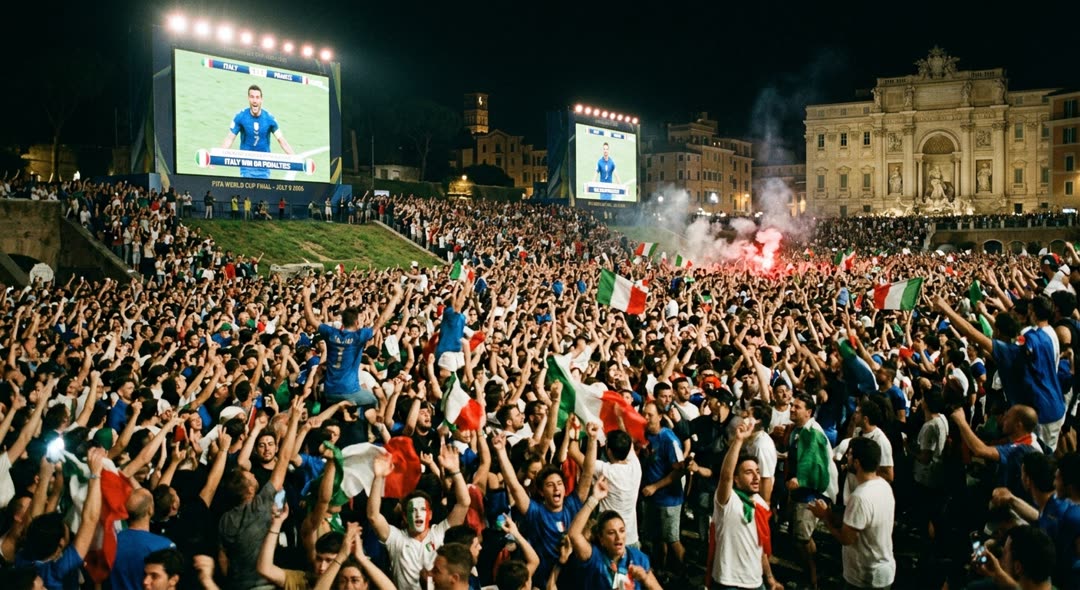
Giant screens glowed white against the old stones of the Circus Maximus. More than 150,000 people stood where chariot teams once ran, watching a football match played a thousand kilometers north. When Fabio Grosso’s penalty hit the net, they jumped into the Trevi Fountain.
On July 9, 2006, in Berlin, Italy met France for the FIFA World Cup final. Italy arrived wounded: defender Alessandro Nesta, 30, had not played since limping off against the Czech Republic in the group stage, and team doctor Enrico Castellacci had confirmed from the squad’s Duisburg base, “He’s definitely not available.” Argentine referee Horacio Elizondo, who had once sent off David Beckham, the Manchester United midfielder, at the 2000 World Club Championship in Brazil, walked to the center circle. The two lineups faced each other under floodlights, and Zinedine Zidane stepped up first.
The two nations carried unfinished business. France had eliminated Italy on penalties in the 1998 World Cup quarter-final. Two years later, at Euro 2000, Italy held a 1-0 lead deep into stoppage time before Sylvain Wiltord, a French substitute forward, equalised in the 93rd minute. David Trezeguet, another substitute, then smashed a left-footed golden goal in extra time to take the trophy 2-1. Italy remembered.
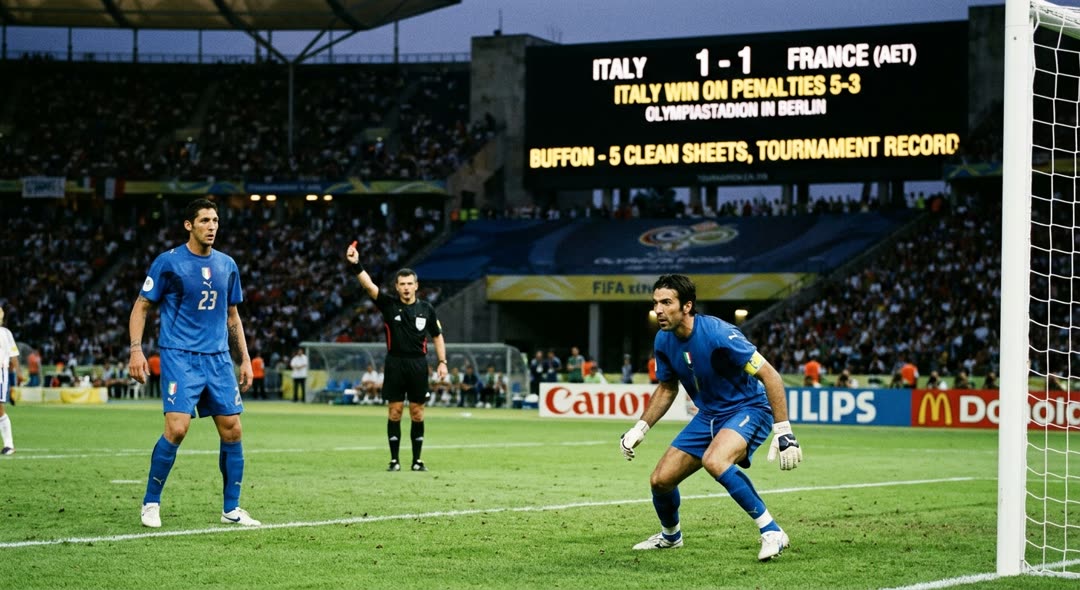
Marco Materazzi, the defender expected alongside captain Fabio Cannavaro in Nesta’s absence, lined up at center-back. Behind them stood Gianluigi Buffon, Italy’s goalkeeper, who had not been beaten by any opposition player in the entire 2006 tournament. Elizondo, the man who had sent off England striker Wayne Rooney earlier in the competition for stamping on Portugal’s Ricardo Carvalho, raised the whistle.
Seven minutes in, France’s Florent Malouda burst into the penalty area and Materazzi caught his foot. Zidane chipped the spot kick onto the underside of the crossbar; the ball dropped inside the goal line and spun back out. Until that moment, Buffon had not been beaten by any opposition player in the entire tournament; Italy’s only goal conceded had come off the boot of their own Cristian Zaccardo. It was Zidane’s third goal in a World Cup final, putting him level with Pelé, Vavá, and Geoff Hurst. Twelve minutes later, Italy’s Andrea Pirlo curled a corner from the right and Materazzi, the same man who had given away the penalty, rose above the French defence to head the equaliser.
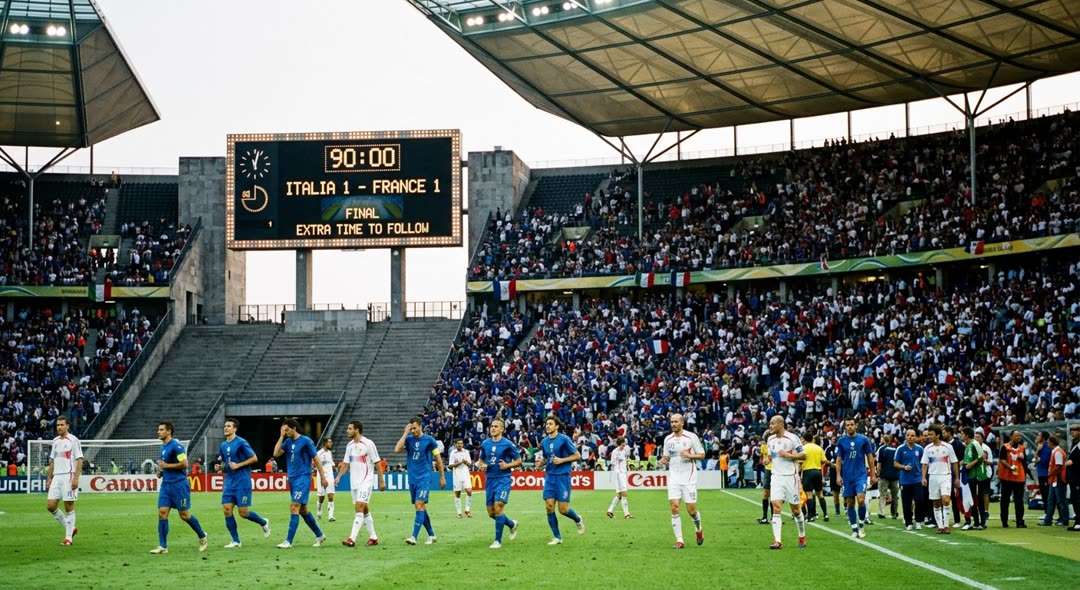
The score held at 1-1 through ninety minutes and into extra time before 69,000 in Berlin. In the 110th minute, Materazzi had been tugging Zidane’s shirt; Zidane told him to stop and offered to swap jerseys after the match. Then Zidane turned and drove his forehead into Materazzi’s chest. Elizondo did not see it; the assistant referee informed him, and he showed the red card. In what Zidane had announced would be his last professional match, he walked off as the fourth player sent off in a World Cup final, after France’s Marcel Desailly in 1998 and Argentina’s Pedro Monzón and Gustavo Dezotti in 1990.
The shootout came. Trezeguet, the man whose golden goal had broken Italy at Euro 2000, hit the crossbar. Grosso stepped up fifth and sent Fabien Barthez, France’s goalkeeper, the wrong way.
Giant screens lit up the old stones of the Circus Maximus in Rome. More than 150,000 people stood there. They watched a football match played a thousand kilometers north. When Fabio Grosso’s penalty hit the net, fans jumped into the Trevi Fountain.
On July 9, 2006, Italy met France in the FIFA World Cup final in Berlin. Italy had problems. Defender Alessandro Nesta, 30, got injured against the Czech Republic in the group stage. He did not play after that. Team doctor Enrico Castellacci said from the squad’s base in Duisburg, “He’s definitely not available.” Argentine referee Horacio Elizondo walked to the center circle. The two teams faced each other under floodlights. Zinedine Zidane stepped up first.
The two countries had history. France beat Italy on penalties in the 1998 World Cup quarter-final. At Euro 2000, Italy led 1-0 late in the game. In the 93rd minute, French substitute Sylvain Wiltord scored to make it 1-1. Then substitute David Trezeguet hit a left-footed golden goal in extra time. France won 2-1. Italy remembered.
Marco Materazzi lined up at center-back with captain Fabio Cannavaro. He replaced Nesta. Behind them stood goalkeeper Gianluigi Buffon. No opposition player had beaten Buffon in the entire 2006 tournament. Elizondo had also sent off England striker Wayne Rooney earlier in the competition. Rooney had stamped on Portugal’s Ricardo Carvalho. Elizondo raised the whistle.
Seven minutes in, France’s Florent Malouda ran into the penalty area. Materazzi caught his foot. Zidane chipped the penalty onto the underside of the crossbar. The ball dropped inside the goal line and spun back out. It was a goal. Italy’s only goal conceded before this had come from their own player, Cristian Zaccardo. This was Zidane’s third goal in a World Cup final. That put him level with Pelé, Vavá, and Geoff Hurst. Twelve minutes later, Andrea Pirlo curled a corner from the right. Materazzi rose above the French defence and headed the equaliser. The same man gave away the penalty and scored the goal.
The score stayed 1-1 through ninety minutes and into extra time. There were 69,000 fans in Berlin. In the 110th minute, Materazzi had been pulling Zidane’s shirt. Zidane told him to stop and offered to swap jerseys after the match. Then Zidane turned and drove his forehead into Materazzi’s chest. Elizondo did not see it. The assistant referee told him, and he showed the red card. Zidane had said this would be his last professional match. He walked off the field. He was the fourth player sent off in a World Cup final.
The shootout came. Trezeguet had scored the golden goal against Italy at Euro 2000. This time, he hit the crossbar. Grosso stepped up fifth. He sent goalkeeper Fabien Barthez the wrong way. Italy were champions.
Words to learn
Sentence patterns
Marco Materazzi, the defender expected alongside captain Fabio Cannavaro in Nesta’s absence, lined up at center-back.Dr. Tanaka, the lead seismologist at the monitoring station during the 2011 earthquake, published her findings three years later.
When Fabio Grosso’s penalty hit the net, they jumped into the Trevi Fountain.When the bridge finally reopened after eighteen months of repair, thousands of commuters crossed it on foot before the first car was allowed through.
On July 9, 2006, in Berlin, Italy met France for the FIFA World Cup final.On March 27, 1964, in Anchorage, Alaska, the ground shook for four and a half minutes.
No opposition player had beaten Buffon in the entire 2006 tournament.The pilot had checked the engines before the plane took off.
Then Zidane turned and drove his forehead into Materazzi’s chest.Then the teacher stood up and walked to the door.
Zidane told him to stop and offered to swap jerseys after the match.She opened the letter and read it slowly.
Discussion questions
- Materazzi gave away the penalty that put Italy behind, then scored the equaliser himself. Have you ever seen a mistake in sport or work turn into a chance to recover — and does the recovery change how you judge the original error?
- Zidane headbutted Materazzi in what he had announced would be his final professional match. How much should a single moment at the end of a career affect the way people remember everything that came before it?
- The story mentions more than 150,000 people watching the match on giant screens at the Circus Maximus. Why do you think people choose to gather in public spaces to watch events they could see at home, and have you experienced something similar?
- Materazzi gave away the penalty but then scored the equaliser. Do you think one moment of failure can change into something good? Can you think of an example from your own life?
- Zidane headbutted Materazzi in his last professional match. Why do you think a great player did something like this in such an important game?
- Do you think penalty shootouts are a fair way to decide a World Cup final? Why or why not?