The Hudson's Reluctant Runway
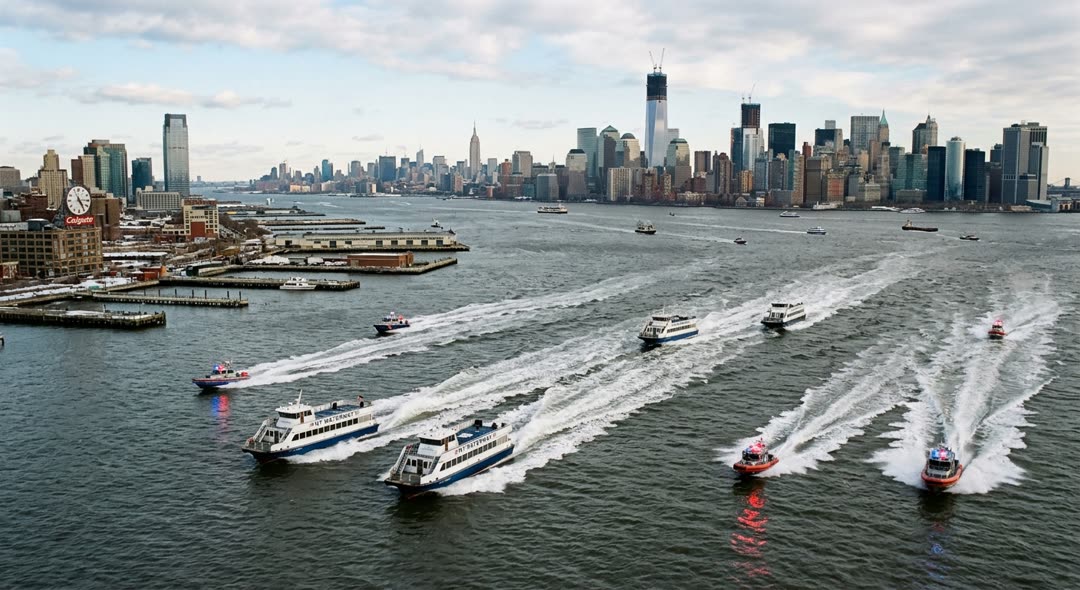
Fourteen boats on the Hudson, all at once.
New York Waterway dispatched every ferry it had to the crash site. Passengers stood on the wings of the half-submerged Airbus, clinging to the fuselage, too numb from the river to pull themselves aboard. Inside the cockpit, First Officer Jeffrey Skiles had been working through the three-page engine-restart checklist since 3:27 p.m., a procedure written for high altitude, not for the seconds between a double bird strike and the waterline.
Chief John Peruggia, forty-five, head of Emergency Medical Service for the New York Fire Department, ordered thirty-five ambulances to a staging area in Manhattan: twenty-five for basic life support, ten with advanced medical capability. From an NYPD helicopter, Detective Michael Delaney dropped into the Hudson wearing a diving suit, mask, and snorkel. No air tank. He swam toward a woman floating in a life vest.
Chesley Sullenberger was fifty-seven. He had flown with US Airways since 1980, accumulating nineteen thousand hours across commercial and military cockpits, including seven years as a U.S. Air Force F-4 pilot. He held a glider pilot licence. At home in Danville, California, he ran a second career called Safety Reliability Methods, a consultancy that advised organizations on managing exactly the kind of catastrophe now playing out below the waterline. The aircraft itself was an Airbus A320-214, built on June 15, 1999, delivered to US Airways that August and never operated by another airline, with 16,299 takeoff-and-landing cycles and 25,241 flight hours on the airframe. Both CFM56 engines had been recently overhauled. The last comprehensive C-Check was completed in April 2008.
Flight 1549 took off from LaGuardia Airport at 3:26 p.m. on the afternoon of January 15, 2009, bound for Charlotte, North Carolina. Seconds later, First Officer Jeffrey Skiles noticed birds on the right side of the aircraft “in a perfect line formation.” Both engines quit nearly simultaneously. Inside the cabin, the silence was so total that flight attendants later compared it to being in a library.
The crew discussed returning to LaGuardia and considered diverting to Teterboro Airport in New Jersey but determined they lacked sufficient altitude and thrust to reach either field. Captain Sullenberger radioed the controller: “We can’t do it. We’re gonna be in the Hudson.” At 3:30 p.m., the Airbus touched the surface of the Hudson River in what aviation calls a ditching, an intentional emergency water landing. All 155 people on board survived.
Sullenberger walked the length of the cabin aisle twice, checking every row, before he was the last person off. On the Manhattan side, eighty-eight passengers came ashore; twenty were taken to hospitals.
The Airbus sat in the Hudson for two days, half-submerged in water measured at thirty-six degrees Fahrenheit, before a crane barge lifted it onto a flatbed. It is now displayed, engines removed, at the Sullenberger Aviation Museum in Charlotte, the city the passengers never reached.
Fourteen boats arrived on the Hudson River at the same time.
On January 15, 2009, Flight 1549 took off from LaGuardia Airport at 3:26 p.m. The plane was going to Charlotte, North Carolina. First Officer Jeffrey Skiles saw birds on the right side of the aircraft. They were flying “in a perfect line formation.” Both engines stopped almost at the same time. Inside the cabin, everything became very quiet. Flight attendants later said it was like being in a library.
The crew talked about going back to LaGuardia. They also thought about landing at Teterboro Airport in New Jersey. But they did not have enough height or power to reach either airport. Captain Sullenberger told the controller: “We can’t do it. We’re gonna be in the Hudson.” At 3:30 p.m., the Airbus touched the surface of the Hudson River. This is called a ditching — an intentional emergency water landing. All 155 people on board survived.
New York Waterway sent every ferry it had to the crash site. Passengers stood on the wings of the half-submerged plane. They held on to the body of the aircraft. The river was very cold, and they were too numb to pull themselves into the boats. First Officer Skiles had been working through the engine-restart checklist since 3:27 p.m. The checklist was three pages long. It was written for high altitude, not for the few seconds before hitting the water.
Chief John Peruggia was forty-five years old. He led the Emergency Medical Service for the New York Fire Department. He ordered thirty-five ambulances to a staging area in Manhattan. Twenty-five were for basic life support. Ten had advanced medical equipment. Detective Michael Delaney jumped from an NYPD helicopter into the Hudson. He wore a diving suit, mask, and snorkel but had no air tank. He swam toward a woman floating in a life vest.
Captain Chesley Sullenberger was fifty-seven. He had flown with US Airways since 1980. He had nineteen thousand flight hours in commercial and military planes. He spent seven years as a U.S. Air Force F-4 pilot. He also held a glider pilot licence. At home in Danville, California, he ran a consultancy called Safety Reliability Methods. It advised organizations on managing exactly this kind of emergency. The aircraft was an Airbus A320-214. It was built on June 15, 1999, and delivered to US Airways that August. It had 16,299 takeoff-and-landing cycles and 25,241 flight hours. Both CFM56 engines had been recently repaired. The last full C-Check was completed in April 2008.
Sullenberger walked through the cabin aisle twice. He checked every row to make sure no one was still inside. He was the last person off the plane. On the Manhattan side, eighty-eight passengers came ashore. Twenty were taken to hospitals.
The Airbus stayed in the Hudson for two days. The water was thirty-six degrees Fahrenheit. Then a crane barge lifted it onto a flatbed truck. Today the plane is displayed at the Sullenberger Aviation Museum in Charlotte. The engines have been removed. Charlotte was the city the passengers never reached.
Words to learn
Sentence patterns
Discussion questions
- Sullenberger ran a consultancy that advised organizations on managing catastrophes, and then faced one himself. How much do you think professional training and expertise can actually prepare someone for a real emergency, compared to instinct or personality under pressure?
- The rescue involved ferry crews, police helicopters, ambulances, and a detective who jumped into freezing water with no air tank. What does the speed and variety of this response suggest about how a city like New York handles sudden crises, and would you expect a similar response where you live?
- The story mentions that Sullenberger walked the cabin aisle twice, checking every row, before leaving the aircraft last. What does this detail tell you about his sense of responsibility, and do you think leaders in other fields should follow the same principle?
- Captain Sullenberger checked every row twice before leaving the plane. Do you think this tells us something important about his character? Why?
- Many boats, helicopters, and ambulances arrived very quickly after the landing. Why do you think the rescue was so fast in New York City?
- The plane is now in a museum. Do you think it is important to keep objects like this? What can people learn from seeing them?