Sweden announces intent to join NATO

A folded flag behind glass. The kind of quiet that fills a room when a country decides to stop being what it has been for two hundred years.
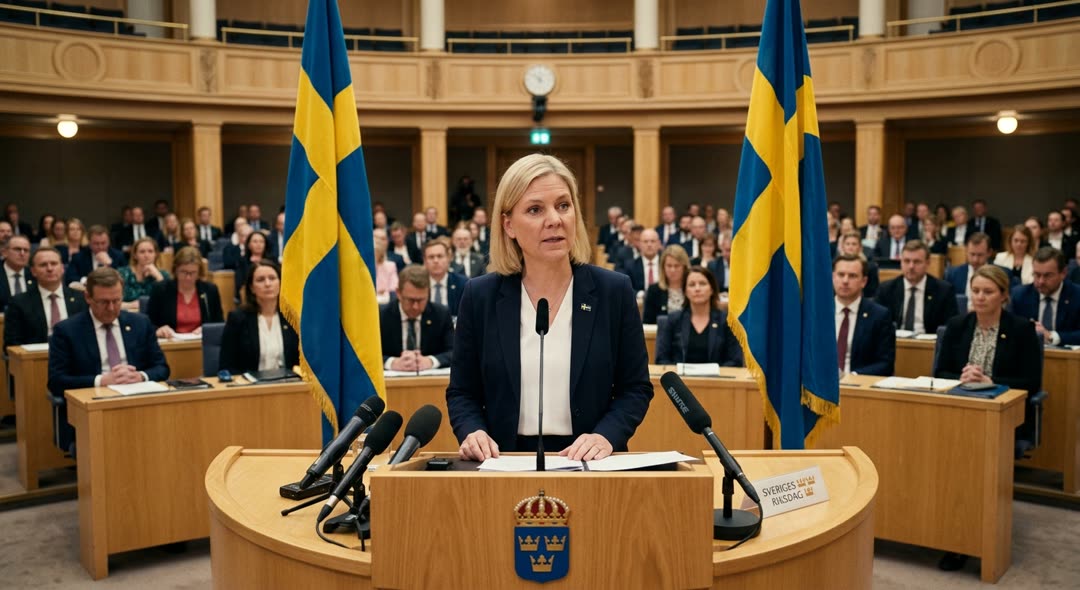
In May 2022, Sweden announced its intent to join NATO, stepping away from a policy of military non-alignment that had held since the Napoleonic Wars. Stockholm attached conditions to the move: no permanent NATO bases on Swedish soil, no nuclear weapons stored within its borders. Two centuries of neutrality, traded for a seat at a different table.
Sweden had not fought a war since 1814. That fact shaped everything. The country built its Cold War identity around armed neutrality, maintaining one of the largest per-capita defense forces in Europe while refusing to pick a side. Swedish-made Gripen fighters patrolled Baltic airspace. Swedish submarines trained to detect foreign vessels in the archipelago. The policy survived two world wars, the Soviet collapse, and the wars in Yugoslavia, each time bending without breaking. But Finland’s parallel shift toward NATO membership in the spring of 2022, triggered by Russia’s invasion of Ukraine, removed the geographic buffer that had made Swedish non-alignment feel less like a gamble.
Finland formally announced its bid on May 9; Sweden declared its intent on May 14. By May 16, Helsinki had confirmed its bid and Stockholm had formalized its decision to apply. “We are leaving one era behind us and entering a new one,” Prime Minister Magdalena Andersson told reporters. Twenty-nine of thirty NATO members signaled readiness to approve.
Turkey was the holdout. On May 16, President Recep Tayyip Erdogan stated his opposition, accusing both countries of harboring members of the PKK, a Kurdish militant organization that Turkey designates as a terrorist group, and of sheltering Gulenists who had fled Turkey. Both Nordic countries had imposed arms embargoes on Ankara in 2019, after Turkish military operations against Kurdish forces in northern Syria. “Neither of these countries have a clear, open attitude towards terrorist organisation,” Erdogan said. “How can we trust them?”
That same day, Estonia launched Hedgehog, a large-scale military exercise in the Baltic involving 15,000 troops from ten countries. The UK offered security guarantees to both applicants for the transition period, and Norway, Denmark, and Iceland pledged to come to Sweden and Finland’s defense if attacked before formal membership took effect.
In Moscow, Vladimir Putin told reporters that the move by Finland and Sweden to join the thirty-member alliance did not directly threaten Russia.
In May 2022, Sweden announced that it wanted to join NATO. This was a huge change. Sweden had stayed out of military groups for about two hundred years, since the time of the Napoleonic Wars.
Stockholm set two conditions. There would be no permanent NATO bases on Swedish land. And NATO would not store nuclear weapons in the country.
Sweden had not fought a war since 1814. This fact shaped everything about the country. During the Cold War, Sweden kept one of the largest defense forces in Europe. But it refused to pick a side. Swedish-made Gripen fighters watched over Baltic airspace. Swedish submarines trained to find foreign ships near the coast. The policy survived two world wars and the end of the Soviet Union.
But something changed in 2022. Russia invaded Ukraine. After that, Finland decided to join NATO too. Finland sits between Sweden and Russia. When Finland moved toward NATO, Sweden lost an important buffer. Being neutral felt more like a risk than a safe choice.
Finland announced its bid on May 9. Sweden followed on May 14. By May 16, both countries had confirmed they would apply. “We are leaving one era behind us and entering a new one,” Prime Minister Magdalena Andersson told reporters. Twenty-nine of thirty NATO members were ready to approve.
But Turkey said no. On May 16, President Recep Tayyip Erdogan stated his opposition. He accused both countries of protecting members of the PKK. The PKK is a Kurdish militant group. Turkey calls it a terrorist organization. Erdogan also said the two countries had given shelter to Gulenists. The Gulenists had left Turkey. Both Nordic countries had stopped selling weapons to Turkey in 2019. They did this after Turkey attacked Kurdish forces in northern Syria. “Neither of these countries have a clear, open attitude towards terrorist organisation,” Erdogan said.
That same day, Estonia started a large military exercise called Hedgehog in the Baltic region. It involved 15,000 troops from ten countries. The UK offered security guarantees to both applicants during the waiting period. Norway, Denmark, and Iceland also promised to defend Sweden and Finland. They said they would protect Sweden and Finland. This was for the time before both countries officially joined NATO.
In Moscow, Vladimir Putin told reporters that the move did not directly threaten Russia.
Words to learn
Sentence patterns
The policy survived two world wars, the Soviet collapse, and the wars in Yugoslavia, each time bending without breaking.The old rail bridge carried freight through four decades of storms and budget cuts, each time rusting a little more but never collapsing.
Two centuries of neutrality, traded for a seat at a different table.Three years of research, condensed into a single forty-page report.
But Finland’s parallel shift toward NATO membership in the spring of 2022, triggered by Russia’s invasion of Ukraine, removed the geographic buffer that had made Swedish non-alignment feel less like a gamble.The factory’s sudden closure in March, caused by a failed safety inspection, left twelve hundred workers without income.
After that, Finland decided to join NATO too.After the earthquake, the government sent help to the area.
Vladimir Putin told reporters that the move did not directly threaten Russia.The mayor told reporters that the bridge was safe to use again.
When Finland moved toward NATO, Sweden lost an important buffer.When the factory closed, many workers lost their jobs.

Discussion questions
- Sweden maintained its policy of non-alignment through two world wars and the entire Cold War. What does it take to push a country to reverse a position it has held for over two hundred years, and can you think of any long-standing policies in your own country that might change under enough pressure?
- Turkey blocked Sweden’s NATO application over concerns about the PKK and past arms embargoes. When a single member of an alliance can veto a new applicant, what are the benefits and risks of giving one country that much power?
- At the end of the story, Putin says that Sweden and Finland joining NATO did not directly threaten Russia, even though Russia’s own invasion of Ukraine was the reason both countries applied. What do you think that statement was designed to accomplish?
- Do you think Sweden made the right choice when it decided to join NATO after two hundred years of staying neutral? Why or why not?
- Why do you think Turkey tried to stop Sweden and Finland from joining? Do you think countries should be able to block others from joining a group?
- How would you feel if your country made a very big change to a policy that had lasted for a long time?