Cold Water, Clear Decisions
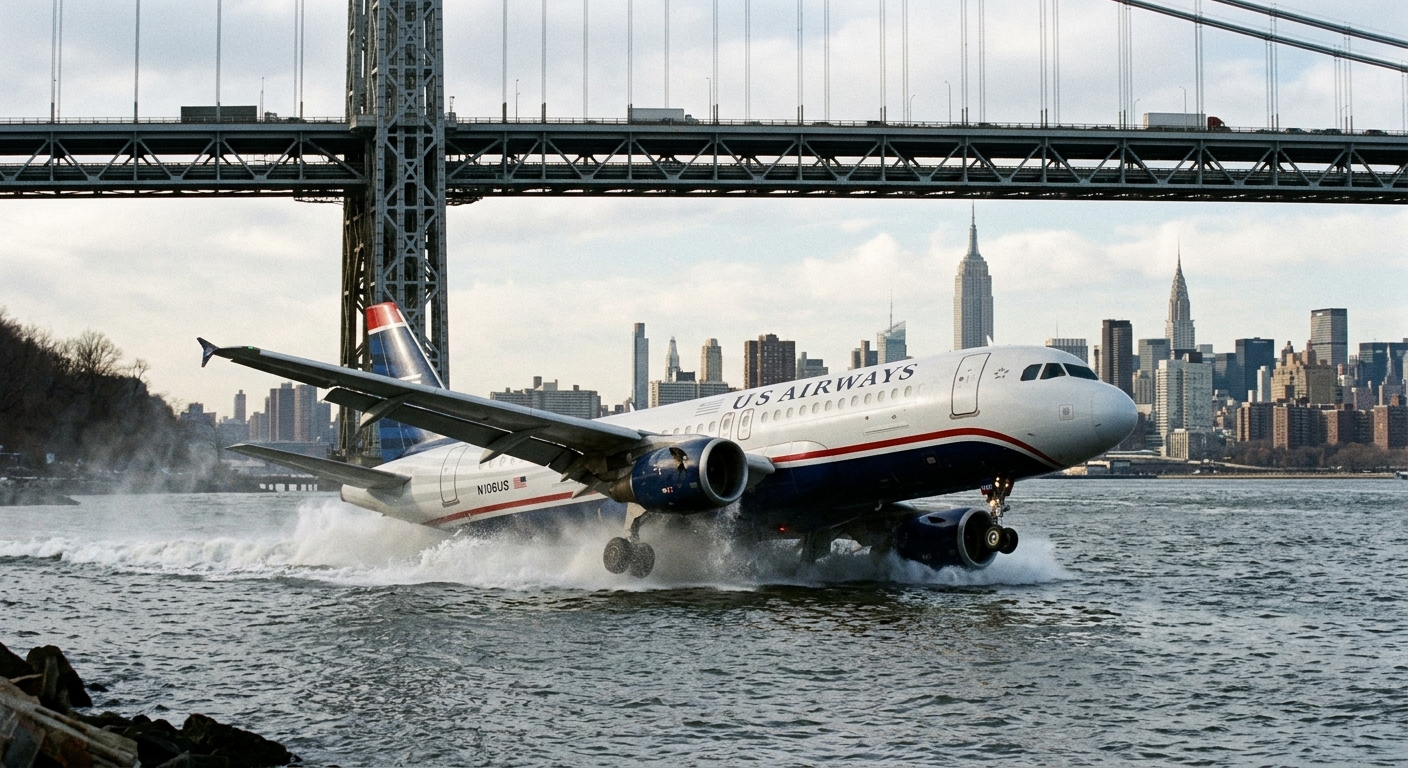
A white fuselage sliding low over the George Washington Bridge, engines silent. The shadow crossed the steel cables and dropped toward the river, and then the belly of the Airbus hit the water near West 48th Street. It floated there, spinning slowly, while the current pushed it south.
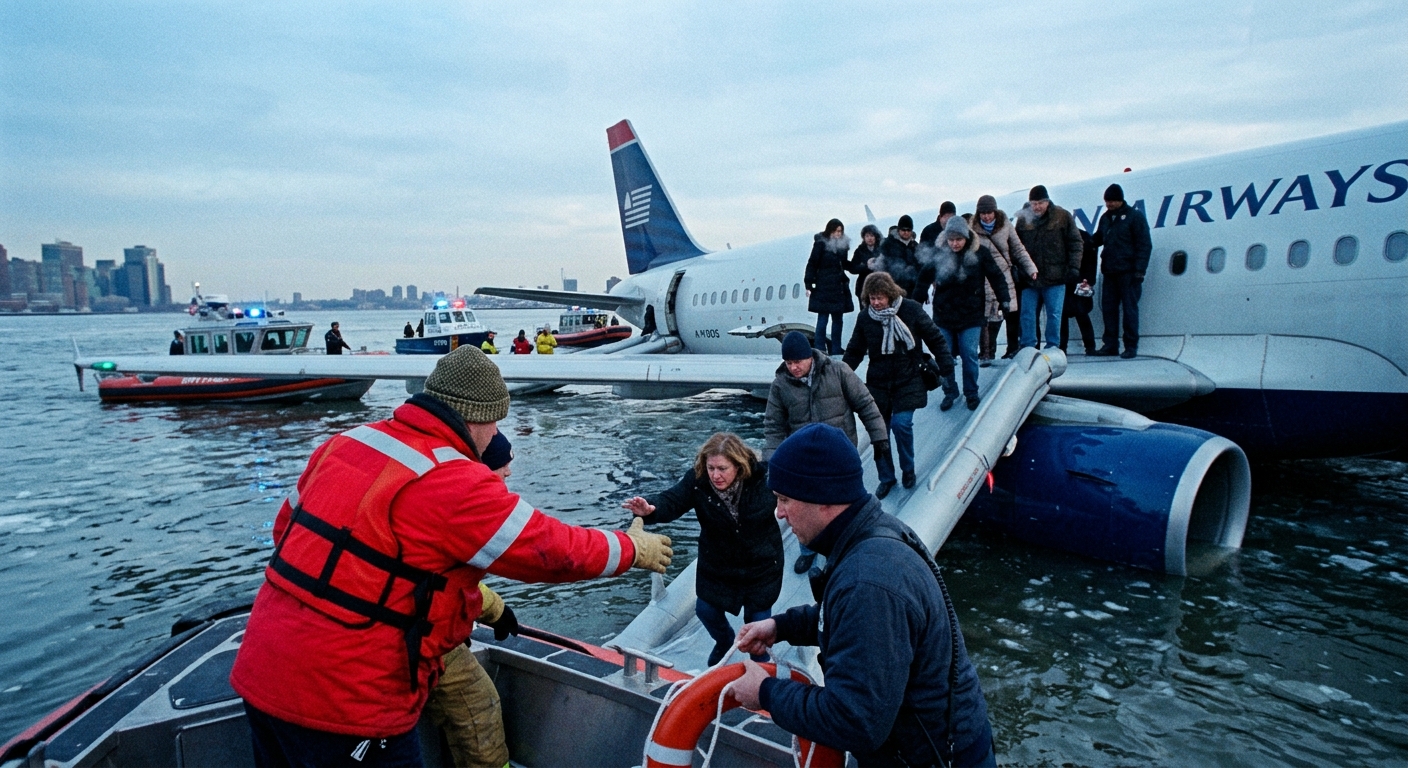
On January 15, 2009, at 3:31 in the afternoon, New York Waterway sent fourteen boats toward the sinking jet. Four NYPD officers at 42nd Street commandeered a Circle Line tour boat that had been picking up tourists and commuters, and they drove it straight for the wings where passengers stood in the cold. Detective Michael Delaney pulled on a diving suit, a mask, and a snorkel, and dropped into the Hudson without an air tank. On the deck of the ferry Thomas Keane, deckhand Honorio Hector Rabanes watched the wings fill with people.
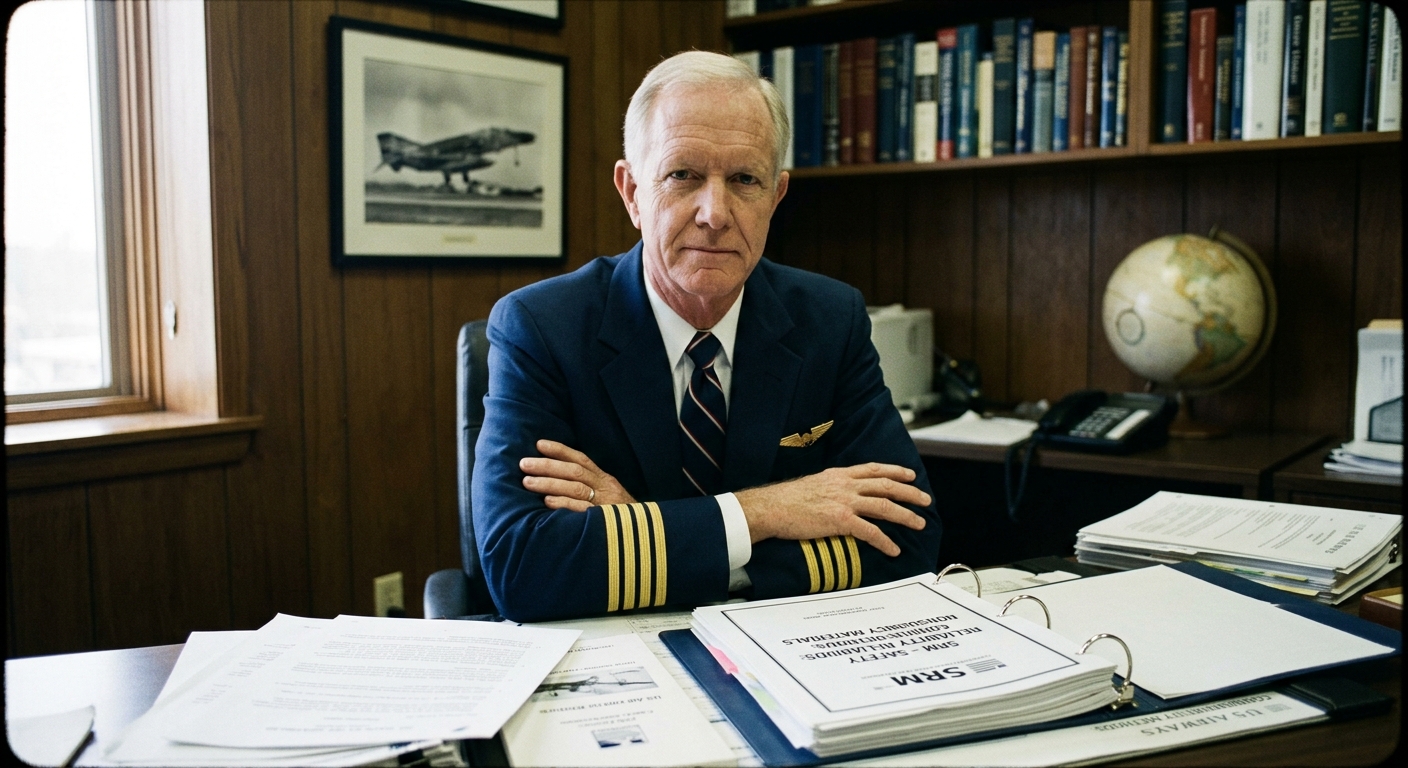
The plane was an Airbus A320, nearly ten years old, scheduled to leave LaGuardia at 3:00 that afternoon for Charlotte, North Carolina. It pushed back from the gate late, at 3:03, carrying 150 passengers and five crew. Twenty-three of those passengers worked for Bank of America. In the cockpit, co-pilot Jeff Skiles handled the takeoff while Captain Chesley B. “Sully” Sullenberger III, fifty-seven, sat in command. Sullenberger had been flying with US Airways since 1980 and ran a risk management consultancy called Safety Reliability Methods on the side. He was a former Air Force pilot. Two days earlier, on January 13, a different pilot had flown the same aircraft when its engine suffered a compressor stall, an anomaly recorded in the maintenance log.
About two minutes after takeoff, at roughly 2,800 feet, the Airbus flew into a flock of Canada geese. Both engines lost power. Sullenberger took the controls from Skiles and radioed the controller at the New York Terminal Radar Approach Control center on Long Island — the FAA’s low-altitude radar facility that handles traffic around the city’s major airports — that the plane had hit birds and lost thrust in both engines. When the controller suggested a return to LaGuardia, Sullenberger answered that he was unable. He rejected Teterboro as well and chose the river, what pilots call a ditching, an intentional emergency water landing. Over the intercom, he told passengers to “brace for impact.”
The air was below twenty degrees Fahrenheit; the Hudson, forty-one. Four-knot currents dragged the floating airframe south while passengers climbed onto the wings. Sullenberger walked the cabin aisle twice to confirm no one remained, then stepped off last. By 4:52 p.m., a city official at Fire Department headquarters declared every passenger accounted for, no fatalities; by that evening, only a small number had been treated, mostly for hypothermia, and just two were kept in hospital overnight.
The Airbus sat in the river for two days before a crane lifted it onto a barge. It was stored in a New Jersey hangar while investigators cut open the engines and found the remains of large birds, later identified as Canada geese. Years later the airframe was shipped to the Carolinas Aviation Museum in Charlotte, the city where Flight 1549 had been headed all along.
On January 15, 2009, US Airways Flight 1549 took off from LaGuardia Airport in New York. The plane was going to Charlotte, North Carolina. It was an Airbus A320 that was nearly ten years old. The flight left the gate late, at 3:03 in the afternoon. There were 150 passengers and five crew members on board. Twenty-three of the passengers worked for Bank of America.
Co-pilot Jeff Skiles flew the plane during takeoff. Captain Chesley B. “Sully” Sullenberger III was in command. He was fifty-seven years old. Sullenberger had been flying with US Airways since 1980. He was a former Air Force pilot. He also ran a risk management company called Safety Reliability Methods. Two days earlier, on January 13, a different pilot had flown the same plane. That time, one engine had a compressor stall. Workers wrote this problem in the maintenance log.
About two minutes after takeoff, the plane was at about 2,800 feet. It flew into a flock of Canada geese. Both engines lost power. Sullenberger took the controls from Skiles. He radioed the controller that the plane had hit birds and lost power in both engines. The controller worked at the New York Terminal Radar Approach Control center on Long Island. This was the FAA facility that watches air traffic around New York’s airports. The controller told Sullenberger to go back to LaGuardia. Sullenberger answered that he could not. He also said no to Teterboro Airport. He chose to land on the Hudson River. Pilots call this a ditching. He told passengers to “brace for impact.”
The air temperature was below twenty degrees Fahrenheit. The water in the Hudson was forty-one degrees. Four-knot currents pushed the floating plane south. Passengers climbed onto the wings.
At 3:31 that afternoon, New York Waterway sent fourteen boats toward the plane. Four NYPD officers at 42nd Street took a Circle Line tour boat. Passengers were standing on the wings in the cold. The officers drove the boat toward them. Detective Michael Delaney put on a diving suit, a mask, and a snorkel. He jumped into the Hudson without an air tank. On the ferry Thomas Keane, deckhand Honorio Hector Rabanes watched people fill the wings.
Sullenberger walked through the cabin twice. He checked that no one was still inside. Then he stepped off the plane last. By 4:52 p.m., a city official at Fire Department headquarters said every passenger was safe. There were no deaths. That evening, only a few passengers needed treatment, mostly for the cold, and just two stayed in hospital overnight.
The plane stayed in the river for two days. Then a crane lifted it onto a barge. Workers stored it in a hangar in New Jersey. Investigators cut open the engines. They found feather remains from large birds, later identified as Canada geese. Years later, the plane was sent to the Carolinas Aviation Museum in Charlotte. Flight 1549 had been going to that city all along.
Words to learn
Sentence patterns
Sullenberger walked the cabin aisle twice to confirm no one remained, then stepped off last.The inspector tested the bridge cables twice to confirm they could hold the weight, then approved the opening.
Captain Chesley B. “Sully” Sullenberger III, fifty-seven, sat in command.The lead engineer, thirty-four, presented the revised safety report to the board.
By 4:52 p.m., a city official at Fire Department headquarters declared every passenger accounted for, no fatalities.By midnight, the rescue team had pulled every trapped worker from the collapsed tunnel.
He told passengers to “brace for impact.”The police officer told the driver to stop the car.
By 4:52 p.m., a city official at Fire Department headquarters said every passenger was safe.By noon, the firefighters put out the fire.
Both engines lost power.The bridge broke and fell into the river.
Discussion questions
- Sullenberger had to reject both LaGuardia and Teterboro and choose the river in a matter of seconds. What factors from his background — military flying, decades of commercial experience, running a risk management business — do you think shaped that decision, and how important is prior experience when someone faces a situation they have never trained for exactly?
- Fourteen boats from New York Waterway, commandeered tour boats, and a detective diving in without an air tank — the rescue involved people acting outside their normal roles. Have you ever been in a situation where you or someone around you had to step far outside their usual responsibilities? What made that possible or difficult?
- The story mentions that a compressor stall was recorded in the maintenance log two days before the accident, on a flight with a different pilot. What responsibility do airlines and maintenance teams carry when earlier warning signs exist, and where should the line fall between acceptable risk and grounding an aircraft?
- Sullenberger chose to land on the river because he could not safely return to the airport. Do you think you could stay calm and make a big decision in a few seconds? Why or why not?
- Many different people helped the passengers — police officers, ferry workers, and boat crews. Why do you think so many people moved so quickly to help?
- The plane is now in a museum. Do you think keeping the plane is a good way to remember this event? What other ways can people remember important moments?