Boiler in the Abyss
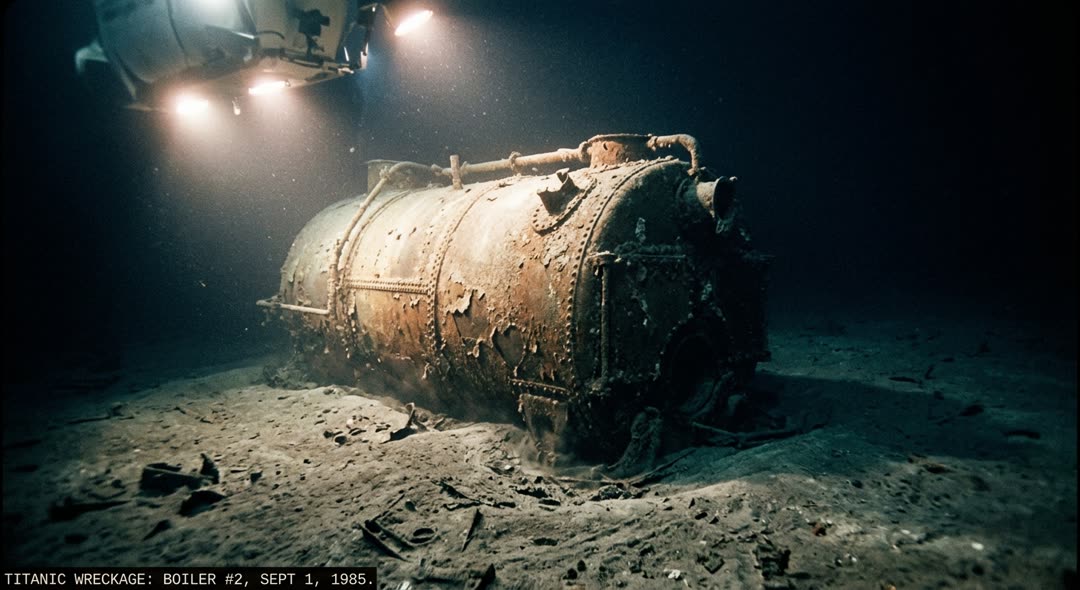
A massive iron cylinder on a video screen, sitting in silence on the seafloor.
Just after 1:00 a.m. on September 1, 1985, the deep-towed camera platform Argo sent back an image that stopped the night watch aboard R/V Knorr: one of Titanic’s boilers, resting under more than 12,400 feet of North Atlantic water. The French research vessel Le Suroit had started the search around July 1, scanning the ocean floor with a deep-towed sonar called SAR, working in slow lawn-mowing passes. On August 22, Knorr picked up where the French team left off, and for nine days Argo’s cameras swept the blank mud until that boiler filled the monitor and a 73-year hunt was over.
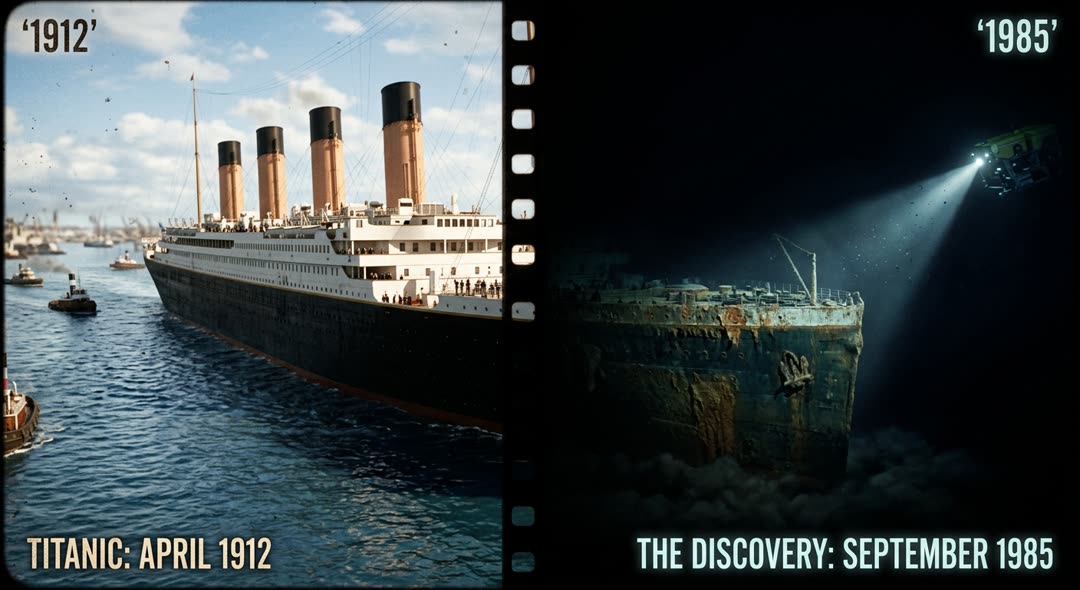
The expedition that found the wreck was a joint operation between Woods Hole Oceanographic Institution and the French Research Institute for Exploitation of the Sea, IFREMER. Dr. Robert D. Ballard, a geologist at Woods Hole, co-led the mission; Jean Louis Michel of IFREMER co-led from the French side and had personally built the SAR sonar that Le Suroit towed across the seafloor. Before sailing, the two men narrowed the target area to 100 square miles of the North Atlantic. The Titanic had lain there, unseen, since April 1912.
Finding the ship was not the mission’s central purpose. The U.S. Office of Naval Technology had funded the expedition to test two prototype deep-sea imaging systems, Argo and SAR, both still undergoing sea trials. Titanic was listed as a secondary objective.
Le Suroit’s cruise lasted 31 days. Towing SAR in what search teams call a lawn-mowing pattern, slow parallel passes just above the bottom, the French crew eliminated more than 75 percent of the 100-square-mile search area without finding wreckage. On August 15, three IFREMER scientists boarded R/V Knorr at Ponta Delgada in the Azores to join the American phase — a phase for which Ballard had been allotted just 12 days of ship time.
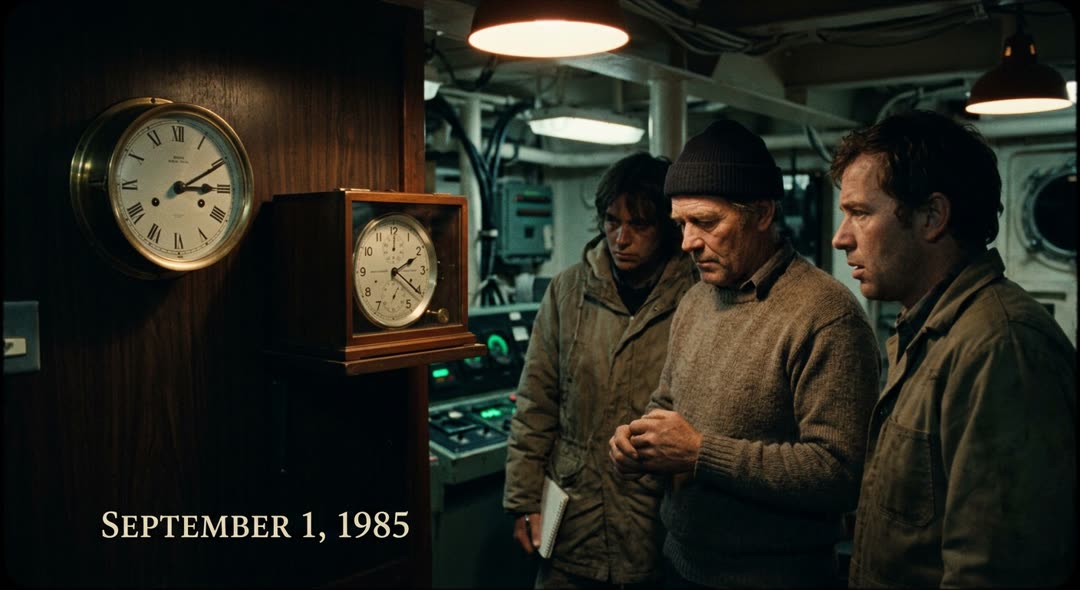
The boiler appeared on Argo’s monitors just after 1:00 a.m. on September 1. As the crew took in what they had found, the clock passed 2:20 a.m. — the exact minute Titanic had gone under in 1912. More than 1,500 men, women, and children had died that night. The celebration on board fell quiet. Before leaving the site, some crew members gathered on Knorr’s fantail and held a brief memorial service for the dead. “We are obviously very pleased and excited to have found the Titanic,” Ballard said afterward. “But we are also very aware of the significance of the Titanic as a maritime disaster.”
Knorr left the site on September 5. Argo, the prototype that had located the wreck, went back into its shipping crate; it had spent fewer than four hours over the debris field itself.
A large iron cylinder appeared on a video screen. It was sitting in silence on the bottom of the ocean.
Just after 1:00 a.m. on September 1, 1985, a deep-sea camera called Argo sent back a picture. The night watch crew on the research ship R/V Knorr saw one of Titanic’s boilers. It was resting under more than 12,400 feet of water in the North Atlantic.
The search had started weeks earlier. Around July 1, the French research ship Le Suroit began looking for the wreck. The ship towed a deep sonar called SAR across the ocean floor. The French team moved in slow, straight lines, like mowing a lawn. Le Suroit’s search lasted 31 days. The crew covered more than 75 percent of the 100-square-mile search area. But they did not find the wreck.
On August 15, three scientists from IFREMER boarded R/V Knorr at Ponta Delgada in the Azores. They joined the American part of the search. On August 22, Knorr reached the search area and began looking. Ballard’s team had only 12 days of ship time for this part of the search. For nine days, Argo’s cameras moved over empty mud. Then the boiler appeared on the screen, and a 73-year search was over.
The expedition was a joint effort between two groups. Woods Hole Oceanographic Institution was the American team. IFREMER, the French Research Institute for Exploitation of the Sea, was the French team. Dr. Robert D. Ballard, a geologist at Woods Hole, co-led the mission. Jean Louis Michel of IFREMER co-led from the French side. He had built the SAR sonar himself. Before sailing, the two men chose a target area of 100 square miles in the North Atlantic. The Titanic had been there, unseen, since April 1912.
Finding the ship was not the main goal of the expedition. The U.S. Office of Naval Technology paid for it. They wanted to test two new deep-sea camera systems: Argo and SAR. Both systems were prototypes, still being tested at sea. Titanic was listed as a secondary goal.
The boiler appeared just after 1:00 a.m. About an hour later, the clock passed 2:20 a.m. That was the exact time Titanic had sunk in 1912. More than 1,500 people had died that night. The celebration on board fell quiet. Before leaving the area, some crew members stood on Knorr’s back deck. They held a short memorial service for the dead. “We are obviously very pleased and excited to have found the Titanic,” Ballard said. “But we are also very aware of the significance of the Titanic as a maritime disaster.”
Knorr left the site on September 5. Argo went back into its shipping crate. It had spent fewer than four hours over the debris field.
Words to learn
Sentence patterns
Towing SAR in what search teams call a lawn-mowing pattern, slow parallel passes just above the bottom, the French crew eliminated more than 75 percent of the 100-square-mile search area without finding wreckage.Scanning the riverbed with a handheld sonar unit, the survey team mapped three previously unknown channels in a single afternoon.
Before sailing, the two men narrowed the target area to 100 square miles of the North Atlantic.Before opening the sealed container, the lab technicians recorded its weight and external temperature.
For nine days Argo’s cameras swept the blank mud until that boiler filled the monitor and a 73-year hunt was over.For six hours the ground crew tested the antenna until a faint signal finally appeared on the frequency display.
Just after 1:00 a.m. on September 1, 1985, a deep-sea camera called Argo sent back a picture.On the morning of June 5, 2004, the rescue team found the missing hikers near the river.
Before sailing, the two men chose a target area of 100 square miles in the North Atlantic.Before leaving the building, the students checked all the windows.
Titanic was listed as a secondary goal.The letter was sent to all the parents last week.
Discussion questions
- The expedition’s official purpose was testing military imaging technology, and finding the Titanic was listed as a secondary objective. How might the goals of the people funding a project differ from the goals of the people doing the work, and can you think of situations where a “side goal” became the most important result?
- The crew held a memorial service on the ship’s fantail before leaving the site, 73 years after the sinking. Why do you think they felt this was necessary, and are there places or events in your own experience where people still pay respect long after a disaster?
- Argo spent fewer than four hours over the actual debris field, yet the total search took weeks of slow passes across blank seafloor. What does this tell you about the balance between preparation and the moment of discovery?
- The team went to test new cameras, not to find Titanic. Do you think they were surprised when they found the wreck? Why or why not?
- The crew held a memorial service before they left the site. Why do you think they did this?
- Would you like to explore the deep ocean? Why or why not?