A Whisper of Signal Across Darkness
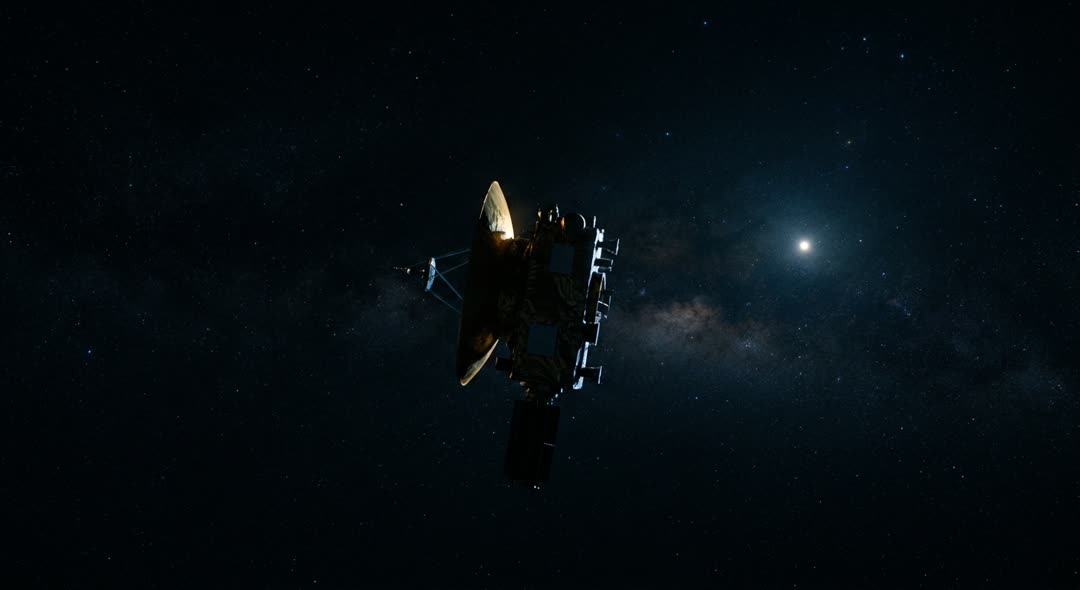
A series of status messages, fifteen minutes of them, crawled across four and a half light-hours of empty space. The spacecraft sending them could not hear anyone waiting. It had been in data-gathering mode through the whole encounter, silent by design.
At 00:53 UTC on July 15, 2015, those messages reached mission operations at the Johns Hopkins University Applied Physics Laboratory in Laurel, Maryland, relayed through NASA’s Deep Space Network. Flight controllers there had built and operated New Horizons for NASA, and now they read the numbers confirming it had survived its pass by Pluto. Alice Bowman, the mission operations manager, said no errors or problems with the probe had been recorded. The flyby was fully successful.
Pluto had been found in 1930 by Clyde Tombaugh, a farmer’s son from Kansas, working a telescope in Flagstaff, Arizona. He had been set to look for Planet X, a world theorized to exist beyond the orbit of Neptune, and the faint point he caught was the thing New Horizons had now crossed the solar system to meet. Building a machine to reach it took decades and, before that, a single contested opening. NASA approved the New Frontiers program in June 2001, and the first mission slot went to a team led by Alan Stern of the Southwest Research Institute in Boulder, Colorado, working with the Applied Physics Laboratory at Johns Hopkins. Stern was the principal investigator. Only one proposal won that first slot, and the mission existed because it had beaten the others.
New Horizons had launched from Cape Canaveral on January 19, 2006, a piano-sized probe weighing 1,054 pounds. Its own mission records disagree on when controllers implemented an early course correction: NASA sources place it on January 28, 2006, on January 30, and on March 9. In February 2007 it flew past Jupiter for a gravity assist, a slingshot maneuver that uses a planet’s gravity to change a spacecraft’s speed, and the pass added 9,000 miles per hour to its velocity and shaved three years off the trip. On February 25, 2010, it passed the halfway point to Pluto.
Ten days out, on July 4, 2015, a timing flaw in the command sequence dropped the spacecraft into safe mode, and it returned to normal science operations on July 7. New Horizons made its closest approach on July 14, 2015, at 7:49 AM Eastern, 11:49 UT, flying above the surface of Pluto. It arrived about one minute earlier than the flight plan drawn up at launch had predicted. Through the encounter it stayed silent and gathering data, and ninety-nine percent of what it collected sat on its onboard recorders, waiting to be sent home a millionth of a billionth of a watt at a time.
New Horizons had left Earth bound for the ninth planet. Months after launch, in 2006, the International Astronomical Union voted to reclassify Pluto as a dwarf planet. The target had changed while the spacecraft was already in flight toward it.
At four and a half light-hours out, the numbers took the better part of a day to cross the distance and tell anyone on Earth that the machine was still whole. The point of light Tombaugh had caught in 1930 now had a spacecraft above it, and the spacecraft was already past.
In 2015, a spacecraft sent status messages home. The messages took fifteen minutes to send. They crossed four and a half light-hours of empty space. The spacecraft could not hear anyone. It was in data-gathering mode. It stayed silent by design.
At 00:53 UTC on July 15, 2015, the messages reached mission operations. This happened at the Johns Hopkins University Applied Physics Laboratory in Laurel, Maryland. NASA’s Deep Space Network relayed the messages. Flight controllers had built and operated New Horizons for NASA. Now they read the numbers. The numbers confirmed the spacecraft had survived its pass by Pluto. Alice Bowman was the mission operations manager. She said no errors or problems had been recorded. The flyby was fully successful.
Pluto was found in 1930 by Clyde Tombaugh. He was a farmer’s son from Kansas. He worked a telescope in Flagstaff, Arizona. He was set to look for Planet X. People believed this world might exist beyond the orbit of Neptune. He caught a faint point of light. New Horizons later crossed the solar system to meet this point.
NASA approved the New Frontiers program in June 2001. The first mission slot went to a team led by Alan Stern. Stern worked at the Southwest Research Institute in Boulder, Colorado. His team worked with the Applied Physics Laboratory at Johns Hopkins. Stern was the lead scientist. Only one proposal won the first slot.
New Horizons launched from Cape Canaveral on January 19, 2006. It was a piano-sized probe. It weighed 1,054 pounds. Its mission records disagree about one early course correction. NASA sources place it on January 28, 2006, on January 30, and on March 9.
In February 2007, it flew past Jupiter for a gravity assist. This slingshot move uses a planet’s gravity to change a spacecraft’s speed. The pass added 9,000 miles per hour to its speed. It also cut three years off the trip. On February 25, 2010, it passed the halfway point to Pluto.
Ten days before the flyby, on July 4, 2015, a timing flaw appeared in the command sequence. It dropped the spacecraft into safe mode. The spacecraft returned to normal science operations on July 7.
New Horizons made its closest approach on July 14, 2015. This was at 7:49 AM Eastern, 11:49 UT. It flew above the surface of Pluto. It arrived about one minute earlier than planned. The flight plan had been made at launch. Through the flyby, the spacecraft stayed silent and gathered data. Ninety-nine percent of the data sat on its recorders. It waited to be sent home very slowly.
New Horizons had left Earth on its way to the ninth planet. Months after launch, in 2006, the International Astronomical Union voted. They decided Pluto was now a dwarf planet. The target had changed. But the spacecraft was already in flight toward it.
The numbers took almost a full day to cross the distance. They told everyone on Earth the machine was still whole. Tombaugh caught a point of light in 1930. Now this point had a spacecraft above it. And the spacecraft was already past.
Words to learn
Sentence patterns
A series of status messages, fifteen minutes of them, crawled across four and a half light-hours of empty space.The old ferry, little more than a raft with an engine, crossed the river four times a day.
Pluto had been found in 1930 by Clyde Tombaugh, a farmer’s son from Kansas, working a telescope in Flagstaff, Arizona.She stood at the platform for an hour, watching every train pull away without her.
It had been in data-gathering mode through the whole encounter, silent by design.The camera kept recording all night, unwatched and unattended.
Pluto was found in 1930 by Clyde Tombaugh.The house was built in 1995 by my father.
On February 25, 2010, it passed the halfway point to Pluto.On Monday, she started her new job.
She said no errors or problems had been recorded.He said the train was late.

Discussion questions
- New Horizons launched toward what the story calls the ninth planet, but Pluto was reclassified as a dwarf planet months later. How might that change of status affect the way people saw the mission, and does a label like “planet” change how important a place seems to you?
- Ninety-nine percent of the data stayed on the spacecraft’s recorders, sent home slowly over a long time. What difficulties come with waiting so long for results, and have you ever had to wait a long time to learn whether something you worked on had succeeded?
- The mission existed only because it beat the other proposals for a single contested slot. What do you think is gained or lost when only one idea among many gets chosen and funded, and have you seen a similar competition in your own school or work?
- New Horizons stayed silent and gathered data for a long time. Do you think it is good to work quietly and not tell people? Why?
- It took many years to build New Horizons and reach Pluto. Would you like to work on one project for many years? Why?
- Pluto became a dwarf planet after the spacecraft launched. Do you think it is sad that Pluto is not the ninth planet now? Why do you think so?