Two Points From History Erased
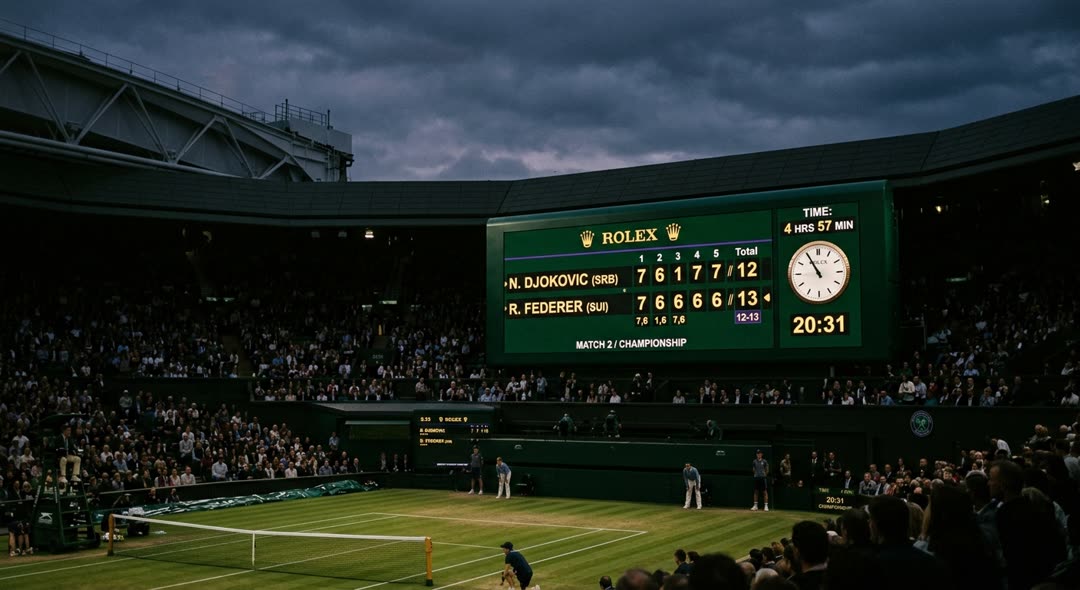
Four hours and fifty-seven minutes on the clock. The ball came off the frame of the racket instead of the strings and lifted high over the grass into the grey London light.
It was 14 July 2019, the men’s singles final at Wimbledon in London. Roger Federer, standing at the far end of the court, had skied that return off the frame of his racket. The point had already been played once and called back, replayed after a Hawk-Eye challenge overturned an ‘out’ call. When the ball finally came down, Novak Djokovic had won his fifth Wimbledon title.
By that summer Djokovic was the world number one and the reigning U.S. Open champion, a husband and father who had climbed to sixteen major singles titles. That climb had a gap in it. Between 2016 and 2018 he fell into a two-year slump, bracketed on one side by his first French Open title in 2016 and on the other by his Wimbledon win the year before. He had beaten Federer in the 2014 and 2015 Wimbledon finals and again in the 2015 U.S. Open final, often playing in front of crowds who wanted the older man to win.
Federer arrived at thirty-seven, less than four weeks from his thirty-eighth birthday, chasing a record-equalling ninth Wimbledon title and the chance to become the oldest Grand Slam champion of the Open era. He carried records of twenty Grand Slam singles titles and 310 total weeks at No. 1, while Djokovic still trailed Rafael Nadal, who stood two majors ahead of him on eighteen.
At three hours and twenty-five minutes Djokovic cracks a backhand winner and breaks for a 4–2 lead in the fifth. Six minutes later Federer breaks straight back, Djokovic netting a forehand. At four hours and seven minutes Federer bends a forehand winner to move ahead 8–7, and three minutes on he serves an ace to bring up two championship points on his own serve, two points from a ninth Wimbledon title.
Djokovic saves both, and within two minutes he has broken back to level at 8–8. The set runs to 12–12, where Wimbledon’s new final-set tiebreaker takes hold, a rule the club had introduced the previous fall to break a final set only once it reaches that score, meant to stop ultramarathon matches from wrecking the schedule, and never before used to decide a Wimbledon final. Djokovic surges to 6–3 in the tiebreak. At four hours and fifty-five minutes he brings up three championship points with a forehand.
The scoreline reads 7–6 (5), 1–6, 7–6 (4), 4–6, 13–12 (3). At four hours and fifty-seven minutes it is the longest Wimbledon men’s singles final ever played, past the four hours and forty-eight minutes of the 2008 final Federer lost to Rafael Nadal. Djokovic is the first man to win a Wimbledon singles final after facing match point since 1948, when Bob Falkenburg saved three to beat John Bromwich for that year’s title.
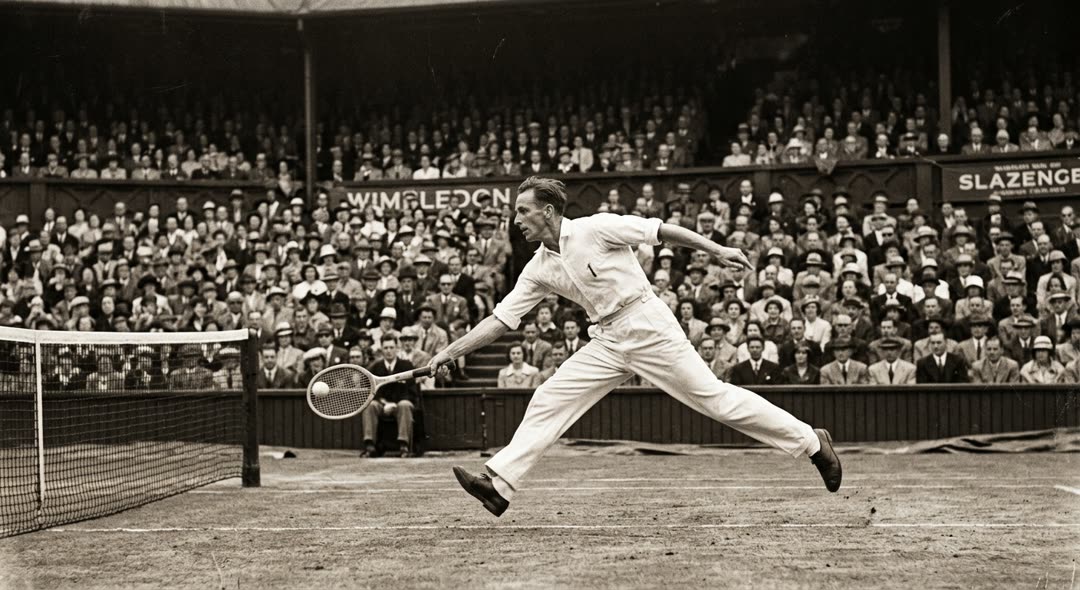
Seventy-one years earlier, on the same lawns, Bob Falkenburg had saved three match points against John Bromwich and gone on to take the 1948 title. The record for winning a Wimbledon final from the brink was not new; it had simply gone unmatched for the length of a lifetime.
Nadal still stood two majors clear of him that afternoon, eighteen to sixteen, the older rivalry unbothered by the one that had just run to four hours and fifty-seven minutes.
It was 14 July 2019, the men’s singles final at Wimbledon in London. Roger Federer hit a return off the frame of his racket. The ball flew high into the grey light and came down. Novak Djokovic had won his fifth Wimbledon title.
Earlier, one point was played again. A Hawk-Eye challenge changed an ‘out’ call, so the players replayed it.
That summer, Djokovic was the world number one. He was the U.S. Open champion. He was a husband and a father. He had won sixteen major singles titles. But his climb had a gap. Between 2016 and 2018 he played badly for two years. He won his first French Open title in 2016. He won Wimbledon the year before. He had beaten Federer in the 2014 and 2015 Wimbledon finals. He beat him again in the 2015 U.S. Open final. Often the crowd wanted the older man to win.
Federer was thirty-seven years old. He was less than four weeks from his thirty-eighth birthday. He wanted a ninth Wimbledon title. He could become the oldest Grand Slam champion of the Open era. He had twenty Grand Slam singles titles and 310 total weeks at No. 1. But Djokovic was still behind Rafael Nadal. Nadal had eighteen majors, two more than Djokovic.
At three hours and twenty-five minutes, Djokovic hit a backhand winner. He broke for a 4–2 lead in the fifth set. Six minutes later, Federer broke straight back when Djokovic netted a forehand. At four hours and seven minutes, Federer hit a forehand winner to lead 8–7. Three minutes later he served an ace. He had two championship points on his own serve. He was two points from a ninth Wimbledon title.
Djokovic saved both points. Within two minutes he broke back to level at 8–8. The set ran to 12–12. Here Wimbledon’s new final-set tiebreaker began. The club had made this rule the previous fall. It breaks a final set only when it reaches 12–12. The rule was meant to stop very long matches. It had never been used in a Wimbledon final before. Djokovic surged to 6–3 in the tiebreak. At four hours and fifty-five minutes, he brought up three championship points with a forehand.
The score was 7–6 (5), 1–6, 7–6 (4), 4–6, 13–12 (3). At four hours and fifty-seven minutes, it was the longest Wimbledon men’s singles final ever played. It passed the four hours and forty-eight minutes of the 2008 final. Federer had lost that final to Rafael Nadal.
Djokovic was the first man to win a Wimbledon singles final after facing match point since 1948. That year, Bob Falkenburg saved three match points. He beat John Bromwich to take the 1948 title.
Nadal still stood two majors clear that afternoon, eighteen to sixteen.
Words to learn
Sentence patterns
Roger Federer, standing at the far end of the court, had skied that return off the frame of his racket.The old bridge, groaning under the weight of the trucks, still carried traffic across the river every morning.
Seventy-one years earlier, on the same lawns, Bob Falkenburg had saved three match points against John Bromwich and gone on to take the 1948 title.Two decades later, in the same courtroom, the lawyer finally cleared her client’s name.
Between 2016 and 2018 he fell into a two-year slump, bracketed on one side by his first French Open title in 2016 and on the other by his Wimbledon win the year before.The village sat quietly in the valley, surrounded on all sides by peaks that stayed white until June.
Djokovic saved both points.The doctor closed the door.
Six minutes later, Federer broke straight back when Djokovic netted a forehand.She stood up when the teacher called her name.
A Hawk-Eye challenge changed an ‘out’ call, so the players replayed it.It started to rain, so we went inside.
Discussion questions
- The story mentions that Djokovic often played in front of crowds who wanted the older man, Federer, to win. Why do you think spectators sometimes favour a veteran competitor, and have you ever found yourself supporting the older player or the underdog in a contest?
- Wimbledon introduced the final-set tiebreaker to stop very long matches from wrecking the schedule. Do you think rule changes like this improve a sport, or do they take something away from it?
- Djokovic won after saving two championship points, something no man had done in a Wimbledon final since 1948. What do you think allows a person to stay composed when they are one point from losing, and how do you deal with high-pressure moments in your own life?
- Do you think it is harder to play well when the crowd wants the other player to win? Why?
- Federer was thirty-seven years old and still reached the final. Do you think older players can beat younger players? Why?
- Would you enjoy watching a match that is almost five hours long? Why or why not?