The Rusting Ship on the Reef
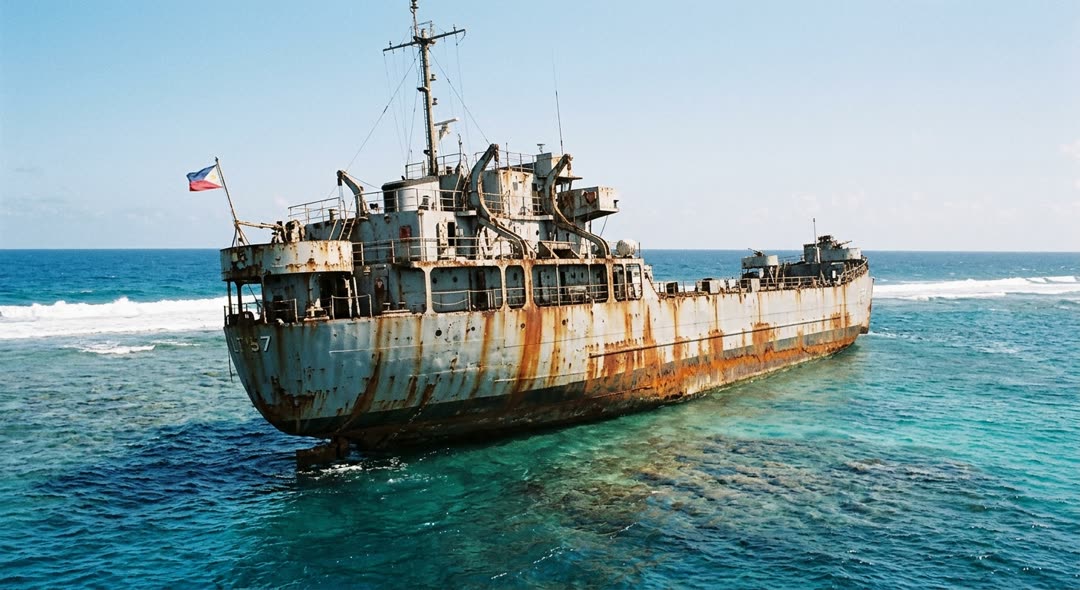
Rust. A Philippine Navy ship, deliberately run aground on Second Thomas Shoal, sits on a submerged reef in the Spratly archipelago, kept there as a military outpost. China’s coast guard has repeatedly blocked attempts to resupply the marines aboard.
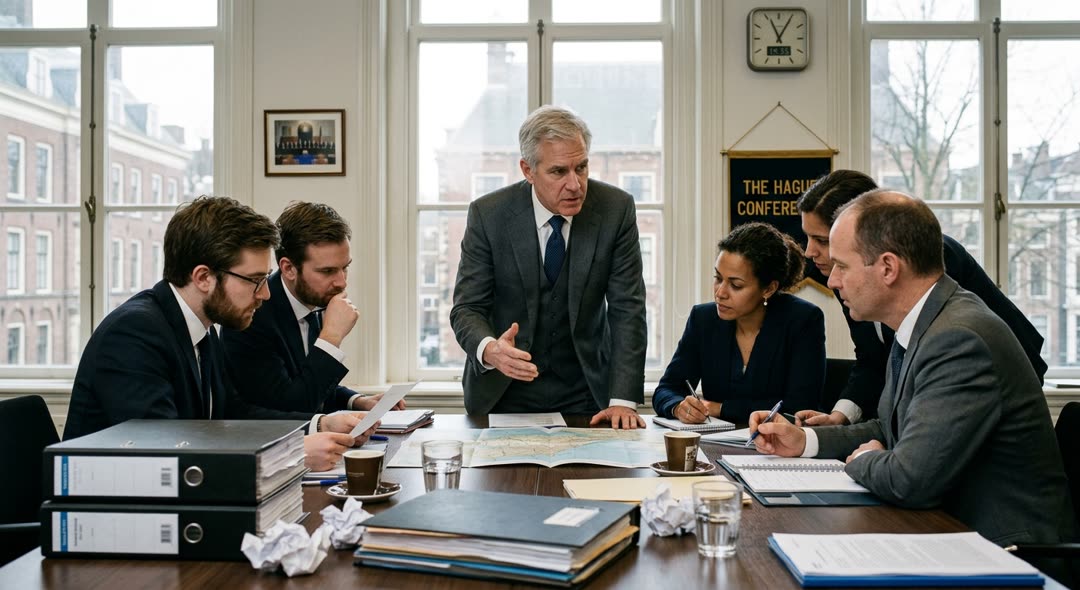
On 12 July 2016, at The Hague, the Permanent Court of Arbitration handed down its ruling in the case brought by the Philippines against China. The tribunal found that none of the Spratly features claimed by China were capable of generating an exclusive economic zone. It classified Taiping island, the largest feature in the Spratlys, as a rock. Two days earlier, Taiwan’s navy had sent a 2,000-tonne coast guard vessel to that same island.
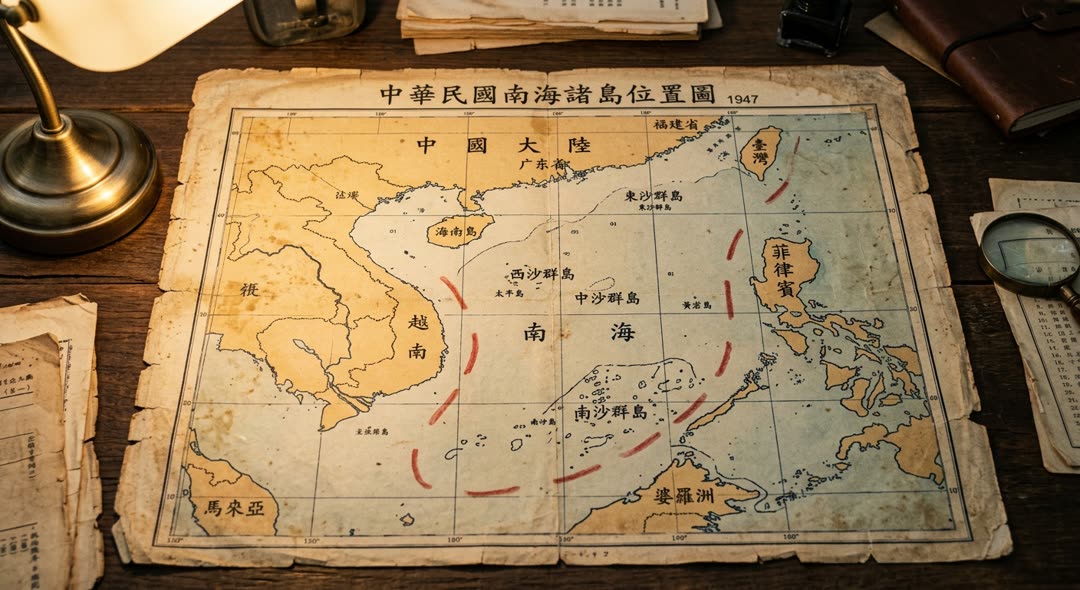
Rust and salt water are one context; money and territory are the deeper one. The sea carries roughly $4.5tn of ship-borne trade each year, spread across some 3.5 million square kilometres of open water, shoals and coral atolls. Beijing claims about 90% of it. The claim rests on the nine-dash line China drew in 1947 after the surrender of Japan, a U-shaped mark Vietnam likens to a hungry cow’s tongue. The same waters, though, are claimed in overlapping pieces by the Philippines, Vietnam, Malaysia, Brunei and Taiwan, six parties in all.
In 2012 China seized Scarborough Shoal and sent its coast guard to harass the foreign fishing vessels working there. In the years that followed it dredged coral atolls into airfields ringed with radar towers and weapons, and US officials counted an extra 800 hectares built across its occupied outposts in eighteen months. Paul Reichler of Foley Hoag coordinated the Philippines’ legal team as the case moved toward the Permanent Court of Arbitration.
Long before the tribunal convened, China had said it would “neither accept nor participate in the arbitration unilaterally initiated by the Philippines.” The tribunal ruled that this refusal did not deprive it of jurisdiction, and it heard the case without Beijing in the room. At 11:00 the Permanent Court of Arbitration released its findings.
It concluded there was no legal basis for China to claim historic rights to resources within the nine-dash line. It found China had violated the Philippines’ sovereign rights by interfering with fishing and petroleum exploration inside the Philippine exclusive economic zone, by constructing artificial islands, and by failing to stop Chinese boats fishing there. The Chinese Coast Guard, the tribunal said, “had unlawfully created a serious risk of collision when they physically obstructed Philippine vessels” near Scarborough Shoal. It condemned the land reclamation at seven features in the Spratlys and found the dredging had caused severe harm to the coral reef environment.
As the ruling landed, President Xi Jinping was in Beijing, meeting European Council President Donald Tusk and European Commission President Jean-Claude Juncker.
The tribunal’s ruling was binding, and it stood. By January 2025, twenty-seven governments had publicly called for it to be respected, eight had rejected it outright, and none of the Philippines’ Southeast Asian neighbours had formally endorsed it.
The marines are still aboard the wreck on Second Thomas Shoal, on the same reef where it was run aground. China’s coast guard still turns the resupply boats back.
An old Philippine Navy ship sits on a reef at Second Thomas Shoal. The reef is in the Spratly archipelago. The ship was run aground there on purpose. It is now a small military outpost. Marines live on the rusting wreck. China’s coast guard often blocks the boats that try to bring them food and supplies.
On 12 July 2016, at The Hague, the Permanent Court of Arbitration gave its ruling. The Philippines had brought the case against China. The tribunal found that China’s Spratly features could not create an exclusive economic zone. It called Taiping island, the largest feature, only a rock. Two days before, Taiwan’s navy had sent a 2,000-tonne coast guard vessel to that same island.
This sea carries about $4.5tn of ship trade each year. It covers some 3.5 million square kilometres of water, shoals and coral. Beijing claims about 90% of it. The claim comes from the nine-dash line China drew in 1947, after the surrender of Japan. Vietnam says the U-shaped mark looks like a hungry cow’s tongue. But the Philippines, Vietnam, Malaysia, Brunei and Taiwan also claim parts of these waters. There are six parties in all.
In 2012 China seized Scarborough Shoal. Its coast guard harassed the foreign fishing boats working there. In the years after, China turned coral atolls into airfields with radar towers and weapons. US officials counted an extra 800 hectares built in eighteen months. Paul Reichler of Foley Hoag led the Philippines’ legal team.
Long before the hearing, China said it would “neither accept nor participate in the arbitration unilaterally initiated by the Philippines.” The tribunal said this refusal did not remove its power to judge. So it heard the case without Beijing in the room. At 11:00 the Permanent Court of Arbitration released its findings.
It said China had no legal basis to claim historic rights inside the nine-dash line. It found China had broken the Philippines’ rights. China had interfered with fishing and petroleum work inside the Philippine exclusive economic zone. It had built artificial islands and let Chinese boats fish there. The Chinese Coast Guard, the tribunal said, “had unlawfully created a serious risk of collision when they physically obstructed Philippine vessels” near Scarborough Shoal. It condemned the land building at seven features and found the dredging badly harmed the coral reef.
When the ruling came, President Xi Jinping was in Beijing. He was meeting Donald Tusk and Jean-Claude Juncker.
The ruling was binding, and it stood. By January 2025, twenty-seven governments had asked for it to be respected. Eight had rejected it. None of the Philippines’ Southeast Asian neighbours had formally backed it.
The marines are still on the wreck at Second Thomas Shoal. China’s coast guard still turns the resupply boats back.
Words to learn
Sentence patterns
A Philippine Navy ship, deliberately run aground on Second Thomas Shoal, sits on a submerged reef in the Spratly archipelago, kept there as a military outpost.The old lighthouse, abandoned for decades, still guides fishermen home on foggy nights.
It found China had violated the Philippines’ sovereign rights by interfering with fishing and petroleum exploration inside the Philippine exclusive economic zone, by constructing artificial islands, and by failing to stop Chinese boats fishing there.The committee revived the neglected park by planting new trees, by adding benches along the paths, and by repairing the broken fountain.
As the ruling landed, President Xi Jinping was in Beijing, meeting European Council President Donald Tusk and European Commission President Jean-Claude Juncker.As the results were announced, the students waited in the hall, checking their phones for any early news.
In 2012 China seized Scarborough Shoal.In 2010 the city built a new bridge.
When the ruling came, President Xi Jinping was in Beijing.When the rain stopped, the children went outside.
It had built artificial islands and let Chinese boats fish there.She cooked the dinner and washed the plates.
Discussion questions
- The tribunal’s ruling was binding, yet China refused to take part and by January 2025 only twenty-seven governments had called for it to be respected. How much real weight do you think an international ruling carries when a powerful country simply ignores it?
- The story sets “rust and salt water” against “money and territory” as the deeper stakes of the dispute. Why might control of these waters matter so much to the six parties claiming them, and what would you push hardest to protect if you were negotiating for one of them?
- The Philippines holds a rusting ship aground as an outpost while China dredged reefs into airfields ringed with radar and weapons. What do these very different methods suggest about how each side asserts its claim, and which approach do you find more convincing?
- Do you think a country should obey a court ruling, even when it does not agree with it? Why?
- China said it would not take part in the case. Do you think this was a good choice? Why do you think so?
- Would you want to live on the wreck at Second Thomas Shoal like the marines? Why or why not?