The Flag That Came Down the Pole
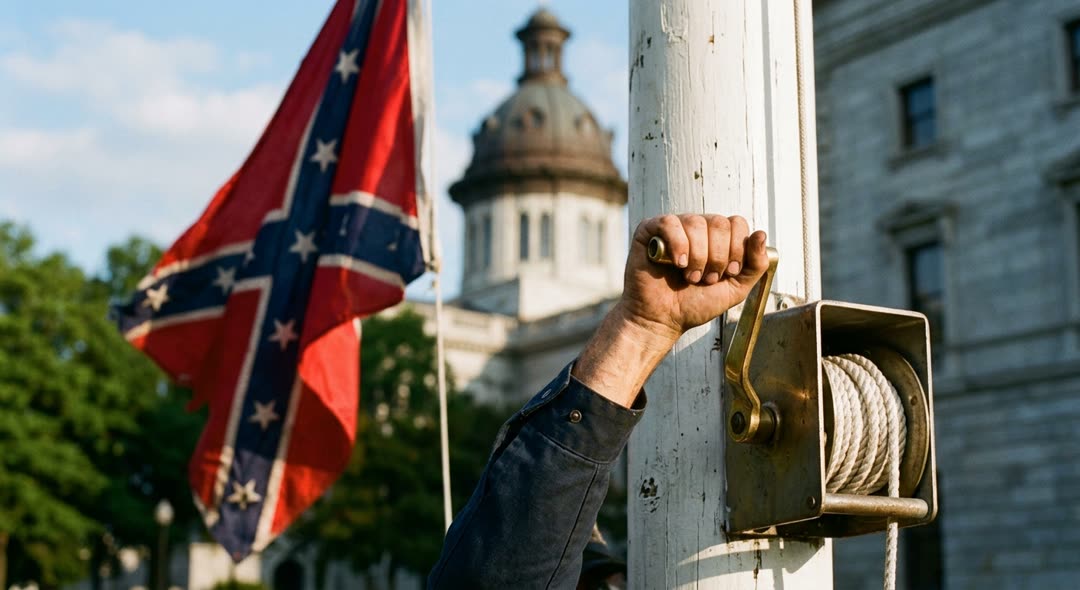
A crank turned. The Confederate battle flag slid down the thirty-foot flagpole on the grounds of the Statehouse in Columbia, South Carolina.
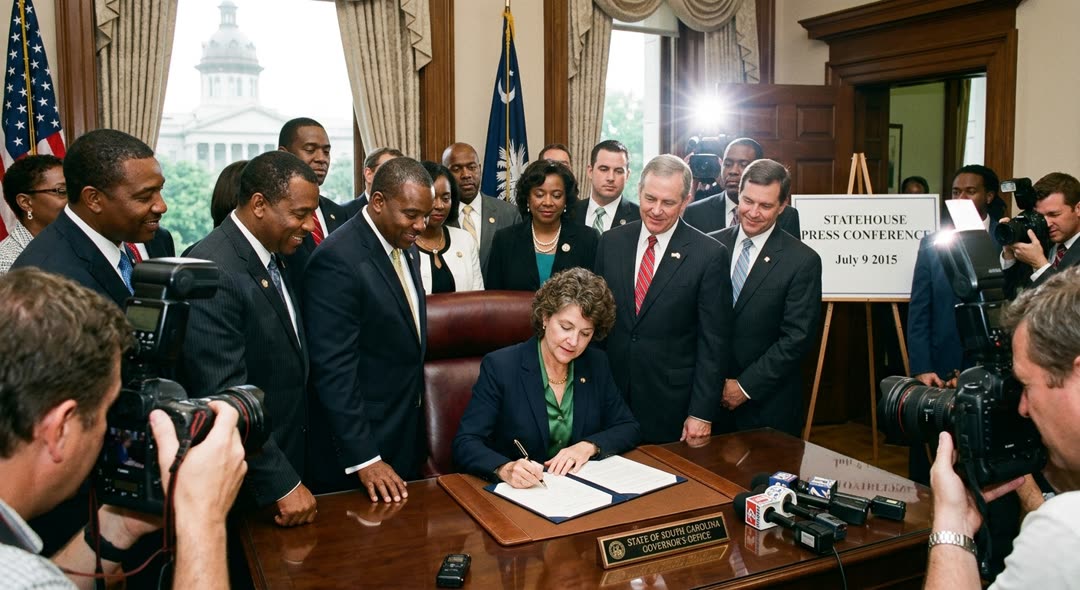
It was July 2015. The flag had first flown over the Capitol dome in 1961, and in 2000 it was moved from the dome to this pole a few steps from the Statehouse, where it had flown since. The day before, Gov. Nikki Haley had signed legislation calling for the flag to come down and be sent to the South Carolina Confederate Relic Room and Military Museum. Now it was being lowered for the last time.
The flag was more than a leftover from 1961. It had been kept flying as a stand against the Civil Rights movement, and for years African-Americans and other activists had called for it to come down. Those calls went nowhere.
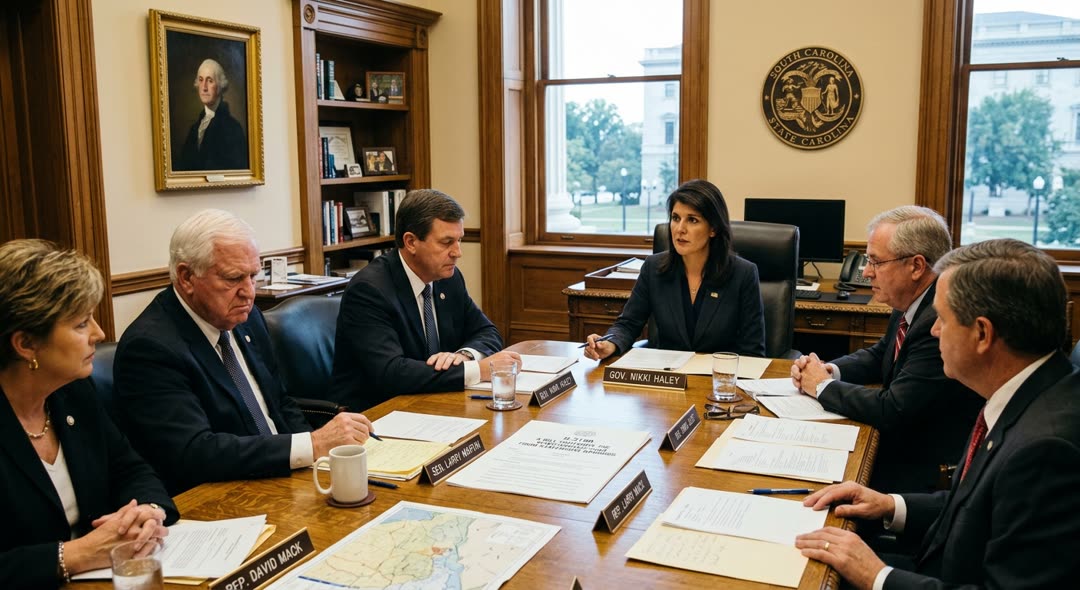
Then, the month before, a gunman walked into a historically black church in the state and opened fire. Nine people were dead. In the weeks that followed, both chambers of the South Carolina legislature and Gov. Nikki Haley reached agreement on a bill to pull the flag from the Statehouse grounds and send it to the Confederate Relic Room and Military Museum.
The House debate ran more than thirteen hours. Dozens of amendments came to the floor, each one a chance to stall. Jenny Horne, a 42-year-old lawyer from Summerville and a descendant of Confederate president Jefferson Davis, took the floor for four minutes. “I cannot believe that we do not have the heart in this body to do something meaningful such as take a symbol of hate off these grounds on Friday,” she said. The last stalling amendment failed after a nearly hour-long delay.
At one in the morning, Senate Bill 897 passed the House 94 to 20, past the two-thirds majority the measure needed. Haley signed it into law that Thursday, July 9.
At ten o’clock the next morning, July 10, state troopers marched in formation to the flagpole on the Statehouse grounds. They cranked the flag down, folded it, and rolled it up before a crowd of hundreds. The crowd chanted “USA! USA! USA!” while Haley watched from the steps of the Statehouse, flanked by lawmakers both black and white.
Among the nine dead was Clementa Pinckney, the pastor of the church and a sitting state senator. He had held a seat in the same Statehouse whose grounds the troopers now cleared of the flag. His desk on the Senate floor had been draped in black since June.
By early afternoon, the flagpole was gone from the Statehouse grounds. The flag itself, folded and rolled, went to a museum a short drive away, where it would sit behind glass.
A crank turned. The Confederate battle flag slid down the tall flagpole. This pole stood on the grounds of the Statehouse in Columbia, South Carolina.
It was July 2015. The flag first flew over the Capitol dome in 1961. In 2000 it was moved to this pole near the Statehouse. It had flown there since then. The day before, Gov. Nikki Haley signed a new law. The law said the flag must come down. It would be sent to the South Carolina Confederate Relic Room and Military Museum. Now it was being lowered for the last time.
The flag was more than an old object from 1961. It had been kept flying against the Civil Rights movement. For years, African-Americans and other activists asked for it to come down. But those calls went nowhere.
Then, the month before, a gunman walked into a black church in the state. He opened fire. Nine people were dead. In the weeks after, both parts of the South Carolina legislature and Gov. Haley agreed on a bill. The bill would pull the flag from the Statehouse grounds. It would send the flag to the museum.
The House debate ran more than thirteen hours. Dozens of amendments came to the floor. Each one was a chance to stall. Jenny Horne was a 42-year-old lawyer from Summerville. She was a descendant of Confederate president Jefferson Davis. She took the floor for four minutes. “I cannot believe that we do not have the heart in this body to do something meaningful,” she said. “We must take a symbol of hate off these grounds on Friday.” The last stalling amendment failed after a delay of nearly an hour.
At one in the morning, Senate Bill 897 passed the House 94 to 20. This was past the two-thirds majority the measure needed. Haley signed it into law that Thursday, July 9.
At ten o’clock the next morning, July 10, state troopers marched to the flagpole. They cranked the flag down. They folded it and rolled it up. A crowd of hundreds watched. The crowd chanted “USA! USA! USA!” Haley watched from the steps of the Statehouse. Lawmakers, both black and white, stood beside her.
Among the nine dead was Clementa Pinckney. He was the pastor of the church and a state senator. He had held a seat in the same Statehouse. Now the troopers cleared its grounds of the flag. His desk on the Senate floor had been draped in black since June.
By early afternoon, the flagpole was gone from the Statehouse grounds. The flag itself, folded and rolled, went to a museum a short drive away. There it would sit behind glass.
Words to learn
Sentence patterns
The flag itself, folded and rolled, went to a museum a short drive away, where it would sit behind glass.The letter, sealed and stamped, sat on the desk for a week before anyone opened it.
Among the nine dead was Clementa Pinckney, the pastor of the church and a sitting state senator.Among the survivors was a nurse who had worked through the night without a break.
Dozens of amendments came to the floor, each one a chance to stall.Twelve boxes were stacked by the door, each one a piece of someone’s old life.
The House debate ran more than thirteen hours.The train left the station at noon.
Jenny Horne was a 42-year-old lawyer from Summerville.My uncle was a quiet teacher from a small town.
At one in the morning, Senate Bill 897 passed the House 94 to 20.At six in the evening, the workers went home.
Discussion questions
- For years the calls to lower the flag “went nowhere,” yet after the church shooting both chambers and the governor agreed within weeks. Why do you think a single tragedy moved lawmakers where earlier efforts had failed, and can you think of another case where one event broke a long-stalled debate?
- Jenny Horne, herself a descendant of Jefferson Davis, spoke strongly in favour of taking the flag down. What might have made her argument persuasive to other lawmakers, and how much weight do you think a speaker’s personal background should carry in a public debate?
- The flag was sent behind glass in a museum rather than destroyed. Do you think preserving a divisive symbol in a museum is a good way to deal with it, and how would you have handled it?
- Do you think it was right to take the flag down? Why?
- Jenny Horne spoke for only four minutes to change people’s minds. Do you think one person can change what a group decides?
- Would you stand in a crowd to watch an important moment like this? Why or why not?