The Empty Cockpit That Crossed Europe

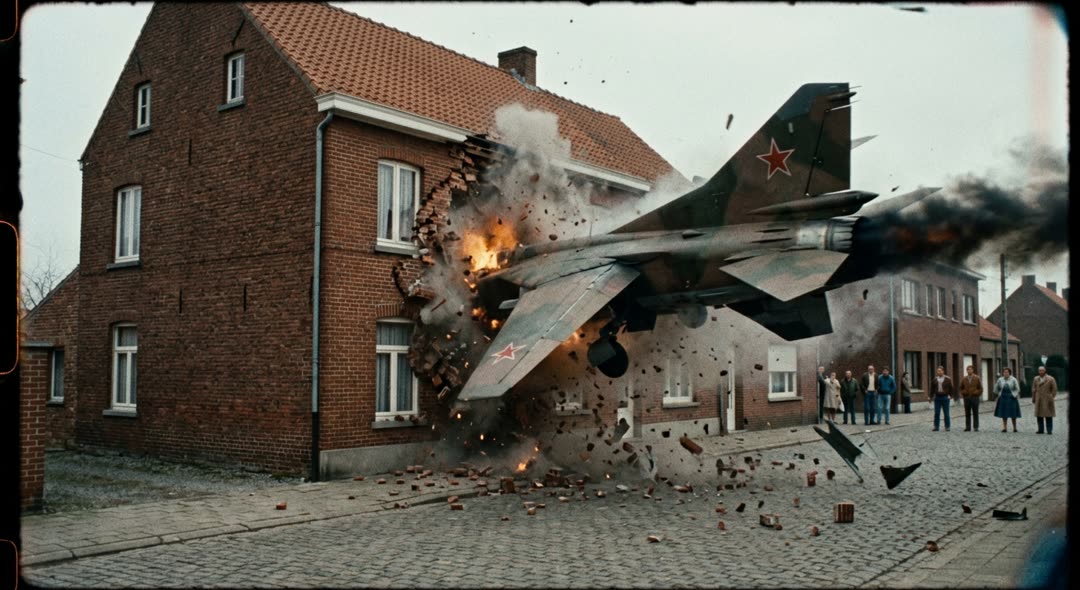
Engine noise, and no pilot behind it. The Soviet MiG-23 came down over Bellegem with nobody at the controls, still holding the course its automatic pilot had kept for more than an hour. It struck a house and killed the man inside.
The crash happened on 4 July 1989, outside the Belgian city of Kortrijk. The jet was a Soviet MiG-23 fighter, and by the Soviet account a malfunction had made its pilot eject far to the east, over Poland. Rather than falling then, the pilotless plane flew on over East Germany, West Germany, and the Netherlands before it reached Belgium. NATO radar had first picked it up more than an hour before it came down in the man’s home.
The subject of this story is the aircraft itself, a Soviet MiG-23 that had lost its pilot and kept flying. He had ejected over Poland, close to the Baltic coast, after what the Soviets described as a malfunction. The jet did not follow him down. It held the heading its automatic pilot was keeping and covered about 560 miles across East Germany, West Germany, and the Netherlands before it reached Belgium. NATO radar had the plane more than an hour before the end. For a long stretch no one on the ground could say what, if anything, it was carrying, because the Soviet side was slow to state whether the load was nuclear or toxic.
The pilot ejects over Poland, near the Baltic coast, after what the Soviets call a malfunction, and the jet keeps flying without him. It crosses East Germany, West Germany, and the Netherlands, holding the heading its automatic pilot has locked in, about 560 miles in all. NATO radar tracks it the whole way, more than an hour of a plane in the air with no one aboard. Over Bellegem the engine finally quits and the aircraft comes down into a house, killing the man inside.
Belgium complains to the Soviet Union about the lack of warning before the crash. Belgian Foreign Minister Mark Eyskens calls in the Soviet ambassador, Feliks P. Bogdanov, for an explanation. What disturbs Eyskens is the silence across that span of more than an hour, from the first radar contact to the impact, with no warning from the Soviet side. He also points to a notable slowness on the Soviet part in disclosing whether the jet was carrying nuclear or toxic weapons.
The pilot who left the jet over Poland came down under his parachute and lived. The man in the Bellegem house, eighteen years old, did not. One had been aboard the MiG-23 and stepped out of it; the other had never been near it.
The MiG-23 had left the ground with a pilot and a mission over Poland. It finished its flight in a house in Bellegem, alone, and the one man it killed had never chosen to be part of it.
A Soviet MiG-23 fighter jet came down over Bellegem, a town in Belgium. People could hear the engine noise, but there was no pilot on board. Still, the plane held its course. Its automatic pilot had kept this same course for more than an hour. The jet hit a house, and it killed the man inside.
The crash happened on 4 July 1989, outside the Belgian city of Kortrijk. The jet was a Soviet MiG-23 fighter. The Soviets said a problem forced the pilot to eject. He jumped out far to the east, over Poland, near the Baltic coast.
The plane did not fall down with him. It kept flying on its own, with no pilot. It flew over East Germany, then West Germany, and then the Netherlands. After that, it reached Belgium. In total, the jet flew about 560 miles. NATO radar first saw the plane more than an hour before the end.
For a long time, no one on the ground knew what the jet was carrying. The Soviet side was slow to say if the load was nuclear or toxic. Over Bellegem, the engine finally stopped. The aircraft came down into a house. It killed the man inside.
Belgium was angry about the lack of warning before the crash. The Belgian Foreign Minister, Mark Eyskens, called in the Soviet ambassador, Feliks P. Bogdanov. He wanted an explanation. Eyskens was upset about the long silence. It lasted more than an hour, from the first radar contact to the crash. In all that time, the Soviet side gave no warning.
Eyskens was also upset because the Soviets were slow with important news. They did not quickly say if the jet carried nuclear or toxic weapons. The pilot had left the jet over Poland. He came down under his parachute, and he lived. The man in the Bellegem house was only eighteen years old. He did not live.
One man had been on the MiG-23, and he stepped out of it. The other man had never been near it. The MiG-23 left the ground with a pilot and a mission over Poland. But it finished its flight alone, in a house in Bellegem. It killed only one man. That man had never chosen to be part of it.
Words to learn
Sentence patterns
The Soviet MiG-23 came down over Bellegem with nobody at the controls, still holding the course its automatic pilot had kept for more than an hour.The old ferry drifted toward the rocks with no one on deck, still following the line the tide had set hours earlier.
What disturbs Eyskens is the silence across that span of more than an hour, from the first radar contact to the impact, with no warning from the Soviet side.What worried the town was the quiet of the factory, closed for weeks, with no notice given to the workers.
One had been aboard the MiG-23 and stepped out of it; the other had never been near it.One had signed the contract and walked away rich; the other had never read a page of it.
Eyskens was also upset because the Soviets were slow with important news.She was tired because she worked all day.
He came down under his parachute, and he lived.I opened the door, and I saw my friend.
After that, it reached Belgium.After lunch, we went to the park.

Discussion questions
- Belgium protested that it received no warning across more than an hour of tracked flight. Do you think a government has a duty to warn other countries when it loses control of a military aircraft, and why?
- The story places the pilot, who ejected and survived, beside the eighteen-year-old in the house, who had never been near the jet. What responsibilities do you think a country should accept when its equipment causes harm far from home?
- NATO radar followed the plane for over an hour, yet it still reached a house. What do you think makes it hard to act on a warning, even when the danger can be seen coming?
- The Soviet side gave no warning for more than an hour. Do you think a country should always warn others quickly when there is danger? Why?
- One man jumped out of the plane and lived, but a man on the ground died. Do you think this was fair? How does the story make you feel?
- The plane flew over many countries with no pilot. Would you feel safe if this happened near your home? Why or why not?