885 Watts Across 890 Million Miles
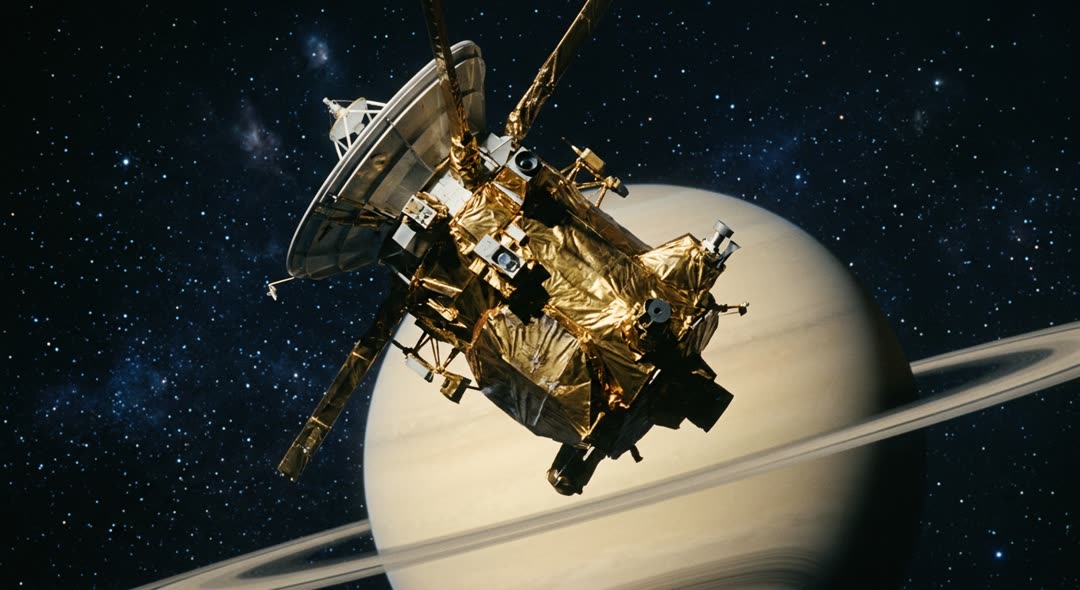
Twenty-two feet of metal, taller than a two-story house, falling silently toward Saturn. Inside its body, twelve science instruments waited. The generators kept producing their 885 watts, the same power they had carried since launch.
On October 15, 1997, Cassini-Huygens lifted off from Cape Canaveral Air Force Station, Florida, atop a Titan IVB/Centaur rocket. The orbiter stood 22 feet high and 13.1 feet wide. Over the mission it would fire its main engine 183 times. This was the spacecraft now arriving at Saturn.
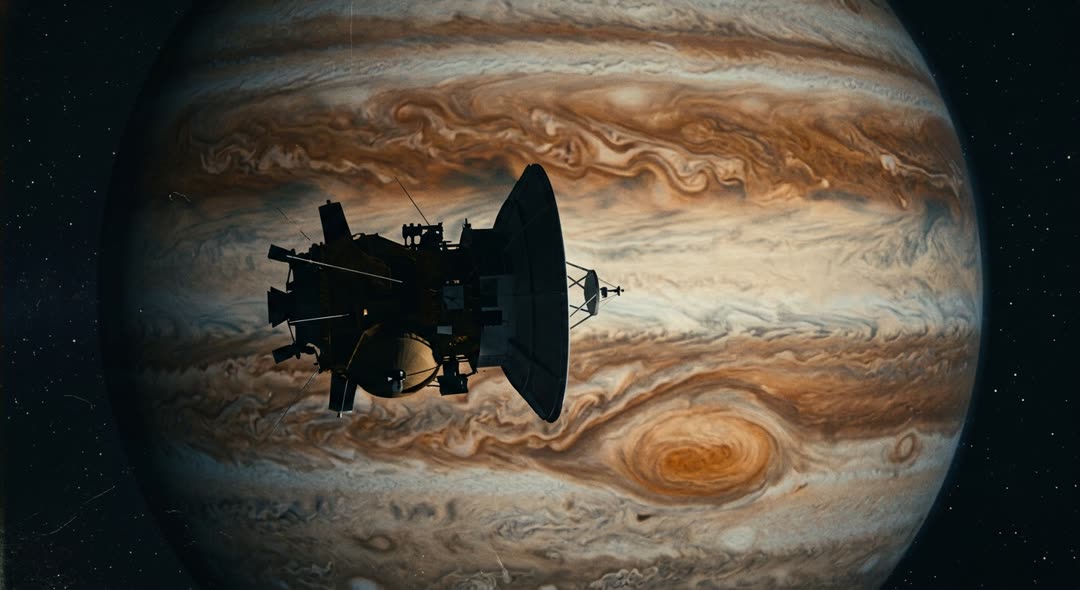
To reach Saturn, Cassini did not fly toward it. The spacecraft first fell inward, toward the Sun. On April 26, 1998, it swung past Venus at 176 miles, then came back for a second Venus pass on June 24, 1999, this time at 370 miles. Less than two months later, on August 18, 1999, it crossed Earth at 727 miles, borrowing speed from the planet it had just left behind. The last push came at Jupiter on December 30, 2000, six million miles out, with closest approach at 5:12 a.m. EST. Each pass added velocity the rocket alone could never have given it, and the path that looked like a detour was the only way the mass could be flung that far.
On June 30, 2004, Pacific Daylight Time, Cassini fires its main engine at 7:36 p.m. to slow itself down and let Saturn’s gravity pull it into orbit. At Saturn’s distance the one-way radio signal takes between sixty-seven and eighty-five minutes to reach Earth, so the burn runs on commands loaded in advance, and the team in Pasadena watches a result that has already happened. It is one of the 183 firings the main engine will perform over the mission, and it is the one that turns a seven-year, 2.1-billion-mile cruise into an orbit.
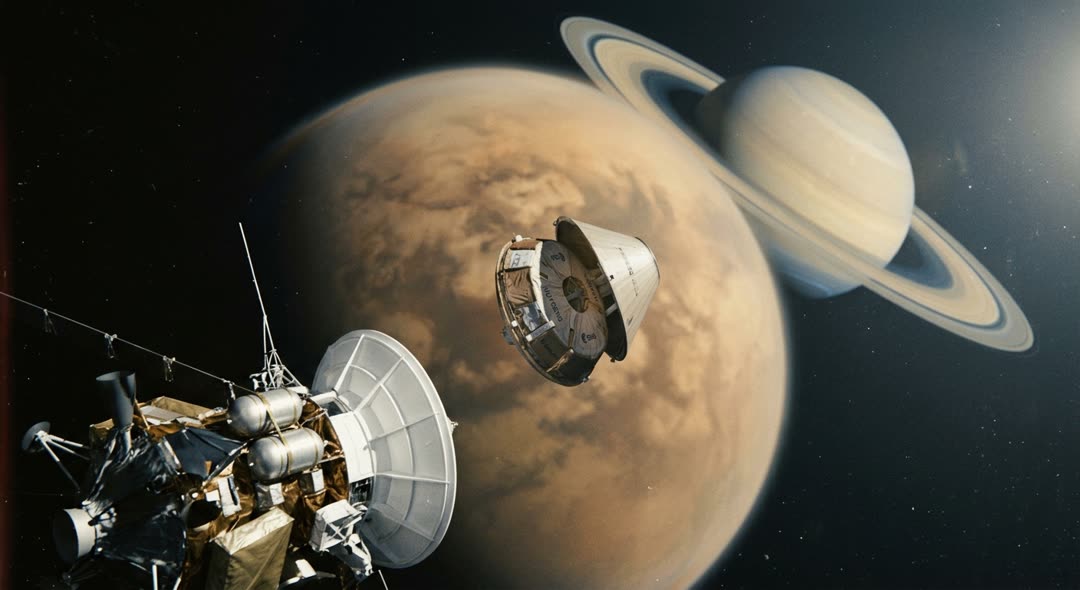
The burn holds, and Cassini settles into its path around the planet. On December 24, 2004, it releases the Huygens probe, the descent craft ESA built to ride down through an atmosphere, toward Titan, Saturn’s largest moon. On January 14, 2005, Huygens falls through Titan’s thick air under parachute and touches the surface, the first landing on a moon in the outer solar system.
The Narrow Angle Camera, part of Cassini’s Imaging Science Subsystem, would eventually return 453,048 images. From May 2001 to early 2002, before any of them, it sent back hazy, unusable frames, the optics fogged by a contamination problem. The instrument built to see Saturn could not yet see anything clearly.
Twelve instruments had waited through the seven-year cruise, fogged optics and all. After the burn held, they had a planet to point at.
The spacecraft was 22 feet of metal. It was taller than a two-story house. Inside its body, twelve science instruments waited. The generators kept making 885 watts. They had carried this same power since launch.
On October 15, 1997, Cassini-Huygens lifted off from Cape Canaveral Air Force Station, Florida. It rode on a Titan IVB/Centaur rocket. The orbiter stood 22 feet high and 13.1 feet wide. Over the mission it would fire its main engine 183 times.
To reach Saturn, Cassini did not fly straight toward it. First the spacecraft fell inward, toward the Sun. On April 26, 1998, it swung past Venus at 176 miles. Then it came back for a second Venus pass on June 24, 1999, at 370 miles. On August 18, 1999, it crossed Earth at 727 miles. It borrowed speed from the planet it had just left. The last push came at Jupiter on December 30, 2000. Cassini was six million miles out, with closest approach at 5:12 a.m. EST. Each pass added speed the rocket alone could never give it.
On June 30, 2004, Pacific Daylight Time, Cassini fired its main engine at 7:36 p.m. The burn slowed the spacecraft down. Then Saturn’s gravity pulled it into orbit. At Saturn’s distance, the one-way radio signal took between sixty-seven and eighty-five minutes to reach Earth. So the burn ran on commands loaded in advance. The team in Pasadena watched a result. It had already happened. It was one of the 183 firings. It turned a seven-year, 2.1-billion-mile cruise into an orbit.
The burn held, and Cassini settled into its path around the planet. On December 24, 2004, it released the Huygens probe. ESA built this descent craft to ride down through an atmosphere. It went toward Titan, Saturn’s largest moon. On January 14, 2005, Huygens fell through Titan’s thick air under parachute. It touched the surface. This was the first landing on a moon in the outer solar system.
The Narrow Angle Camera was part of Cassini’s Imaging Science Subsystem. It would return 453,048 images. From May 2001 to early 2002, it sent back hazy, unusable frames. The optics were fogged by a contamination problem. The instrument built to see Saturn could not yet see anything clearly.
Twelve instruments had waited through the seven-year cruise. After the burn held, they had a planet to point at.
Words to learn
Sentence patterns
Less than two months later, on August 18, 1999, it crossed Earth at 727 miles, borrowing speed from the planet it had just left behind.The climbers reached the ridge before noon, saving daylight for the descent ahead.
It is one of the 183 firings the main engine will perform over the mission, and it is the one that turns a seven-year, 2.1-billion-mile cruise into an orbit.It was the smallest valve that caused the entire system to shut down.
At Saturn’s distance the one-way radio signal takes between sixty-seven and eighty-five minutes to reach Earth, so the burn runs on commands loaded in advance, and the team in Pasadena watches a result that has already happened.The bridge could carry only light traffic, so the trucks were sent along the older road through the hills.
On December 24, 2004, it released the Huygens probe.On May 3, 2019, the team opened their new office.
The burn slowed the spacecraft down.The rain stopped the football game.
After the burn held, they had a planet to point at.After the bell rang, the students left the room.
Discussion questions
- To reach Saturn, Cassini first fell inward toward the Sun and gained speed from Venus, Earth, and Jupiter rather than flying straight out. Why might an indirect route sometimes be the only workable way to reach a goal, and have you ever taken a longer path to get somewhere you wanted to be?
- Because the signal took over an hour each way, the team in Pasadena could only watch a result that had already happened. How would you cope with working on something important when you cannot see the outcome as it unfolds?
- The camera sent back fogged, unusable frames for months before the spacecraft even reached Saturn. How do you think a team keeps faith in a project when its main instrument is not yet working as intended?
- The team in Pasadena watched a result that had already happened. Do you think it is hard to wait for news you cannot change? Why?
- Cassini used the speed of other planets to reach Saturn. Do you think it is smart to take a longer path to reach a goal?
- Huygens made the first landing on a moon in the outer solar system. Would you like to visit a place no one has visited before? Why?