Three Billion Letters in the East Room
A map, unrolled across a table in the East Room. Nearly two centuries earlier, Thomas Jefferson and Meriwether Lewis had spread one out in that same room, the record of an expedition across the American frontier to the Pacific. Now scientists laid down a different kind of map, almost 3 billion letters long.
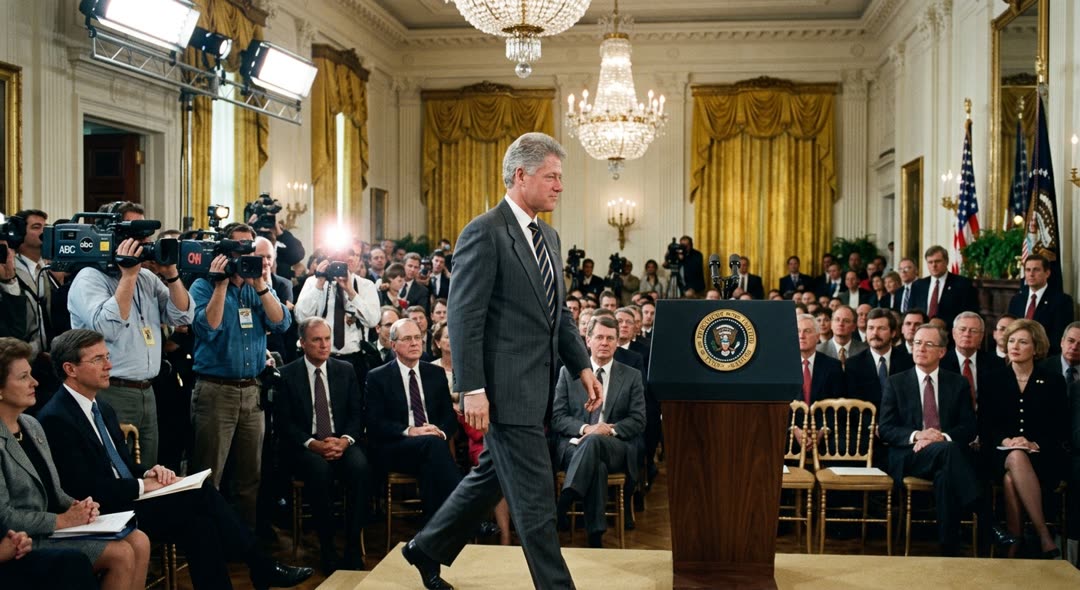
At 10:19 A.M. on June 26, 2000, President Bill Clinton stepped into the East Room of the White House to announce the completion of the first survey of the entire human genome. Prime Minister Tony Blair joined by satellite from the State Dining Room at 10 Downing Street, flanked by the Nobel laureates Fred Sanger and Max Perutz. Secretary Richardson stood among those gathered in the East Room; Secretary Shalala could not attend. For the first time, the human species could read the chemical letters of its own genetic code.
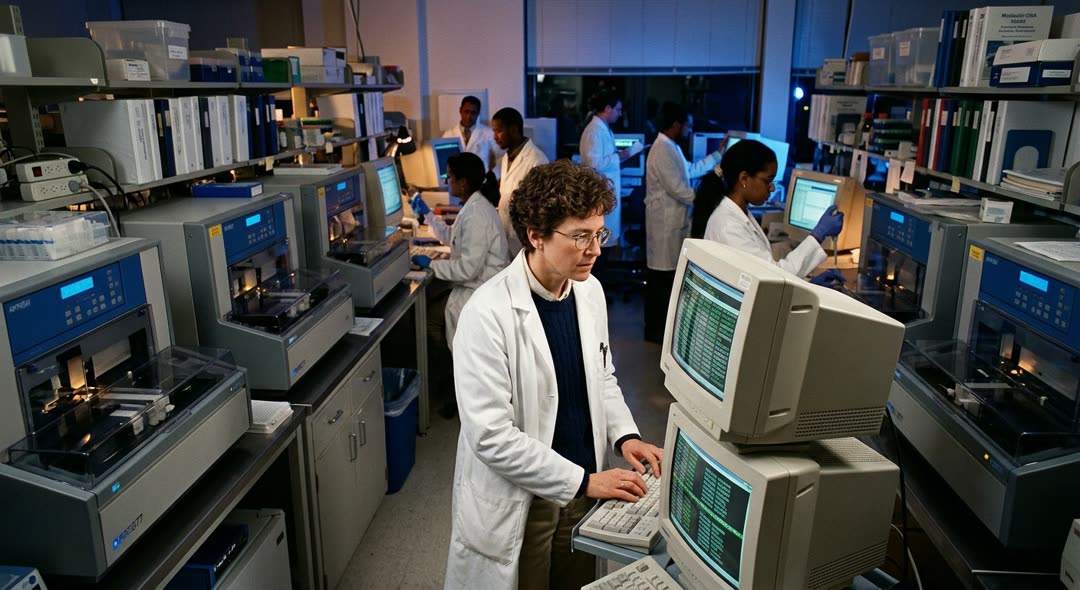
The work had deep roots. Less than fifty years earlier a young Englishman named Francis Crick and a younger American named James Watson had found the elegant structure of the genetic code, and Watson announced it in the journal Nature. Fifteen years before this morning, leaders at the Department of Energy, the National Academy of Sciences, and the National Institutes of Health set the public project in motion, with Charles DeLisi of the Department of Energy and Watson, by then at Cold Spring Harbor, helping to start it and Ari Patrinos of the Department of Energy pushing it forward in the United States. Dr. Francis Collins, the geneticist who had found the cystic fibrosis gene in 1989, took the lead, directing an international team of more than a thousand scientists across six nations for seven years, most of the sequencing done in the final fifteen months once the consortium could read a thousand letters of code each second, around the clock.
The public consortium was not working alone. On September 8, 1999, a private company called Celera Genomics, led by Dr. Craig Venter, began its own run at the human genome from a lab eighteen miles from the White House, using the whole genome shotgun method that essentially the same team had pioneered five years earlier at the Institute for Genomic Research.
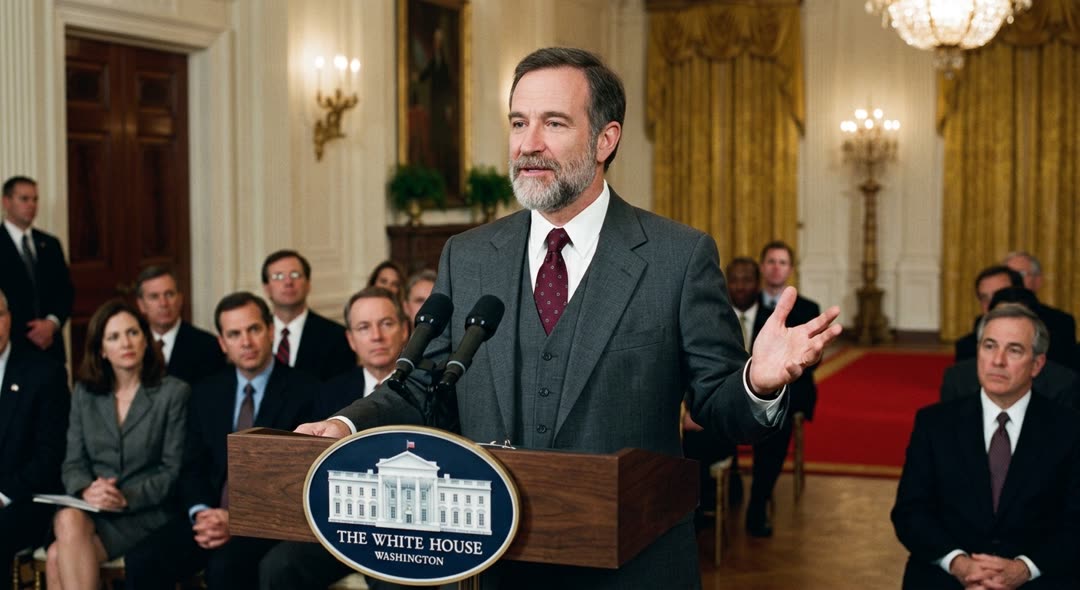
In the East Room, Clinton turned to the man whose discovery had made the morning possible. “Dr. Watson, the way you announced your discovery in the journal ‘Nature,’ was one of the great understatements of all time. This structure has novel features, which are of considerable biological interest,” he said, reading back the sentence that had once described the double helix. Then he reached further back, to Galileo, who had claimed centuries before that he had learned the language in which God created the universe, and offered his own version: “Today, we are learning the language in which God created life.” He noted that in genetic terms all human beings, regardless of race, are more than 99.9 percent the same, and Dr. Francis Collins, the geneticist directing the public consortium, answered the thought directly: “I’m happy that today, the only race we are talking about is the human race.” Collins quoted Alexander Pope, “Know then thyself. Presume not God to scan. The proper study of mankind is man,” and reminded the room that “Today is most certainly not the end of genomics, but perhaps it’s the end of the beginning.”
Dr. Craig Venter, the head of Celera Genomics who had once served in the medical corps in Vietnam thirty-three years earlier, opened by noting he was shorter than the previous two speakers, then placed the day on a longer scale: “Today, June 26, in the year 2000, marks an historic point in the 100,000-year record of humanity.” He added that in the five Celera genomes there is no way to tell one ethnicity from another. The two efforts had arrived from different directions: the international consortium had built a map of overlapping fragments covering 97 percent of the human genome and had sequenced 85 percent of it, while Celera, nine months after starting its own run, had completed a first assembly of the sequence.
Clinton set the next mark before the room dispersed, a goal to finish a virtually error-free final draft of the genome before the fiftieth anniversary of the discovery of the double helix. Later that afternoon, at 12:30, Celera was scheduled to describe its own first assembly of the human genetic code at a joint press conference.
Collins had directed the public consortium toward a code that named the genes behind disease. His sister-in-law, a marionette artist, had died of breast cancer.
The map stayed on the table through the speeches, almost 3 billion letters held flat under the East Room lights. By 12:30 the work would be described again, eighteen miles away, in a company’s own words.
A map lay open across a table in the East Room. Almost two hundred years before, Thomas Jefferson and Meriwether Lewis had spread one out in the same room. Now scientists laid down a different map. It was almost 3 billion letters long.
At 10:19 A.M. on June 26, 2000, President Bill Clinton walked into the East Room of the White House. He announced the completion of the first survey of the entire human genome. Prime Minister Tony Blair joined by satellite from 10 Downing Street. With him stood the Nobel laureates Fred Sanger and Max Perutz. Secretary Richardson was in the East Room, but Secretary Shalala could not attend. For the first time, people could read the chemical letters of their own genetic code.
The work had deep roots. Less than fifty years before, Francis Crick and James Watson found the structure of the genetic code. Watson announced it in the journal Nature. Fifteen years before this morning, leaders started the public project. They came from the Department of Energy, the National Academy of Sciences, and the National Institutes of Health. Charles DeLisi and Watson helped start it. Ari Patrinos pushed it forward in the United States.
Dr. Francis Collins was a geneticist. He had found the cystic fibrosis gene in 1989. He took the lead and directed more than a thousand scientists across six nations for seven years. Most of the work was done in the final fifteen months. By then the team could read a thousand letters of code each second, around the clock.
The public team was not alone. On September 8, 1999, a private company called Celera Genomics began its own run. Its leader was Dr. Craig Venter. The lab stood eighteen miles from the White House. They used the whole genome shotgun method. The same team had pioneered this method five years earlier at the Institute for Genomic Research.
In the East Room, Clinton spoke to Watson. He said the way Watson announced his discovery was one of the great understatements of all time. Long ago, Galileo said he had learned the language God used to make the universe. Then Clinton said that today people were learning the language God used to create life. He noted that all human beings are more than 99.9 percent the same. Collins answered, “the only race we are talking about is the human race.” He also quoted the poet Alexander Pope. He said this day was not the end of genomics, but perhaps the end of the beginning.
Dr. Craig Venter had served in the medical corps in Vietnam thirty-three years earlier. He joked that he was shorter than the two speakers before him. Then he said the day marked a historic point in the 100,000-year record of humanity. He added that the five Celera genomes could not show one ethnicity from another. The international team had built a map covering 97 percent of the genome and had sequenced 85 percent. Celera had finished a first assembly nine months after starting.
Clinton set the next goal. He wanted a nearly error-free final draft before the fiftieth anniversary of the discovery of the double helix. Later that afternoon, at 12:30, Celera would describe its own first assembly at a press conference.
Collins had a reason close to his heart. His sister-in-law was a marionette artist, and she had died of breast cancer.
Words to learn
Sentence patterns
At 10:19 A.M. on June 26, 2000, President Bill Clinton stepped into the East Room of the White House to announce the completion of the first survey of the entire human genome.At 9:00 sharp on the first morning of spring, the gardeners opened the gates to the public park.
Prime Minister Tony Blair joined by satellite from the State Dining Room at 10 Downing Street, flanked by the Nobel laureates Fred Sanger and Max Perutz.The mayor arrived at the ceremony on foot, flanked by two senior aides from the city council.
His sister-in-law, a marionette artist, had died of breast cancer.Her grandfather, a retired train driver, still rises before dawn each morning.
Watson announced it in the journal Nature.The children planted a tree in the garden.
Secretary Richardson was in the East Room, but Secretary Shalala could not attend.I wanted to go outside, but it started to rain.
He added that the five Celera genomes could not show one ethnicity from another.She said that the bus was full.
Discussion questions
- Both Clinton and Venter set the announcement against a long span of time — Clinton recalling Jefferson and Lewis in that same room, Venter naming the “100,000-year record of humanity.” Why might speakers reach for such distant timelines on a day like this, and when have you seen a present-day event framed against a far older past?
- The public consortium and the private company Celera approached the human genome from different directions and arrived at the same announcement. What do you think is gained or lost when public and private teams race toward the same goal, and have you experienced competition that pushed work forward?
- Clinton noted that all human beings are more than 99.9 percent the same, and Collins answered that “the only race we are talking about is the human race.” Why might the scientists have chosen to stress this point at the announcement, and how do you respond to the idea that genetics shows people are nearly identical?
- Clinton said the only race that matters is the human race. Do you think it is important that all people are more than 99.9 percent the same? Why?
- Two teams worked on the human genome at the same time. Do you think it is better to work alone or with other people on a big project? Why?
- Collins worked on the genetic code, and his sister-in-law had died of an illness. Do you think personal reasons help people work hard? Why?