Birthday Pizza on the Twenty-First Floor
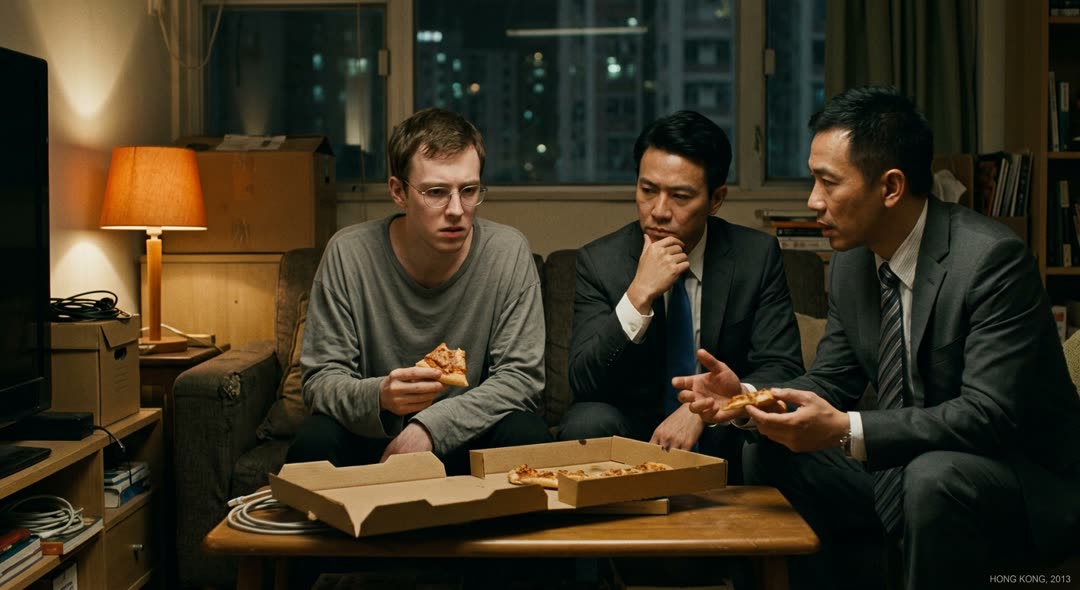
A birthday pizza, shared early, at a private house. Edward Snowden ate it with his lawyers a few days before he turned thirty. He was a former U.S. National Security Agency contractor, and he had gone public in Hong Kong on June 9, 2013 as the source of disclosures about classified surveillance programs.
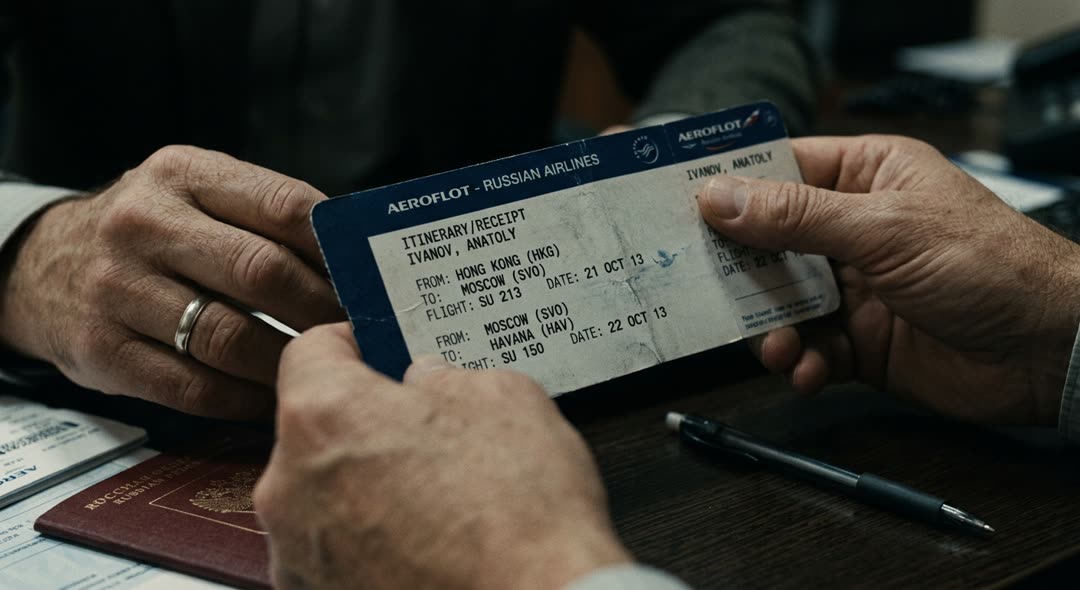
On June 21, his thirtieth birthday, Snowden was on the 21st floor of a skyscraper in a fashionable Hong Kong neighbourhood, inside the Russian Consulate. That same day, U.S. authorities revealed he had been charged with theft of government property and two violations of the Espionage Act. According to Kommersant, he had purchased an Aeroflot ticket to fly from Hong Kong to Havana, through Moscow. He arrived in the transit area of Moscow’s Sheremetyevo International Airport from Hong Kong on June 23.
A WikiLeaks staffer named Sarah Harrison had joined Snowden in Hong Kong and become his adviser. On June 22, the day before he flew, the United States revoked his passport. He left anyway.
Willy Lam, a political analyst at the Chinese University of Hong Kong, said “The decision was basically made in Beijing not to send him to the U.S.” Simon N.M. Young, a law professor at the University of Hong Kong who had been monitoring the case closely, called the departure “a shocker.”
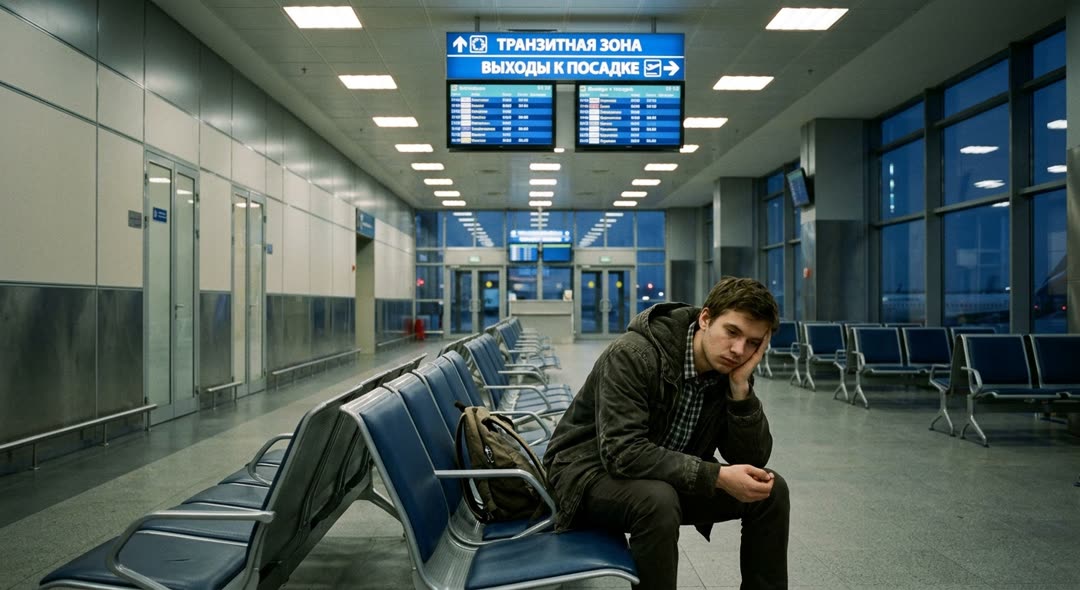
On the morning of June 23, the Chinese government made its final decision to let Snowden leave Hong Kong, a city that holds an extradition treaty with the United States. He boarded an Aeroflot flight, Russia’s national airline, the carrier on which he had bought a Hong Kong–Moscow–Havana ticket. Shortly after the plane cleared Chinese airspace, WikiLeaks released a statement saying it had assisted his political asylum in a democratic country, arranged his travel papers, and secured his safe exit from Hong Kong. He landed in the transit area of Moscow’s Sheremetyevo International Airport, the zone where travelers wait between flights without formally entering Russia.
Havana was supposed to be the next leg. He never made it. Kommersant quoted unnamed Russian officials saying the Cubans, under American pressure, decided to refuse him entry, leaving him stranded inside the transit zone with no Russian visa and no asylum documents, his passport already revoked by Washington the day before he flew.
Behind him, Hong Kong had been arguing over his case. Hundreds of residents marched on the U.S. consulate in support of him, though the two Los Angeles Times accounts disagree on when: one dates the march to June 15, the other to June 22, the day before he left.
He had gone public as the source of disclosures about domestic surveillance, the watcher of ordinary citizens. The House Permanent Select Committee on Intelligence later found that the vast majority of the documents pertained to military, defence, and intelligence operations, not domestic privacy programmes.
He did not board another plane.
Edward Snowden ate a birthday pizza early, at a private house. He shared it with his lawyers a few days before he turned thirty. He was a former U.S. National Security Agency contractor.
On June 9, 2013, he went public in Hong Kong. He was the source of news about secret surveillance programs.
June 21 was his thirtieth birthday. That day he was on the 21st floor of a tall building in Hong Kong, inside the Russian Consulate. The same day, U.S. authorities said he had been charged with theft of government property and two violations of the Espionage Act. According to Kommersant, he had bought an Aeroflot ticket to fly from Hong Kong to Havana, through Moscow.
Sarah Harrison was a WikiLeaks staffer. She joined Snowden in Hong Kong and became his adviser. On June 22, the day before he flew, the United States revoked his passport. He left anyway.
Willy Lam was a political analyst at the Chinese University of Hong Kong. He said, “The decision was basically made in Beijing not to send him to the U.S.” Simon N.M. Young was a law professor at the University of Hong Kong. He had watched the case closely. He called the departure “a shocker.”
On the morning of June 23, the Chinese government made its final decision. They let Snowden leave Hong Kong. Hong Kong holds an extradition treaty with the United States. He boarded an Aeroflot flight. Aeroflot is Russia’s national airline.
Soon after the plane cleared Chinese airspace, WikiLeaks released a statement. It said it had helped his political asylum in a democratic country, arranged his travel papers, and secured his safe exit from Hong Kong.
He landed in the transit area of Moscow’s Sheremetyevo International Airport. Travelers wait there between flights, but they do not formally enter Russia.
Havana was supposed to be the next stop. He never got there. Kommersant quoted unnamed Russian officials. They said the Cubans refused him entry, under American pressure. This left him stuck inside the transit zone. He had no Russian visa and no asylum documents. Washington had already revoked his passport the day before he flew.
Behind him, Hong Kong had been arguing over his case. Hundreds of residents marched on the U.S. consulate to support him. The two Los Angeles Times accounts disagree on the date. One says June 15, and the other says June 22.
He had gone public as the source of news about domestic surveillance. He was the watcher of ordinary citizens. The House Permanent Select Committee on Intelligence looked at the documents later. It found that most of them were about military, defence, and intelligence operations, not domestic privacy programmes.
He did not board another plane.
Words to learn
Sentence patterns
He landed in the transit area of Moscow’s Sheremetyevo International Airport, the zone where travelers wait between flights without formally entering Russia.We finally reached the old harbour, the one place in town that still looked the way it had fifty years ago.
Willy Lam, a political analyst at the Chinese University of Hong Kong, said “The decision was basically made in Beijing not to send him to the U.S.”Dr. Reyes, a marine biologist who had studied the reef for decades, warned that the bleaching was getting worse.
Kommersant quoted unnamed Russian officials saying the Cubans, under American pressure, decided to refuse him entry, leaving him stranded inside the transit zone with no Russian visa and no asylum documents, his passport already revoked by Washington the day before he flew.The factory shut its gates without notice, leaving hundreds of workers searching for new jobs in a single week.
He was a former U.S. National Security Agency contractor.My grandfather was a farmer in a small town.
Soon after the plane cleared Chinese airspace, WikiLeaks released a statement.After the rain stopped, the children went outside to play.
Travelers wait there between flights, but they do not formally enter Russia.I wanted to go to the party, but I was too tired.
Discussion questions
- The story notes that a House committee later found most of the documents pertained to military, defence, and intelligence operations, not domestic privacy programmes, even though Snowden went public over domestic surveillance. How do you weigh that gap, and when, if ever, do you think leaking secret information can be justified?
- After his passport was revoked and Cuba refused him entry, Snowden was left stranded in the transit zone. What does this suggest about how little control one person keeps once several governments are involved, and have you ever had to wait on a decision that others made for you?
- Willy Lam and Simon N.M. Young describe Hong Kong’s decision to let Snowden leave very differently. Whose reading do you find more convincing, and how do you decide whom to trust when informed people disagree?
- Snowden shared news about secret surveillance programs. Do you think people have a right to know what their government does? Why?
- Snowden could not reach Havana, so he was stuck in the airport transit zone. Would you feel afraid in his situation? Why?
- Hundreds of people marched to support Snowden. Do you think it is important to support someone when you believe they are right?