When Geneva Said It Aloud

Dark scoreboards. On the night of March 11, 2020, the NBA suspended its season until further notice, becoming the first major American sports league to shut down because of COVID-19.
That same evening, actor Tom Hanks announced that he and his wife, Rita Wilson, had tested positive for the virus. He had been working in Australia when they both fell ill. A basketball season and one of the most recognizable faces on earth vanished from public life within hours of each other, and neither came with a return date.
Italy had recorded 12,462 cases and 827 deaths by March 11, more than any country outside China, and Premier Giuseppe Conte ordered all shops and businesses except pharmacies and grocery stores to close. Iran followed with 354 deaths, third in the world, and nearly 10,000 cases across the Middle East had been traced to the country or to travelers who passed through it. Iran’s senior vice president, Eshaq Jahangiri, had himself been diagnosed.
In the United States, Washington state led the country with 29 deaths, San Francisco and Washington state had banned large gatherings, and Seattle officials announced school closures that would send roughly 53,000 students home. The outbreak was accelerating. Dr. Anthony Fauci, director of the National Institute of Allergy and Infectious Disease, testified before Congress that same day. “Bottom line, it’s going to get worse.”
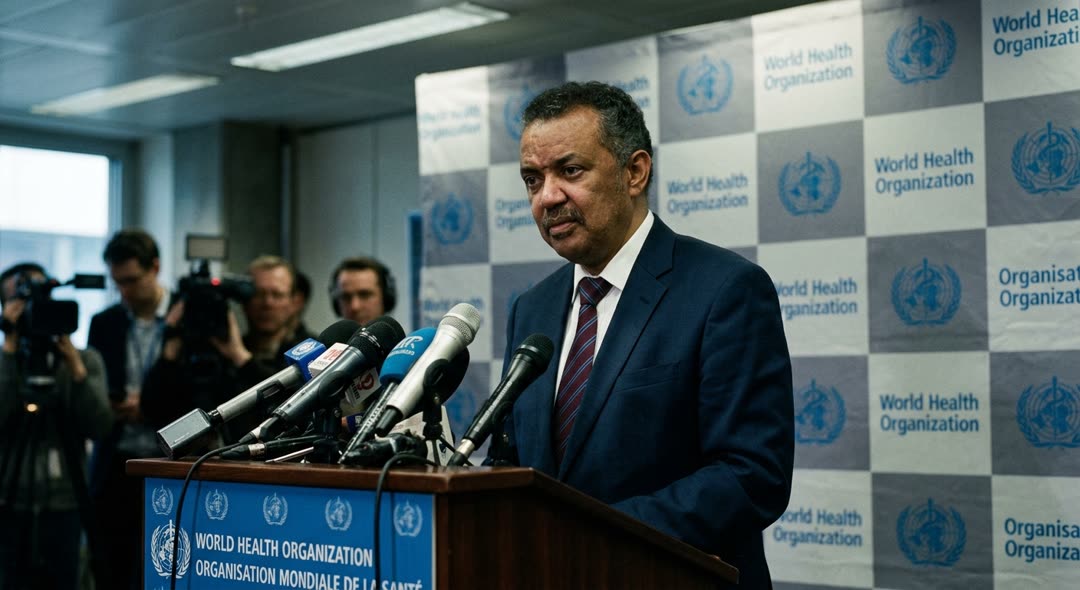
At the World Health Organization’s Geneva headquarters, Director-General Tedros Adhanom Ghebreyesus stepped to the microphone and used a word his organization had been avoiding for weeks. COVID-19, he said, was now a pandemic, a classification the WHO defines as sustained outbreaks occurring in multiple regions of the world simultaneously. More than 126,000 people in 114 countries had been infected, and more than 4,600 were dead. “We are deeply concerned by the alarming levels of spread and severity and by the alarming levels of inaction.” He did not frame the label as a surrender. “All countries can still change the course of this pandemic. If countries detect, test, treat, isolate, trace and mobilize their people in the response.”
The Dow Jones Industrial Average dropped 1,464 points that day, falling twenty percent below the record high it had set the previous month and crossing the line Wall Street calls a bear market, the threshold where a stock index has lost a fifth of its peak value. The NCAA announced that its March Madness tournament would be played to empty arenas. Both Joe Biden and Bernie Sanders canceled their campaign rallies. Italy designated billions in financial relief. Iran reported a single-day jump of sixty-two deaths.
The day after the declaration, China reported just fifteen new cases, a record low. Its total stood at 80,793 patients, three-fourths of whom had already recovered, and 3,169 dead. The country where the virus had started was approaching the far side of its outbreak while the rest of the world was still counting the first wave in.
On March 11, 2020, the NBA stopped its basketball season. COVID-19 was spreading fast, and no one knew when games would start again. It was the first big American sports league to shut down.
That same evening, actor Tom Hanks said that he and his wife, Rita Wilson, had tested positive for the virus. He had been working in Australia when they both got sick. A basketball season and a famous actor disappeared from public life within hours. Neither had a return date.
Italy was hit hard. By March 11, the country had 12,462 cases and 827 deaths. This was more than any country outside China. Premier Giuseppe Conte ordered all shops to close, except pharmacies and grocery stores. Iran had 354 deaths and was third in the world. Nearly 10,000 cases across the Middle East were connected to Iran. Even Iran’s senior vice president, Eshaq Jahangiri, was sick with the virus.
In the United States, Washington state had 29 deaths, the most in the country. San Francisco and Washington state banned large gatherings. Seattle officials closed schools. About 53,000 students had to stay home. Dr. Anthony Fauci spoke to Congress that day. He was the director of the National Institute of Allergy and Infectious Disease. He said, “Bottom line, it’s going to get worse.”
At the World Health Organization’s headquarters in Geneva, Director-General Tedros Adhanom Ghebreyesus used a word his organization had avoided for weeks. He called COVID-19 a pandemic. The WHO uses this word when outbreaks happen in many parts of the world at the same time. More than 126,000 people in 114 countries were infected. More than 4,600 were dead. He said, “We are deeply concerned by the alarming levels of spread and severity and by the alarming levels of inaction.” But he also said countries could still change the course. “If countries detect, test, treat, isolate, trace and mobilize their people in the response.”
The stock market fell hard. The Dow Jones Industrial Average dropped 1,464 points. It was now twenty percent below its record high from the previous month. Wall Street calls this a bear market. The NCAA said its March Madness tournament would be played in empty arenas. Both Joe Biden and Bernie Sanders canceled their campaign rallies. Italy set aside billions for financial relief. Iran reported sixty-two more deaths in a single day.
The day after the declaration, China reported just fifteen new cases. This was a record low. China had 80,793 total patients, and three-fourths had already recovered. The country had 3,169 dead. The place where the virus started was getting past its outbreak. But the rest of the world was still counting the first wave.

Words to learn
Sentence patterns
On the night of March 11, 2020, the NBA suspended its season until further notice, becoming the first major American sports league to shut down because of COVID-19.The factory closed its assembly line in September, becoming the last automaker in the region to halt production.
Its total stood at 80,793 patients, three-fourths of whom had already recovered, and 3,169 dead.The university enrolled 4,200 first-year students, roughly a third of whom had moved from another country.
The country where the virus had started was approaching the far side of its outbreak while the rest of the world was still counting the first wave in.Northern cities were already reopening schools while southern provinces were still under strict lockdown.
Italy had 12,462 cases and 827 deaths. This was more than any country outside China.The school had 200 absent students. This was more than any other school in the city.
He said, “Bottom line, it’s going to get worse.”The doctor said, “You need to rest for two weeks.”
The day after the declaration, China reported just fifteen new cases.The morning after the earthquake, rescue teams found twelve survivors.
Discussion questions
- The WHO waited weeks before calling COVID-19 a pandemic. Why might an international organization hesitate to use a strong label, even when the numbers are rising fast?
- Within a single day, a basketball league, a Hollywood actor, and a government health official all delivered bad news to the public. How do you think hearing these announcements together — rather than one at a time — changed the way people reacted?
- By mid-March, China was recovering while other countries were just entering their first wave. What problems could arise when different parts of the world are at different stages of the same crisis?
- Do you think it was the right decision for the NBA to stop its season? Why or why not?
- How did you feel when you first heard about the pandemic? What changed in your daily life?
- Why do you think the WHO waited weeks before calling COVID-19 a pandemic?