One Room, Three Exits, Everything Revealed
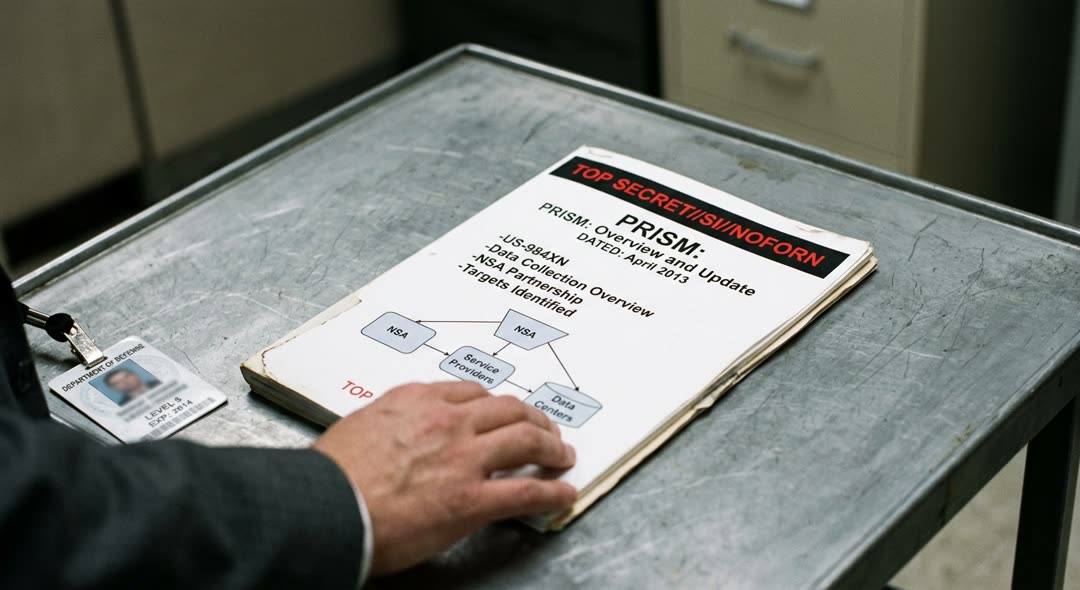
Forty-one slides. A single PowerPoint file, stamped top-secret, its cover dated April 2013, outlining how the National Security Agency pulled data from the servers of America’s largest technology companies. The file had a name: PRISM.
In June 2013, The Guardian published details from that forty-one-slide presentation, verified by the newspaper’s own editorial process, revealing a surveillance apparatus that had operated in silence. The document had been designed to train intelligence operatives on the program’s capabilities. Its existence was never meant to leave the classified briefing rooms where analysts learned how to use it.
Edward Snowden grew up in Elizabeth City, North Carolina, before his family relocated to Maryland, close to the NSA headquarters at Fort Meade. After breaking both legs during Army training, he took a job as a security guard at an NSA facility at the University of Maryland, then moved into IT security work for the CIA. By 2007, the agency had stationed him with diplomatic cover in Geneva, Switzerland. He left the CIA in 2009 and shifted to a private contractor role at an NSA facility on a military base in Japan.
He was one of approximately 850,000 Americans who held top-secret clearance. In March 2013, Director of National Intelligence James Clapper told a Senate intelligence committee hearing that the NSA does not collect data on millions of Americans. The infrastructure Snowden had spent years inside was, by then, already collecting it.
On May 20, 2013, a twenty-nine-year-old employee of the defense contractor Booz Allen Hamilton, a former technical assistant for the CIA who had never finished his computing coursework at a community college in Maryland, boarded a flight to Hong Kong. Edward Snowden checked into a hotel and barely left. He lined the door with pillows to block eavesdropping, and every time he typed a password he pulled a large red hood over his head and laptop to defeat hidden cameras he feared were watching from the ceiling. He left the room a total of approximately three times during his entire stay. He earned roughly $200,000 a year and had shared a home in Hawaii with his girlfriend. He had given all of it up to sit in that room, waiting for the stories to publish.
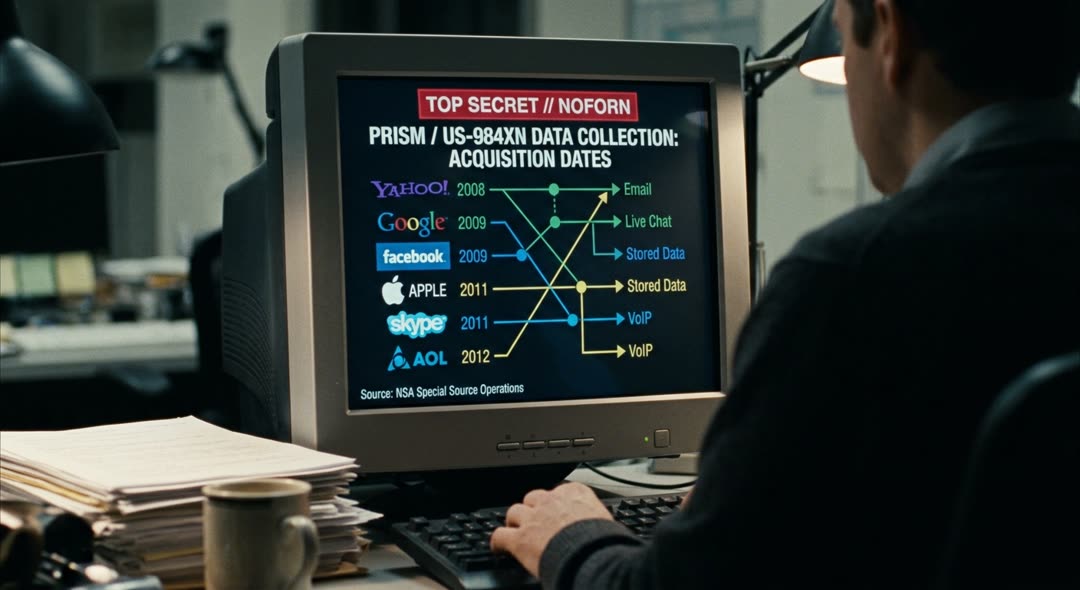
On June 5, 2013, The Guardian published a top-secret court order compelling Verizon to turn over telephone records of millions of American customers, issued under the “business records” provision of the Patriot Act. The next day, the newspaper revealed PRISM: a program authorized under Section 702 of the FISA Amendments Act, enacted in 2008, which empowered the NSA to compel technology companies to turn over information about their users without individual warrants. The slides showed when each company had joined: Yahoo in 2008, Google, Facebook, and PalTalk in 2009, YouTube in 2010, Skype and AOL in 2011, Apple in 2012. More than 77,000 intelligence reports had cited the program, with over 2,000 PRISM-based reports issued every month. On June 9, The Guardian revealed Snowden’s identity, at his own request, transforming an anonymous document leak into a named act by a single person against the infrastructure he had spent years inside.
In the same month Clapper testified, the NSA’s own internal accounting tool, a program called Boundless Informant, recorded 97 billion pieces of intelligence collected from computer networks worldwide. Almost three billion of them came from inside the United States.
In April 2013, someone inside the United States intelligence system took a secret file. It was a PowerPoint presentation with forty-one slides. The file explained a program called PRISM. It showed how the National Security Agency collected data from America’s biggest technology companies. The presentation was marked top-secret. It was made to train intelligence workers. No one outside the agency was supposed to see it.
Edward Snowden grew up in Elizabeth City, North Carolina. His family later moved to Maryland, near the NSA headquarters at Fort Meade. He joined the Army but broke both legs during training. After that, he took a job as a security guard at an NSA building at the University of Maryland. He then moved into IT security work for the CIA. By 2007, the CIA sent him to Geneva, Switzerland. He left the CIA in 2009 and started working for a private company at an NSA building in Japan.
Snowden was one of about 850,000 Americans who had top-secret clearance. In March 2013, Director of National Intelligence James Clapper told a Senate hearing that the NSA does not collect data on millions of Americans. But the system Snowden worked inside was already doing exactly that.
On May 20, 2013, Snowden boarded a flight to Hong Kong. He was twenty-nine years old. He worked for Booz Allen Hamilton, a defense company. He had never finished his computing studies at a community college in Maryland. He checked into a hotel and almost never left. He put pillows against the door to block listening devices. When he typed a password, he pulled a large red hood over his head and laptop. He was afraid hidden cameras were watching from the ceiling. He left the room about three times during his whole stay. He earned about $200,000 a year and had shared a home in Hawaii with his girlfriend. He gave up all of it to sit in that room and wait.
On June 5, 2013, The Guardian newspaper published a secret court order. It forced the phone company Verizon to give the government phone records of millions of American customers. The next day, The Guardian revealed PRISM. The program was allowed under Section 702 of the FISA Amendments Act from 2008. It gave the NSA the power to force technology companies to share information about their users without individual court orders. Several major companies had joined the program, including Yahoo in 2008 and Apple in 2012. More than 77,000 intelligence reports had used information from PRISM. Over 2,000 PRISM-based reports were sent every month.
On June 9, The Guardian revealed Snowden’s name. He asked the newspaper to identify him. This changed the story from an anonymous leak into a public act by one person against the system he had worked inside for years.
In the same month that Clapper spoke to the Senate, the NSA had a tool called Boundless Informant. It recorded 97 billion pieces of intelligence from computer networks around the world. Almost three billion of them came from inside the United States.

Words to learn
Sentence patterns
On May 20, 2013, a twenty-nine-year-old employee of the defense contractor Booz Allen Hamilton, a former technical assistant for the CIA who had never finished his computing coursework at a community college in Maryland, boarded a flight to Hong Kong.The lead engineer at the plant, a thirty-year veteran who had personally designed the original cooling system in the 1990s, noticed the pressure reading first.
On June 9, The Guardian revealed Snowden’s identity, at his own request, transforming an anonymous document leak into a named act by a single person against the infrastructure he had spent years inside.The court released the full report on Monday morning, confirming what investigators had suspected for over a year.
The next day, the newspaper revealed PRISM: a program authorized under Section 702 of the FISA Amendments Act, enacted in 2008, which empowered the NSA to compel technology companies to turn over information about their users without individual warrants.The investigators had a single lead: a partial licence plate number recorded by a petrol station camera three blocks from the scene.
When he typed a password, he pulled a large red hood over his head and laptop.When the storm hit the coast, the government closed all the schools.
It forced the phone company Verizon to give the government phone records of millions of American customers.The police asked the driver to stop the car at the side of the road.
Snowden was one of about 850,000 Americans who had top-secret clearance.She was one of twelve students who finished the course early.
Discussion questions
- Snowden gave up a $200,000 salary and his life in Hawaii to leak classified documents. When, if ever, do you think a person is justified in breaking the law to reveal information the public does not know about?
- The story mentions that James Clapper told Congress the NSA does not collect data on millions of Americans, while the agency’s own tools recorded billions of pieces of intelligence from inside the United States. How should governments balance national security programs with honest communication to the public?
- Snowden chose to reveal his identity rather than remain anonymous. What are the advantages and risks of putting your name behind an act of public disclosure, compared with staying hidden?
- Snowden gave up his job, his home, and his girlfriend to share secret information with the public. Do you think he did the right thing? Why or why not?
- James Clapper told the Senate that the NSA does not collect data on millions of Americans, but the NSA was already doing it. Why do you think governments sometimes keep secrets from their own people?
- Would you give up a comfortable life to tell the public something important? What would you need to believe before making that choice?