Silent Wreckage in the Strait
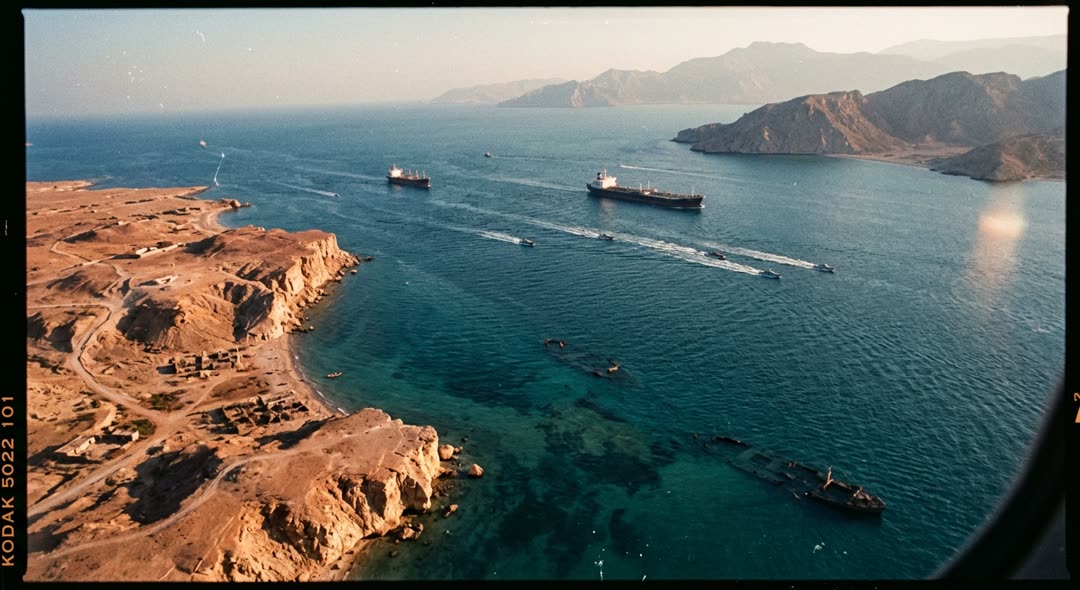
The waters of the Strait of Hormuz carry a third of the world’s oil. On a Sunday morning in the summer of 1988, those same waters swallowed the wreckage of a civilian airliner near the island of Qeshm.
Iran Air Flight 655, an Airbus A300, left Bandar Abbas on July 3, 1988, climbing over the Persian Gulf on a routine corridor. Below it, the USS Vincennes, an Aegis guided-missile cruiser carrying the Navy’s most advanced target-detection radar and weapons, was engaged in a surface fight after three Iranian gunboats had fired on a U.S. helicopter. The cruiser’s crew tracked the ascending contact. They received no electronic signal identifying it as a civilian plane, and Captain William C. Rogers, the ship’s commanding officer, ordered two missiles fired.
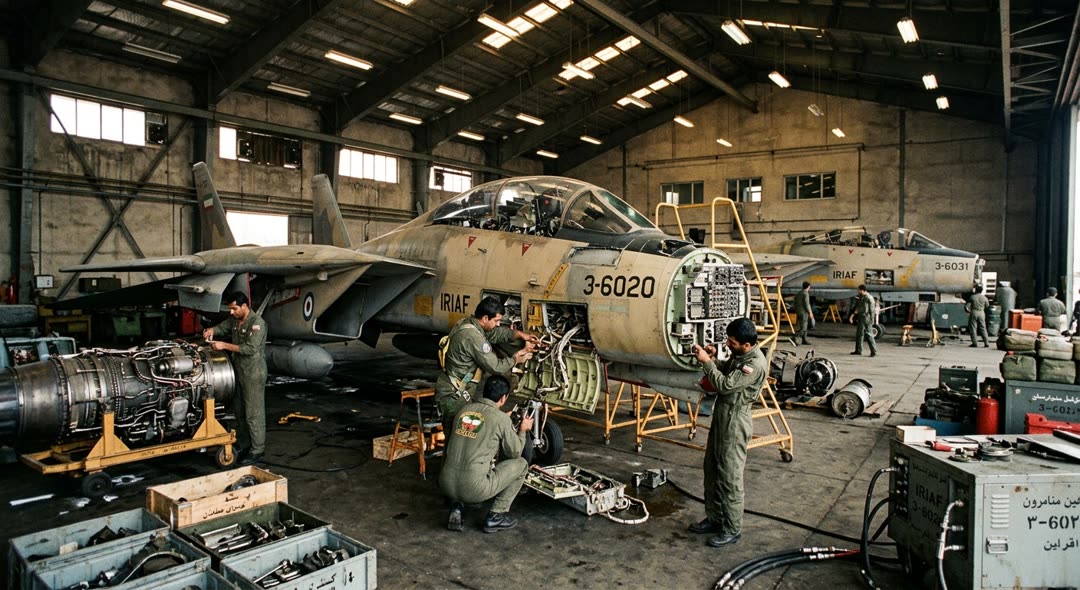
The roots of that Sunday morning ran back more than three decades. In 1953, a CIA-backed coup toppled Iran’s elected prime minister and secured Shah Mohammad Reza Pahlavi’s absolute power. The Shah became Washington’s foremost ally in the Gulf, and in the mid-1970s the United States sold Iran seventy to eighty F-14 fighter jets, training Iranian pilots, weapons officers, and maintenance specialists on American soil. After the 1979 revolution, Iran lost access to spare parts and kept roughly fifteen of those planes flying by cannibalizing grounded aircraft, using them mostly as long-range radar platforms to guide other jets against Iraq. Tensions sharpened fast. The frigate USS Samuel B. Roberts struck a mine in the shipping lanes the Navy was trying to keep open for Kuwaiti tankers, Washington accused Iran of laying it, and on April 18, 1988, the U.S. Navy conducted Operation Praying Mantis, a daylong battle against Iranian forces in the Gulf. In the weeks that followed, General George B. Crist, the Marine Corps general commanding U.S. Central Command, told reporters the military had seen its first deployment of Iranian F-14s into Bandar Abbas, the same airfield Flight 655 would leave ten weeks later.
Flight 655 lifted off from Bandar Abbas twenty-seven minutes behind schedule, bound for Dubai on a corridor Iran Air had flown twice a week for more than twenty years. The airport was a joint military-civilian base, and the surface engagement had already pulled the Vincennes across the line into Iranian territorial waters.
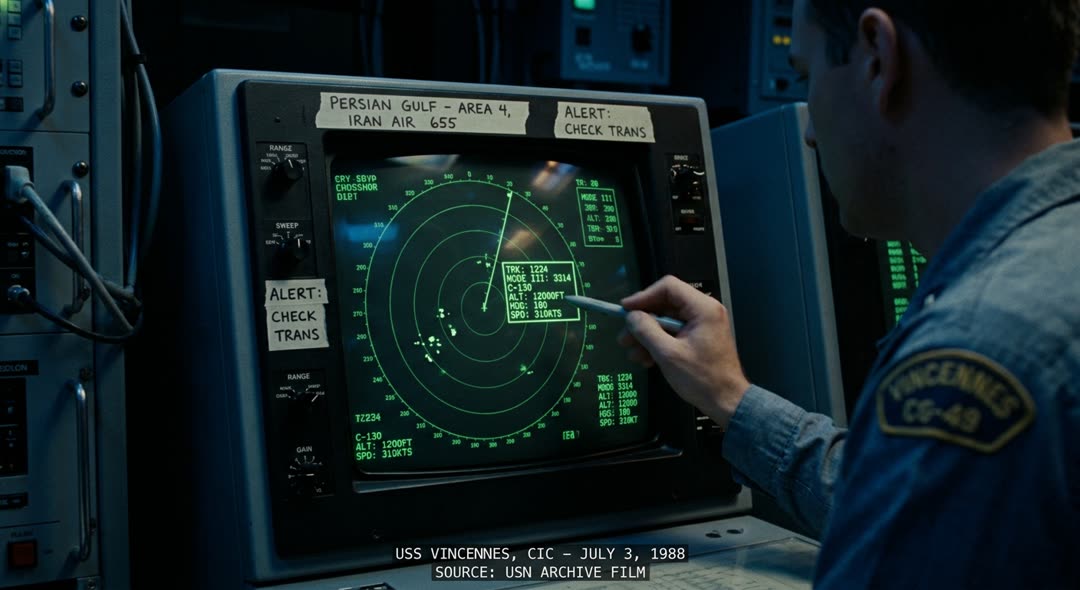
Inside the ship’s Combat Information Center, the sealed compartment from which the captain directs combat operations, Rogers and his crew tracked the climbing contact. Over five minutes the Vincennes and a second warship, the USS Sides, broadcast eleven radio warnings on different frequencies, but seven went out on a military channel the airliner’s cockpit could not receive. Only one, transmitted by the Sides thirty-nine seconds before the Vincennes fired, was clearly directed at the flight. Every console monitoring the aircraft displayed a Mode III transponder squawk, the identification code carried by civilian planes; not one showed a Mode II military signal. Numerous crewmen would later recall seeing a Mode II reading that the ship’s own Aegis data tapes showed never appeared. The tapes recorded Flight 655 at 12,000 feet, ascending, traveling at 380 knots; one crewman recalled the contact at 7,800 feet, descending, at 445 knots.
Rogers requested permission to engage at twenty nautical miles but held fire until approximately nine, then ordered two Standard surface-to-air missiles launched. All 290 people aboard, sixty-six of them infants and children, were killed.
The captain of Flight 655 had spoken his last recorded words to air traffic control shortly after takeoff: “Thank you, good day.” The aircraft’s black box flight recorders were never recovered.
The Strait of Hormuz carries a third of the world’s oil. On Sunday, July 3, 1988, a civilian plane crashed into these waters near the island of Qeshm.
Iran Air Flight 655, an Airbus A300, left Bandar Abbas that morning. It was twenty-seven minutes late. The plane was climbing over the Persian Gulf on its way to Dubai. Iran Air had flown this route twice a week for more than twenty years.
Bandar Abbas airport was used by both the military and civilians. Below the plane, the USS Vincennes was fighting on the surface. Three Iranian gunboats had fired on a U.S. helicopter. The battle had pulled the Vincennes across the line into Iranian territorial waters.
The trouble between the two countries went back many years. In 1953, a CIA-backed coup removed Iran’s elected prime minister. This brought Shah Mohammad Reza Pahlavi to full power. The Shah became Washington’s closest ally in the Gulf. In the mid-1970s, the United States sold Iran seventy to eighty F-14 fighter jets. After the 1979 revolution, Iran lost access to spare parts. They kept about fifteen planes flying by taking parts from grounded aircraft.
Tensions grew quickly. The frigate USS Samuel B. Roberts hit a mine in the shipping lanes. Washington said Iran had placed it. On April 18, 1988, the U.S. Navy fought Operation Praying Mantis against Iranian forces in the Gulf. After that, General George B. Crist told reporters the military had seen Iranian F-14s at Bandar Abbas for the first time.
Inside the ship’s Combat Information Center, Captain William C. Rogers and his crew tracked the climbing plane. Over five minutes, the Vincennes and a second warship, the USS Sides, sent eleven radio warnings. But seven went out on a military channel. The plane’s cockpit could not receive those signals. Only one warning was clearly sent to the flight. The USS Sides sent it thirty-nine seconds before the Vincennes fired.
Every screen on the ship showed the plane’s civilian identification code. No screen showed a military signal. But many crew members later said they remembered seeing a military signal. The ship’s own recorded data showed this signal never appeared. The data showed Flight 655 at 12,000 feet, going up, at 380 knots. One crew member remembered the plane at 7,800 feet, going down, at 445 knots.
Rogers asked for permission to fire at twenty nautical miles. He held fire until about nine miles. Then he ordered two Standard surface-to-air missiles launched. All 290 people on the plane were killed. Sixty-six of them were infants and children.
The captain of Flight 655 had said his last recorded words to air traffic control after takeoff: “Thank you, good day.” The black box flight recorders were never found.
Words to learn
Sentence patterns
Iran Air Flight 655, an Airbus A300, left Bandar Abbas on July 3, 1988, climbing over the Persian Gulf on a routine corridor.The Titan submersible, a five-person deep-sea vessel built from carbon fiber and titanium, lost contact with its support ship on June 18, 2023, roughly one hour and forty-five minutes into its dive.
Rogers requested permission to engage at twenty nautical miles but held fire until approximately nine, then ordered two Standard surface-to-air missiles launched.The pilot reported engine failure at six thousand feet but maintained altitude until she cleared the city, then set the plane down in a harvested wheat field.
The waters of the Strait of Hormuz carry a third of the world’s oil.The auditorium that hosted the town’s weekly film screenings became the emergency shelter where families waited for news after the flood.
Rogers asked for permission to fire at twenty nautical miles.The captain asked for help from the nearest airport.
After the 1979 revolution, Iran lost access to spare parts.After the earthquake, the city closed all the bridges.
Three Iranian gunboats had fired on a U.S. helicopter.The storm had already passed when the rescue team arrived.
Discussion questions
- Several crewmen recalled seeing radar readings — a descending altitude, a military signal — that the ship’s own recorded data showed never appeared. What might cause trained professionals to remember details differently from what instruments actually recorded, and what safeguards could reduce this kind of error?
- The story traces a chain from a 1953 coup through arms sales, a revolution, a mine strike, and a naval battle before reaching the morning of July 3, 1988. When examining a single event, how far back is it useful to look for causes — and at what point does the chain become too long to assign responsibility?
- Of the eleven radio warnings sent before the missiles were fired, most went out on channels the airliner’s cockpit could not receive. What does this suggest about the gap between following procedures and actually communicating, and can you think of situations outside the military where the same gap exists?
- Do you think Captain Rogers had enough information to make a good decision? Why or why not?
- Why do you think many crew members remembered seeing a military signal when the recorded data showed it never appeared?
- The trouble between the U.S. and Iran went back many years before this event. Do you think that history made this mistake more likely?