Two Spoonfuls of Tuna Every Two Days
Red paint on paper, pressed against a drill bit half a mile underground.
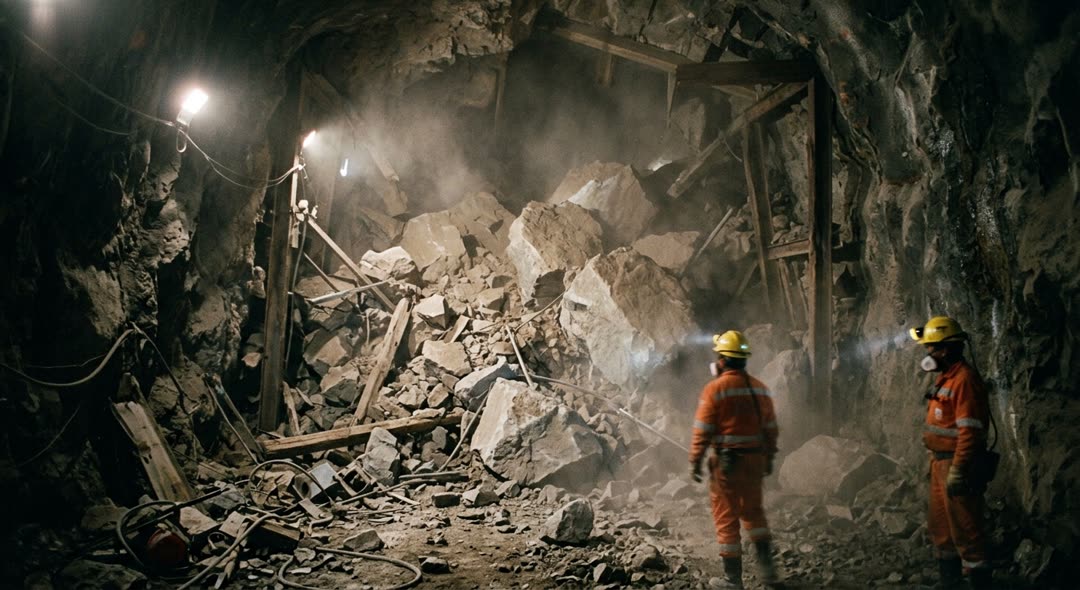
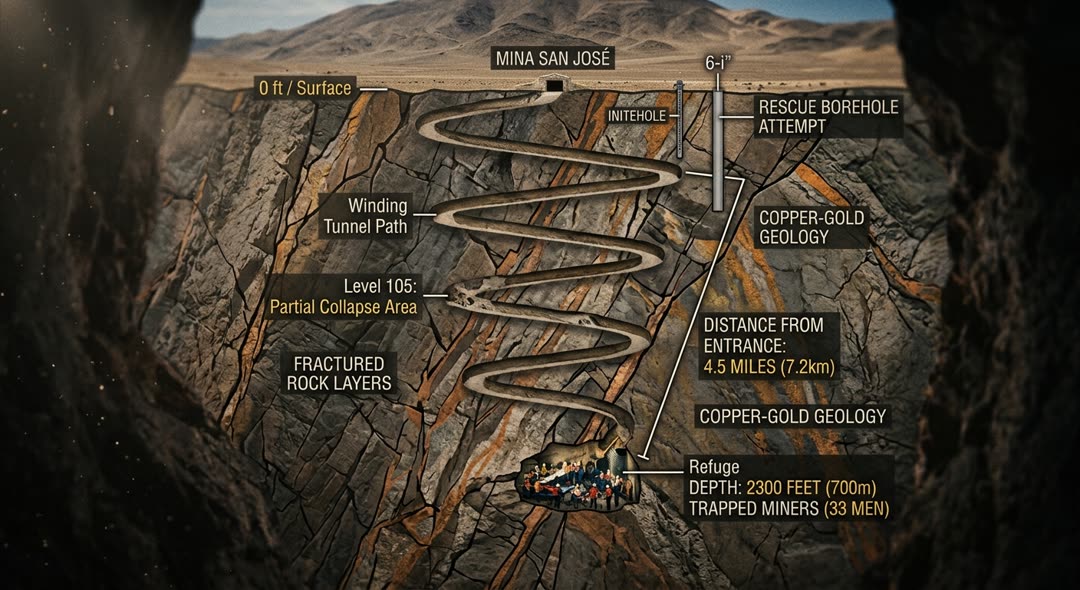
The San José gold and copper mine sat outside Copiapó, a northern Chilean city roughly 500 miles from Santiago. On August 5, 2010, its tunnels collapsed and trapped 33 miners below. Luis Urzúa, the shift supervisor, scouted the ventilation shaft for an escape route and found the ladder missing. The men gathered in an underground refuge that measured 540 square feet, furnished with two long wooden benches, where a thermometer read 29.5 degrees Celsius.
The mine belonged to Compañía Minera San Esteban Primera, a local private company. Regulators had shut it down in 2007 after an accident, and Chile’s national mining authority, Sernageomin, allowed it to reopen the following year. Sixteen workers had been killed there in the years before the collapse. The 33 men now sat 2,300 feet below the surface and roughly 4.5 miles from the entrance along the winding tunnel, sealed behind hundreds of thousands of tons of fractured rock.
André Sougarret, a mine manager on loan from state-run copper giant Codelco’s El Teniente operation, took charge of the rescue drilling. He estimated at least 120 days to bore an escape shaft 66 centimetres wide and 2,300 feet deep, wide enough to lower a capsule on a pulley and pull the miners out one at a time. The math was plain: four months of living underground, minimum.
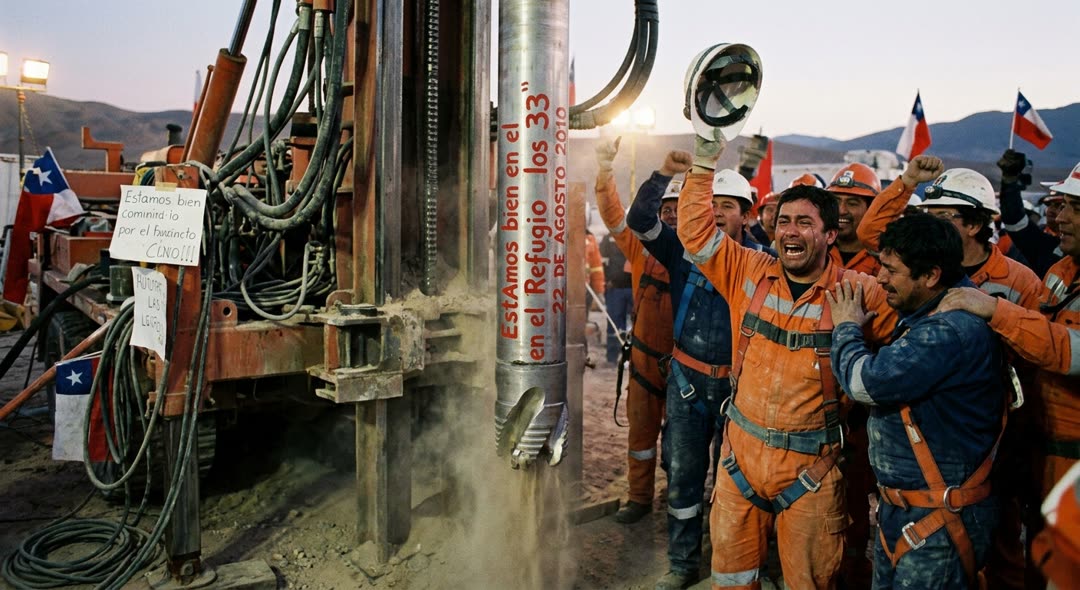
For seventeen days, no one on the surface knew whether the 33 men were alive. Underground, they rationed emergency provisions designed for two or three days: two mouthfuls of tuna and half a glass of milk every 48 hours, each miner losing an estimated 17.5 to 20 pounds. Starting August 8, rescue workers drilled bore-holes five inches in diameter, narrow exploratory shafts punched straight down from the surface to probe for signs of life. On August 22, one drill reached 2,260 feet and workers heard tapping on the bit; the miners had tied a note to it, written in red paint: “The 33 of us in the shelter are well.”
Supplies began moving down through palomas, narrow plastic tubes threaded through the bore-holes to deliver food, hydration gels, medicine, and communication equipment. On August 31, a four-person NASA team arrived in Santiago, including Dr. Michael Duncan, deputy chief medical officer at NASA’s Space Life Sciences Directorate, psychologist Al Holland, and engineer Clint Cragg, to advise on the physical and psychological toll of prolonged confinement underground. Sougarret warned Urzúa by phone that drilling the escape shaft could send approximately 70,000 litres of water cascading into the miners’ chamber. On October 13, sixty-nine days after the collapse, all 33 miners were pulled to the surface through that shaft, each strapped into a specially designed capsule for a ride of 15 to 20 minutes, the full extraction taking about 22 hours.
The San José mine was a gold and copper mine near Copiapó in northern Chile. It was about 500 miles from Santiago. On August 5, 2010, the tunnels collapsed. Thirty-three miners were trapped underground.
Luis Urzúa was the shift supervisor. He checked the ventilation shaft for a way out. The ladder was missing. The men gathered in a small underground refuge. It measured 540 square feet and had two long wooden benches. The temperature was 29.5 degrees Celsius.
The mine belonged to Compañía Minera San Esteban Primera, a private company. Chile’s mining authority, Sernageomin, had shut it down in 2007 after an accident. It reopened the next year. Sixteen workers had died there before the collapse. Now the 33 men sat 2,300 feet below the surface. They were about 4.5 miles from the entrance along the winding tunnel.
André Sougarret led the rescue. He was a mine manager from Codelco’s El Teniente operation, a state-run copper company. He planned to drill an escape shaft 66 centimetres wide and 2,300 feet deep. A capsule on a pulley would carry the miners out one at a time. He estimated this would take at least 120 days.
For seventeen days, no one on the surface knew if the men were alive. Underground, the miners rationed emergency food meant for two or three days. Each man ate two mouthfuls of tuna and drank half a glass of milk every 48 hours. Each miner lost about 17.5 to 20 pounds.
On August 8, rescue workers began drilling narrow bore-holes. These were five inches wide. They were meant to find signs of life. On August 22, one drill reached the miners. Workers heard tapping on the drill bit. The miners had tied a note to it. The note said: “The 33 of us in the shelter are well.”
After that, supplies moved down through palomas. These were narrow plastic tubes that fit through the bore-holes. They carried food, hydration gels, medicine, and communication equipment.
On August 31, a four-person NASA team arrived in Santiago. The team included Dr. Michael Duncan, deputy chief medical officer at NASA’s Space Life Sciences Directorate. It also included psychologist Al Holland and engineer Clint Cragg. They gave advice on the physical and mental effects of long confinement underground.
Sougarret warned Urzúa by phone that drilling the escape shaft could send about 70,000 litres of water into the miners’ area. The machine built to save them could also flood them.
On October 13, sixty-nine days after the collapse, all 33 miners came to the surface. Each man rode up in a specially designed capsule. The ride took 15 to 20 minutes per person. The full rescue took about 22 hours.
Words to learn
Sentence patterns
The San José gold and copper mine sat outside Copiapó, a northern Chilean city roughly 500 miles from Santiago.The research station operated near Tromsø, a Norwegian port town 200 miles inside the Arctic Circle.
For seventeen days, no one on the surface knew whether the 33 men were alive.For six hours, air traffic controllers received no signal from the aircraft.
On October 13, sixty-nine days after the collapse, all 33 miners were pulled to the surface through that shaft, each strapped into a specially designed capsule for a ride of 15 to 20 minutes, the full extraction taking about 22 hours.The ferry unloaded 340 passengers onto the dock, each carrying only what they could hold in both hands.
For seventeen days, no one on the surface knew if the men were alive.For six hours, the passengers waited at the airport for news.
Sougarret warned Urzúa by phone that drilling the escape shaft could send about 70,000 litres of water into the miners’ area.The doctor warned the town that the river could flood after the heavy rain.
André Sougarret led the rescue.The captain stopped the ship before it hit the rocks.
Discussion questions
- The mine had been shut down after an accident and then reopened. What responsibility do you think regulators carry when a workplace they approve later causes harm, and how should that affect decisions to reopen?
- NASA sent a team to advise on prolonged confinement — a space agency helping underground miners. Can you think of other situations where expertise from one field could be applied to a completely different crisis?
- The miners had to sit directly beneath the drill that might flood their chamber with water. If you had to trust a process that could either save you or kill you, what would you need to hear from the people running it?
- The miners had very little food for seventeen days. How do you think they stayed calm and worked together during that time?
- Do you think the mine should have been reopened after it was shut down in 2007? Why or why not?
- If you were trapped underground for sixty-nine days, what would be the hardest part for you?