Six Hundred Holes, One Daring Flight
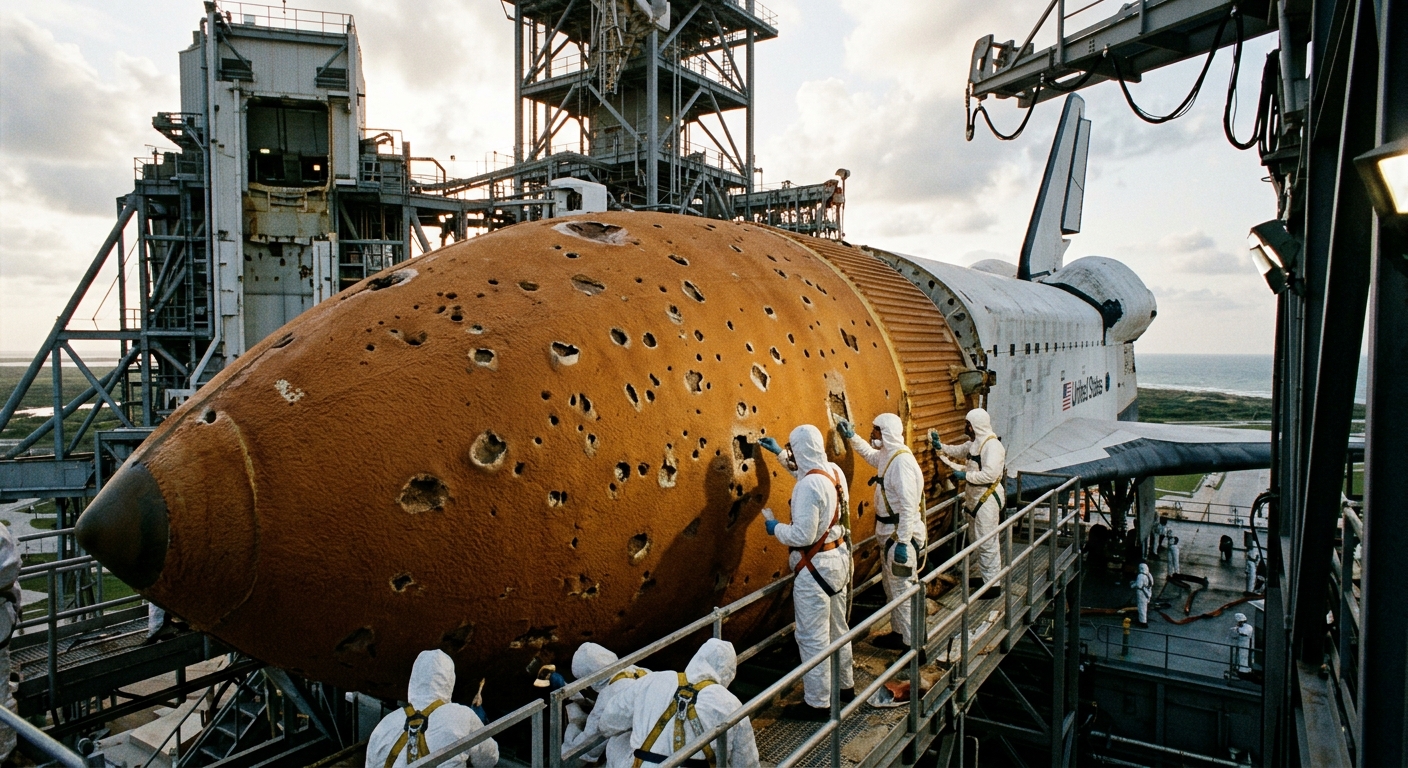
Orange foam, pocked with hailstone craters. On May 8, 1999, a storm crossed Launch Pad 39B at Kennedy Space Center and punched more than 650 divots into the insulation wrapping Discovery’s external tank. Workers spent four days hunched over the skin, patching 460 of the worst wounds before anyone would talk about a countdown again.
When the clock finally ran on May 27, the only concern launch managers logged was a sailboat that had drifted into the solid rocket booster recovery zone. Discovery climbed toward an International Space Station that barely existed: two modules, the Russian-built Zarya and the American Node 1, Unity, bolted together five months earlier and never yet occupied by a crew. Commander Kent Rominger docked the orbiter at Pressurized Mating Adapter 2 on the forward end of Unity. The station, at that point, weighed less than a mid-size commercial airliner.
Seven people rode that column of fire. Kent Rominger commanded from the flight deck. His pilot was Rick Husband. Behind them sat mission specialists Tamara Jernigan, Ellen Ochoa, and Daniel Barry, alongside Julie Payette of the Canadian Space Agency and Valeri Tokarev representing Roscosmos.
The mission, designated assembly flight 2A.1, was only the second shuttle visit to the station and the first tasked with resupply and interior outfitting. No crew had yet entered the joined structure. Tokarev and Jernigan would be the first through the hatch, stepping into modules where five months of uncrewed silence waited on the other side of the seal.
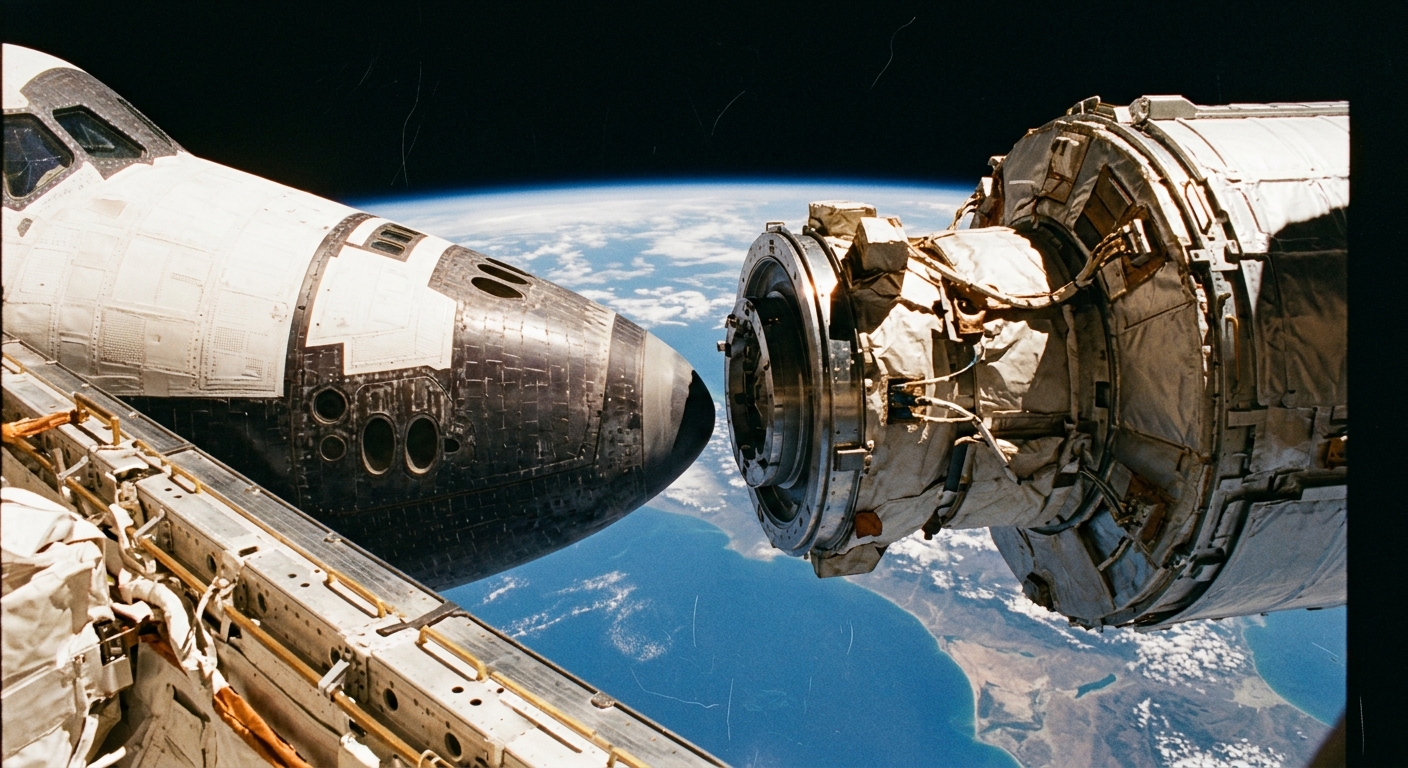
Two days after liftoff, Discovery closed on the station 173 nautical miles above the Earth. Rominger threaded the orbiter’s docking ring toward PMA-2 and the two spacecraft locked together as they crossed the Russian-Kazakh border. Once the hatches opened, the crew logged 79 hours and 30 minutes inside the linked modules across a docked stay of 5 days, 18 hours, and 17 minutes, ferrying 84 gallons of water (a byproduct of the shuttle’s hydrogen fuel cells) into tanks set aside for the station’s first permanent residents.
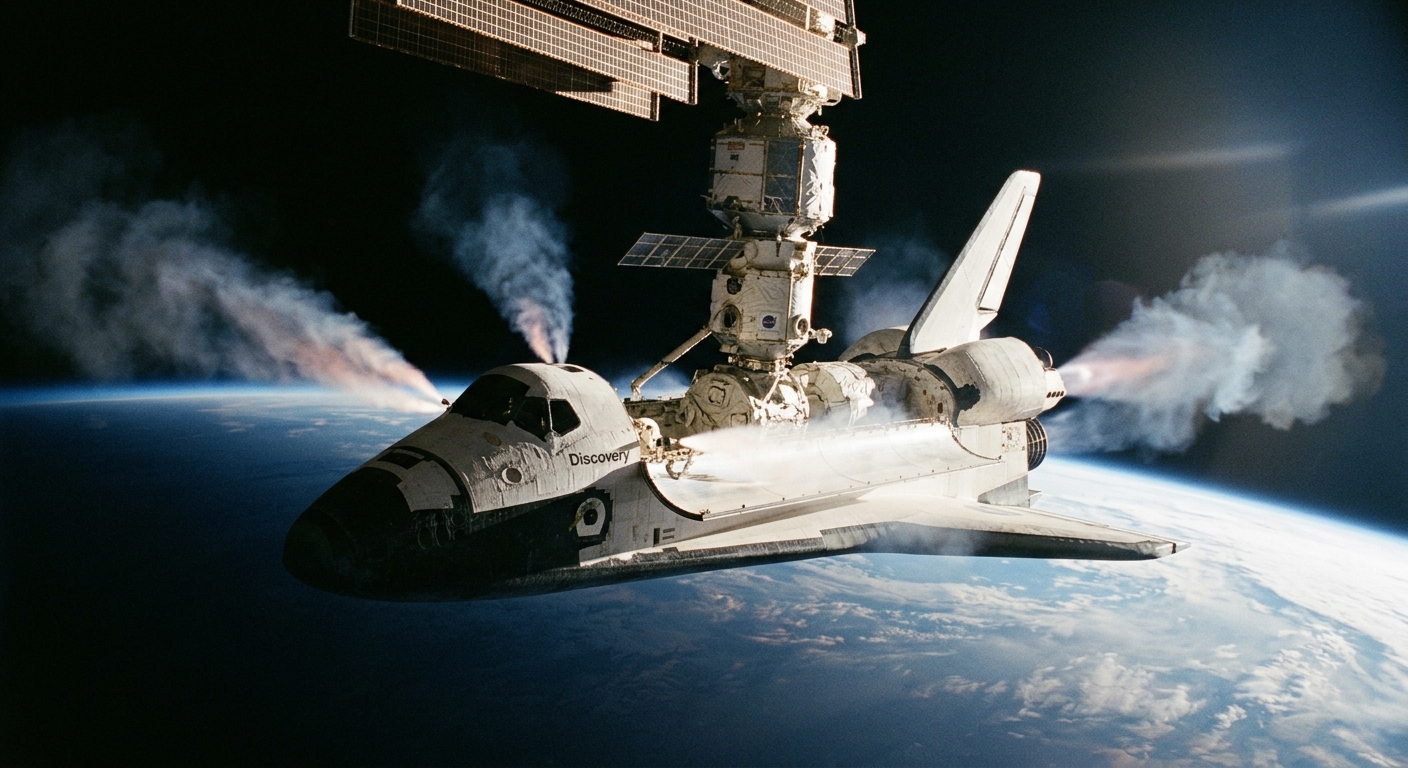
Before the mission’s single spacewalk, controllers lowered cabin pressure from its normal 14.7 psi to 10.2 psi to bleed dissolved nitrogen from the crew’s blood. Jernigan and Barry worked 7 hours and 55 minutes in vacuum, bolting two cranes to the station exterior: an Orbital Replacement Unit Transfer Device, an American-built rail arm designed to slide heavy equipment along the hull during future assembly flights, and components of Strela, a Russian telescoping boom for moving crew and cargo across the station’s Russian segment. Back inside, the rest of the crew stowed clothing, sleeping bags, spare parts, and medical gear hauled up in a Spacehab double module, a commercial pressurized cargo container riding in Discovery’s payload bay. Before undocking, Rominger and Husband pulsed Discovery’s reaction control system, a network of small thruster jets used for fine orbital adjustments, 17 times, nudging the station’s orbit six miles higher.
Discovery glided onto Runway 15 at Kennedy Space Center on June 6. The station drifted unoccupied for another seventeen months before Expedition 1 moved in. Rick Husband flew his next mission as commander of Columbia.
On May 8, 1999, a storm hit Launch Pad 39B at Kennedy Space Center. Hailstones made more than 650 holes in the foam covering Discovery’s external tank. Workers spent four days fixing 460 of the worst holes before anyone would talk about a launch date again.
Discovery finally launched on May 27. The only problem was a sailboat in the rocket booster recovery area. The shuttle flew toward the International Space Station. The station was very small at that time. It had only two modules. One was Zarya, built by Russia. The other was Unity, also called Node 1, built by America. They were joined together five months earlier. No crew had ever lived inside. The station weighed less than a medium-sized airplane.
Seven people were on Discovery. Kent Rominger was the commander. Rick Husband was the pilot. The mission specialists were Tamara Jernigan, Ellen Ochoa, and Daniel Barry. Julie Payette came from the Canadian Space Agency. Valeri Tokarev came from Roscosmos, the Russian space agency.
The mission was called assembly flight 2A.1. It was only the second shuttle visit to the station. It was the first visit for bringing supplies and setting up the inside.
Two days after launch, Discovery reached the station 173 nautical miles above the Earth. Rominger guided the shuttle’s docking ring toward Pressurized Mating Adapter 2. The two spacecraft locked together over the Russian-Kazakh border. Tokarev and Jernigan were the first to open the hatch. Five months of silence waited on the other side.
The crew spent 79 hours and 30 minutes inside the joined modules. The total docked time was 5 days, 18 hours, and 17 minutes. They moved 84 gallons of water into tanks for the station’s future crew. This water came from Discovery’s hydrogen fuel cells.
Before the spacewalk, controllers lowered the cabin air pressure from 14.7 psi to 10.2 psi. This removed dissolved nitrogen from the crew’s blood. Jernigan and Barry worked outside for 7 hours and 55 minutes. They attached two cranes to the station. One was an Orbital Replacement Unit Transfer Device. It was an American rail arm for moving heavy equipment along the hull. The other was part of Strela, a Russian boom for moving crew and cargo. Inside, the rest of the crew stored clothing, sleeping bags, spare parts, and medical gear. These supplies came up in a Spacehab double module in Discovery’s payload bay.
Before leaving, Rominger and Husband fired Discovery’s small thruster jets 17 times. This pushed the station’s orbit six miles higher.
Discovery landed on Runway 15 at Kennedy Space Center on June 6. The station stayed empty for seventeen more months before Expedition 1 moved in. Rick Husband flew his next mission as commander of Columbia.
Words to learn
Sentence patterns
Orange foam, pocked with hailstone craters.The bridge deck, cracked by two winters of salt and frost, needed replacing before the highway could reopen.
Rominger and Husband pulsed Discovery’s reaction control system … 17 times, nudging the station’s orbit six miles higher.The engineering team rerouted coolant through a backup loop, buying themselves another six hours before the next scheduled shutdown.
The mission, designated assembly flight 2A.1, was only the second shuttle visit to the station and the first tasked with resupply and interior outfitting.The head surgeon, a transplant specialist with thirty years in the field, briefed the family before the procedure began.
Tokarev and Jernigan were the first to open the hatch.She was the first to finish the exam.
Workers spent four days fixing 460 of the worst holes.The students spent two hours practising for the concert.
This pushed the station’s orbit six miles higher.This helped the team win the final game.
Discussion questions
- The crew spent nearly 80 hours inside a station that had been empty and unoccupied for five months. What practical or psychological challenges do you think come with entering and working inside a structure that has had no human presence for a long period?
- Discovery’s external tank was damaged by a hailstorm, and workers had to patch hundreds of divots before the launch could proceed. How should space agencies balance the pressure of launch schedules against the need for thorough safety checks?
- Rick Husband flew his next mission as commander of Columbia — a detail the story leaves without further comment. Why do you think the author chose to end the article this way, and what effect does that final sentence have on you as a reader?
- The crew brought water, clothing, and medical supplies to a station where nobody lived yet. Why do you think they prepared so early?
- Seven people from three countries worked together on this mission. Do you think international teamwork in space is important? Why or why not?
- Would you like to be one of the first people to enter a new space station? Why or why not?