Where Silence Bought Power
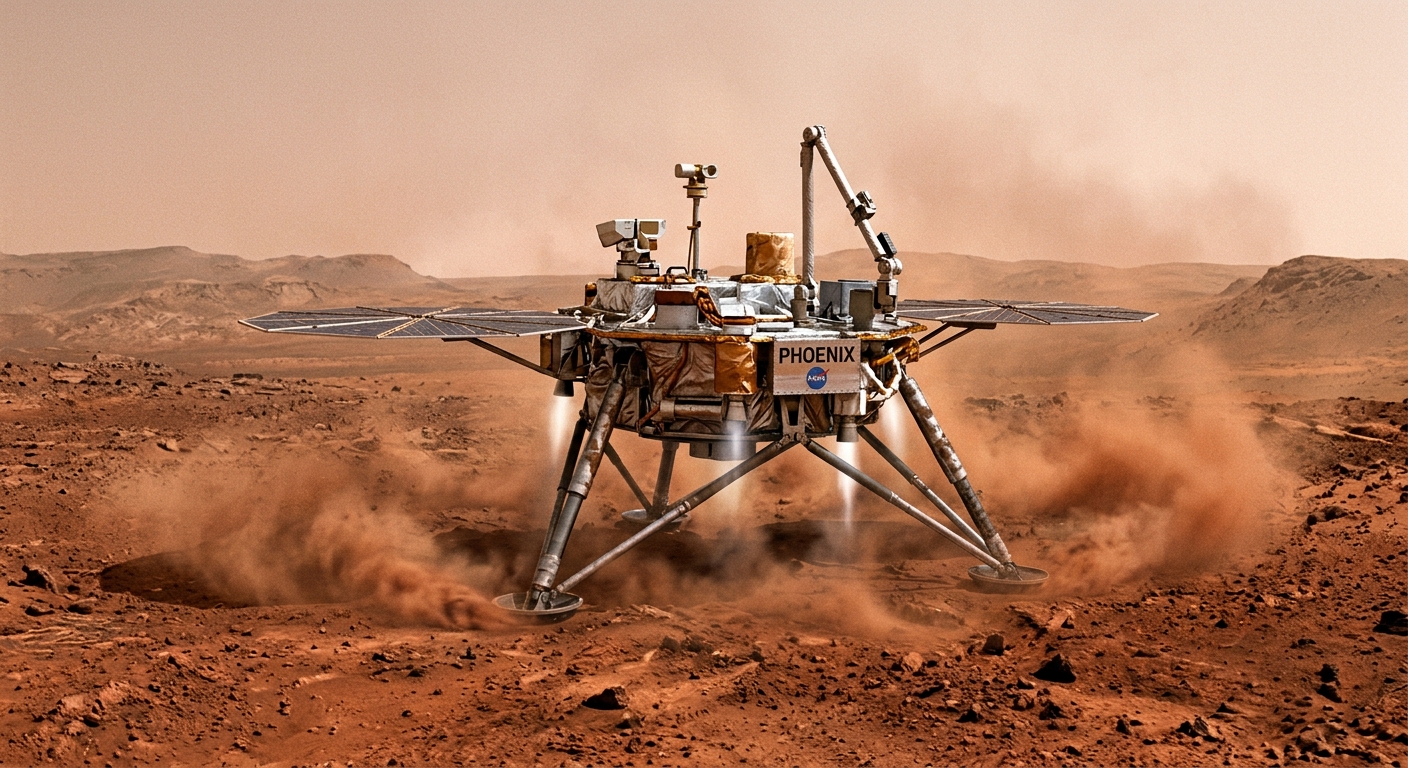
Three legs on cold dirt.
Phoenix fell through the Martian atmosphere and set down at 23:53:44 UTC on May 25, 2008, on the flat valley floor of Vastitas Borealis, the broad lowland plain covering much of Mars’s northern polar region. No spacecraft had ever landed this far north. It had launched on August 4, 2007, crossing 422 million miles to reach a site chosen because the orbiter Mars Odyssey had already confirmed ice lay just beneath the surface. Bolted to the lander’s frame, a 7.7-foot robotic arm waited, built to dig into that permafrost and deliver soil and ice to the onboard laboratory deck, where instruments would look for chemical ingredients of life preserved in the frozen ground.
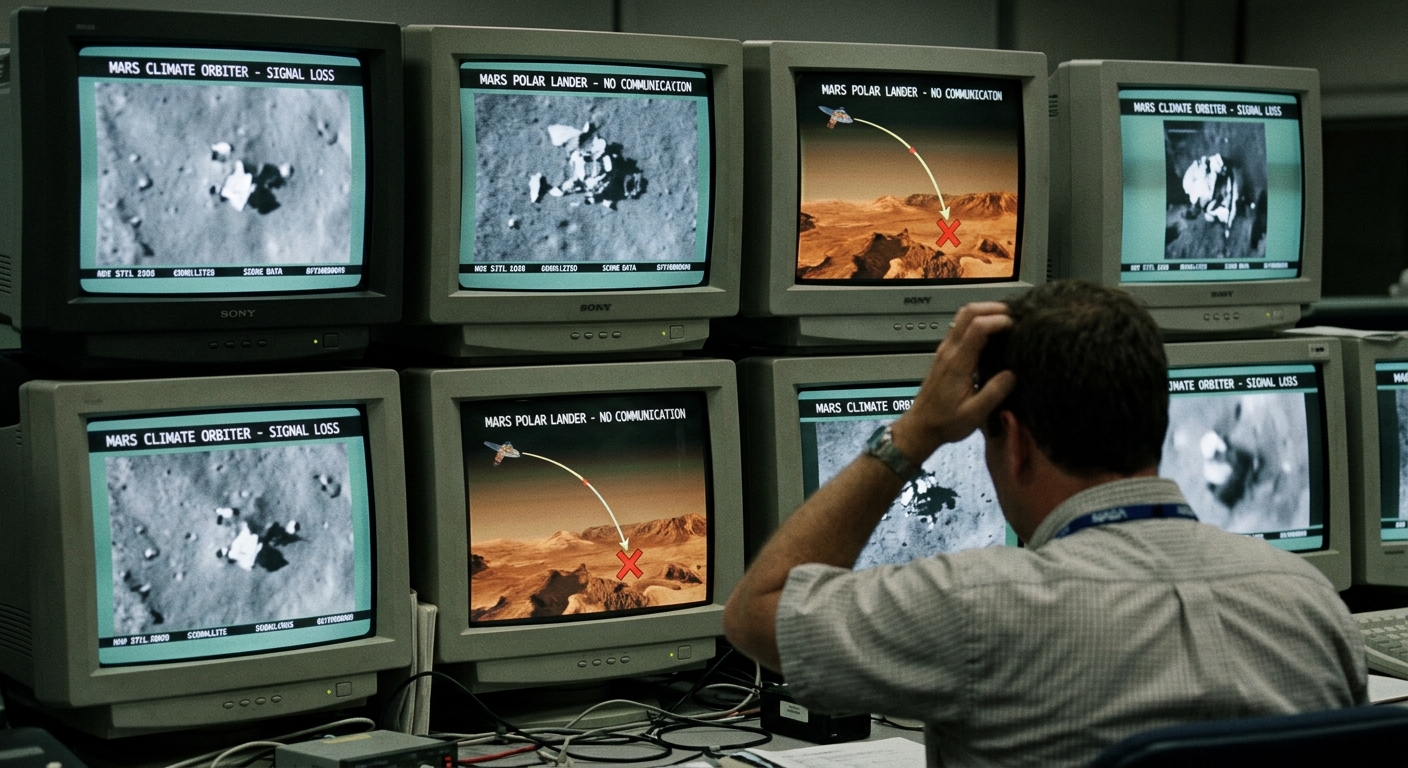
The mission grew from wreckage. In 1999, NASA lost a spacecraft during a Mars landing attempt, and the agency canceled a planned 2001 lander in response. The hardware built for that dead mission sat unused until 2002, when Mars Odyssey discovered that water ice lay just beneath the surface across much of high-latitude Mars. Peter Smith, a planetary scientist at the University of Arizona, proposed resurrecting the stranded 2001 hardware and flying it north. NASA selected his proposal over twenty-four competitors, making Phoenix the first mission in the Mars Scout program.
Only five of Earth’s previous eleven attempts to land on Mars had succeeded. In the months before Phoenix’s arrival, Mars Reconnaissance Orbiter fired its thrusters on February 6, 2008, to shift its orbit into position as a relay station for the descent.
Seven minutes before reaching the top of the atmosphere, Phoenix jettisoned its cruise stage, the support structure that had carried solar panels and kept the spacecraft alive across nine months of interplanetary flight. Batteries now provided the only power. The lander hit the thin Martian air at 5.7 kilometers per second and began the sequence engineers call entry, descent, and landing: a heat shield absorbing friction, then a parachute snapping open, then twelve descent rockets firing in pulses to walk the speed down. By the time the three legs touched soil, Phoenix was falling at roughly 2.4 meters per second. It was the first Mars landing on rockets rather than airbags since Viking 2 set down in 1976.
One minute after touchdown, Phoenix shut off its transmitter. Every watt of battery power went to unfolding the solar arrays that would keep the lander alive through the arctic summer. Mars Odyssey, orbiting overhead, had already tilted its antenna away from its normal downward view to track the descending lander, and Mars Express did the same, recording transmissions during the plunge as a backup. The confirmation signal, relayed through Odyssey, crossed the 15-minute light-travel gap and reached the Goldstone antenna station of NASA’s Deep Space Network, the global system of large radio dishes that links Earth to its distant spacecraft, at 4:53:44 p.m. Pacific Time.
“What a thrilling landing!” Peter Smith said. “But the team is waiting impatiently for the next set of signals that will verify a healthy spacecraft.” At JPL in Pasadena, at Lockheed Martin in Denver, and at the University of Arizona in Tucson, rooms full of people who had built or steered the machine broke into the same noise at the same moment.
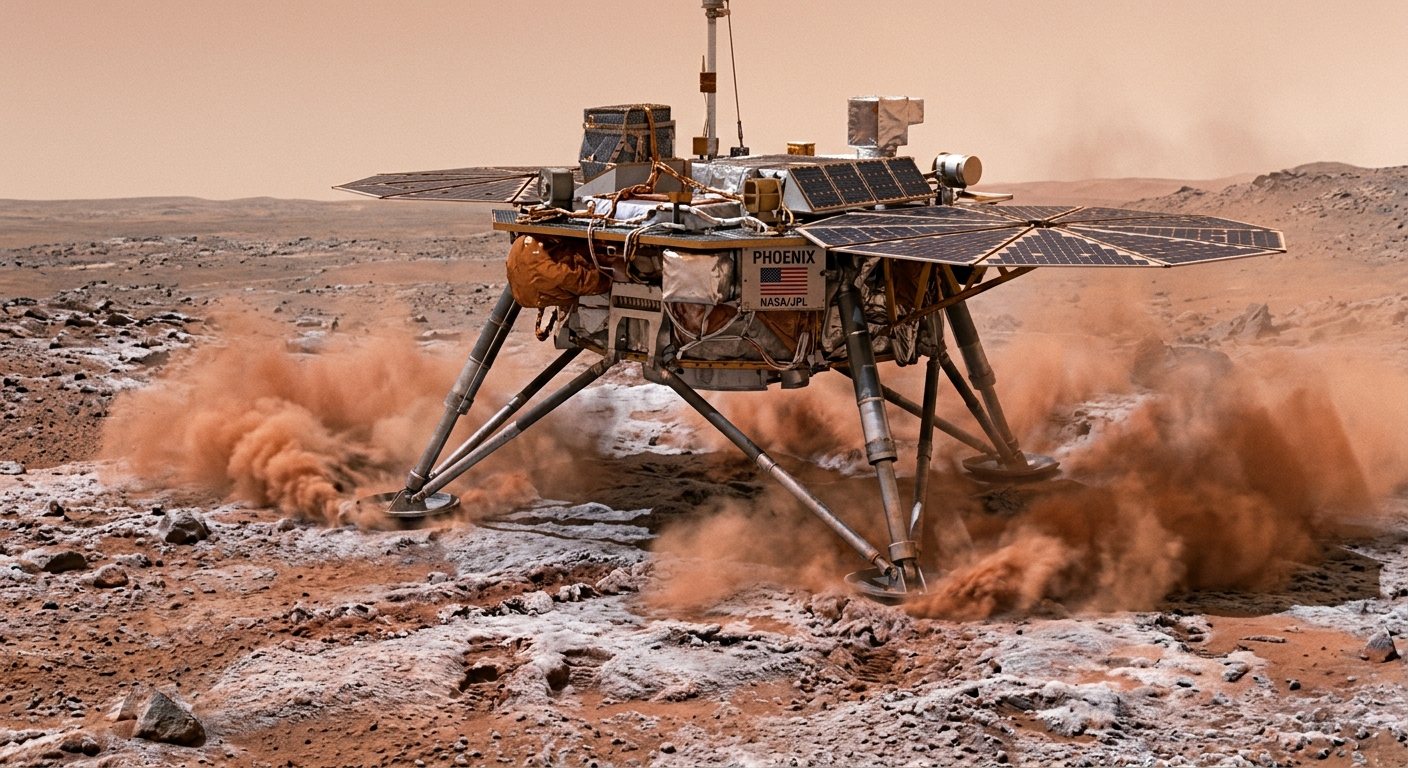
Five months later, on November 2, 2008, Phoenix sent its last signal. Dust and the lengthening polar night had starved its solar panels, and the lander froze in the same ice it had spent the summer digging up.
Three legs on cold dirt.
Phoenix fell through the air around Mars. It landed at 23:53:44 UTC on May 25, 2008. The landing site was Vastitas Borealis, a wide lowland plain near Mars’s north pole. No spacecraft had ever landed this far north.
Phoenix launched on August 4, 2007. It crossed 422 million miles to reach Mars. Scientists chose the site because the orbiter Mars Odyssey had found ice under the surface. A 7.7-foot robotic arm was on the lander. The arm was built to dig into the frozen ground. It would bring soil and ice to the onboard laboratory. The instruments would look for chemical signs of life.
The mission grew from failure. In 1999, NASA lost a spacecraft during a Mars landing attempt. The agency canceled a planned 2001 lander after that. The hardware for the canceled mission sat unused. Then in 2002, Mars Odyssey discovered water ice under the surface across northern Mars. Peter Smith, a planetary scientist at the University of Arizona, had an idea. He proposed using the unused 2001 hardware and flying it north. NASA chose his proposal over twenty-four competitors. Phoenix became the first mission in the Mars Scout program.
Only five of Earth’s previous eleven Mars landing attempts had succeeded. Before Phoenix arrived, Mars Reconnaissance Orbiter fired its engines on February 6, 2008. It moved into position as a relay station for the landing.
Seven minutes before reaching the atmosphere, Phoenix dropped its cruise stage. The cruise stage had carried solar panels during the nine-month flight. Now batteries were the only power. The lander hit the thin Martian air at 5.7 kilometers per second. A heat shield protected the lander. Then a parachute opened. Then twelve rockets fired in pulses to slow the lander down. When the three legs touched soil, Phoenix was falling at about 2.4 meters per second. The last Mars landing on rockets was Viking 2 in 1976.
One minute after landing, Phoenix turned off its radio. All battery power went to opening the solar panels. Mars Odyssey had turned its antenna to track the falling lander. Mars Express also recorded signals during the landing as a backup. The confirmation signal traveled through Odyssey. Radio signals take 15 minutes to travel from Mars to Earth. The signal reached the Goldstone antenna station at 4:53:44 p.m. Pacific Time. Goldstone is part of NASA’s Deep Space Network. The Deep Space Network is a global system of large radio dishes. It connects Earth to distant spacecraft.
“What a thrilling landing!” said Peter Smith. He said the team was waiting for the next signals to show a healthy spacecraft. At JPL in Pasadena, at Lockheed Martin in Denver, and at the University of Arizona in Tucson, people celebrated.
Five months later, on November 2, 2008, Phoenix sent its last signal. Dust and the long polar night had starved its solar panels. The lander froze in the same ice it had spent the summer digging up.
Words to learn
Sentence patterns
Mars Odyssey, orbiting overhead, had already tilted its antenna away from its normal downward view to track the descending lander, and Mars Express did the same, recording transmissions during the plunge as a backup.The rescue helicopter circled the flooded valley twice, scanning the rooftops for survivors before choosing a landing spot.
The mission grew from wreckage. In 1999, NASA lost a spacecraft during a Mars landing attempt, and the agency canceled a planned 2001 lander in response.The factory closed without warning. On a Monday morning in March, three hundred workers arrived to find the gates locked and a single printed notice taped to the fence.
By the time the three legs touched soil, Phoenix was falling at roughly 2.4 meters per second.By the time the last passenger stepped off the train, the platform crew had already cleared the snow from both exits.
Scientists chose the site because the orbiter Mars Odyssey had found ice under the surface.The school closed early because heavy snow covered all the roads.
One minute after landing, Phoenix turned off its radio.Three days before the race, the runners checked the course.
When the three legs touched soil, Phoenix was falling at about 2.4 meters per second.When the train stopped at the platform, hundreds of passengers were waiting outside.
Discussion questions
- Phoenix was built from hardware left over from a cancelled mission. What are the advantages and risks of reusing old technology for a new purpose instead of building from scratch?
- The story says only five of eleven previous attempts to land on Mars had succeeded. If you were deciding how to spend a space agency’s budget, how would you weigh the value of high-risk exploration missions against safer projects closer to Earth?
- Phoenix froze in the same ice it had spent the summer digging up. What does this tell you about the trade-offs engineers face when designing a machine for a harsh environment with a limited lifespan?
- Phoenix was built from parts of a canceled mission. Do you think it is a good idea to reuse old technology for new projects? Why or why not?
- Phoenix worked for only five months before it froze on Mars. Do you think short missions like this are worth the cost? Why?
- Would you like to work on a team that sends spacecraft to other planets? What part of the job would you enjoy most?