The Orange Canvas: 190th Fighter Squadron Friendly Fire Incident
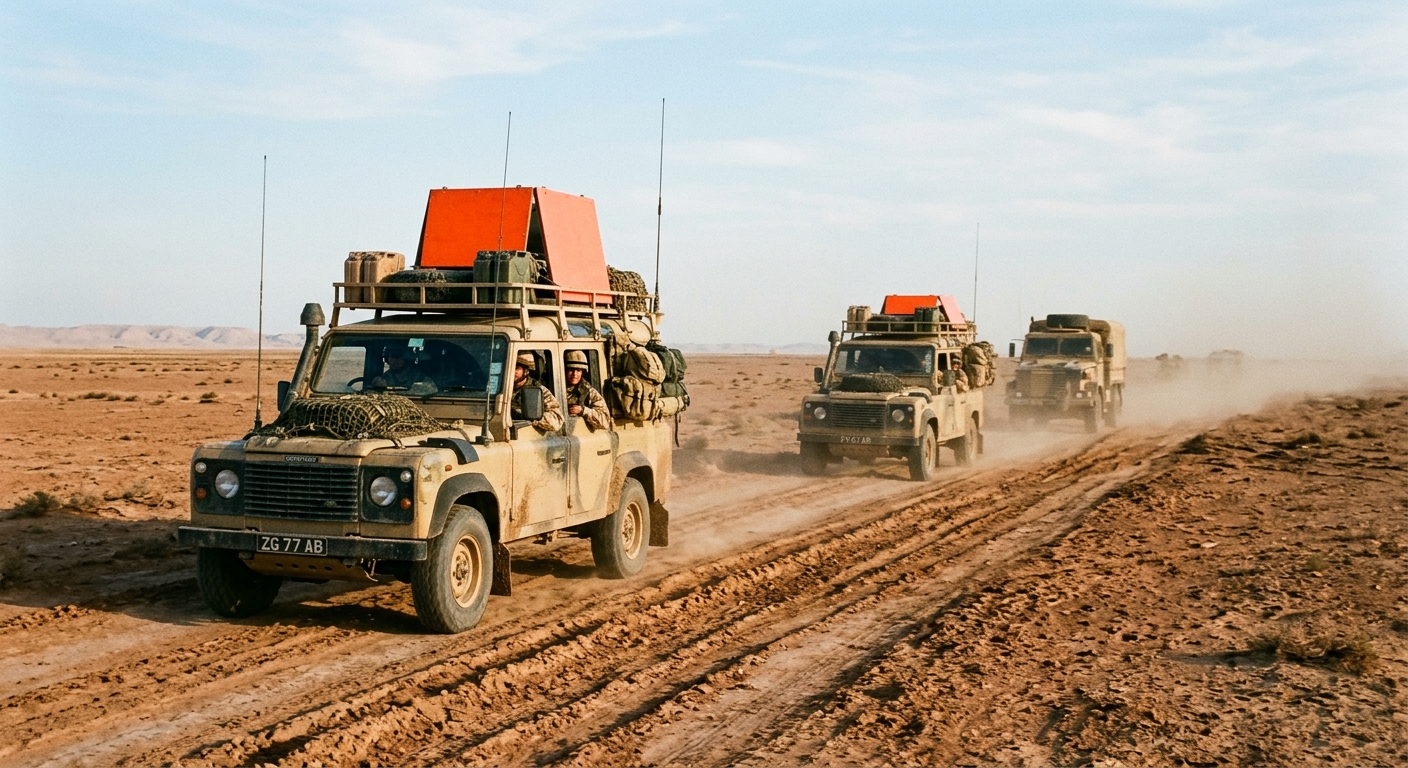
The orange panels were unmistakable. Affixed to the top of every vehicle in the four-strong patrol, they broadcast a single message in the visual language of military identification: friendly forces, do not engage. On 28 March 2003, soldiers of the Household Cavalry were conducting a reconnaissance patrol roughly 25 miles north of Basra, operating within a designated no engagement zone. What the orange panels could not account for was the perspective of two American pilots, 12,000 feet above.
The aircraft were A-10 Thunderbolts — ground-attack planes built to destroy vehicles. The lead pilot, call sign POPOV35, was a major. His wingman, POPOV36, held the rank of lieutenant colonel. Scanning the ground below, POPOV35 reported by radio what he believed he had spotted: a truck fitted with orange rockets. He was describing the identification panels. Both pilots reviewed the target and agreed it appeared hostile.
Protocol required them to contact the Forward Air Controller on the ground, call sign Manila Hotel, who held the authority to authorise any strike. The pilots asked whether any friendly forces were operating near the vehicles they had identified. But they transmitted the wrong coordinates. The British patrol was three miles from the position the pilots reported. Manila Hotel had no reason to suspect British soldiers were nearby.
POPOV35 called for a marker round — a standard precaution that would place a smoke shell on the target for visual verification before any attack. Neither pilot waited for it. POPOV35, the flight lead, directed the attack, and both A-10s opened fire without authorisation from Manila Hotel.
The rounds struck the lead vehicle. Lance-Corporal of Horse Matthew Hull, aged 25, was killed. His 26th birthday was three days away. Several other soldiers sustained injuries. The aircraft completed two attack runs.
Christopher Finney, an 18-year-old Trooper serving as driver of the lead vehicle, survived the initial impact. When the vehicle caught fire, he re-entered it, transmitted a distress call by radio, and pulled Trooper Tudball clear of the wreckage. He then attempted to reach Hull. The George Cross — the highest British award for gallantry not in the face of the enemy — was conferred on Finney on 31 October 2003. On 25 February 2004, Queen Elizabeth II presented it to him at Buckingham Palace. At 18, he became the youngest British soldier to receive the decoration.
Inside the cockpit, a recording system had captured everything. One pilot said: “I’m gonna be sick.” The other: “We’re in jail, dude.” Neither knew at the time how consequential those words would become.
The United States Air Force concluded its investigation in 2003 without releasing the findings publicly. Reports suggested the inquiry had recommended disciplinary action; senior officials overruled it. Both pilots returned to operational flying. In 2004, a British military inquiry determined that POPOV35 had directed the attack and that no authority on the ground had sanctioned it. A British officer concluded that adherence to British rules of engagement would have prevented Hull’s death.
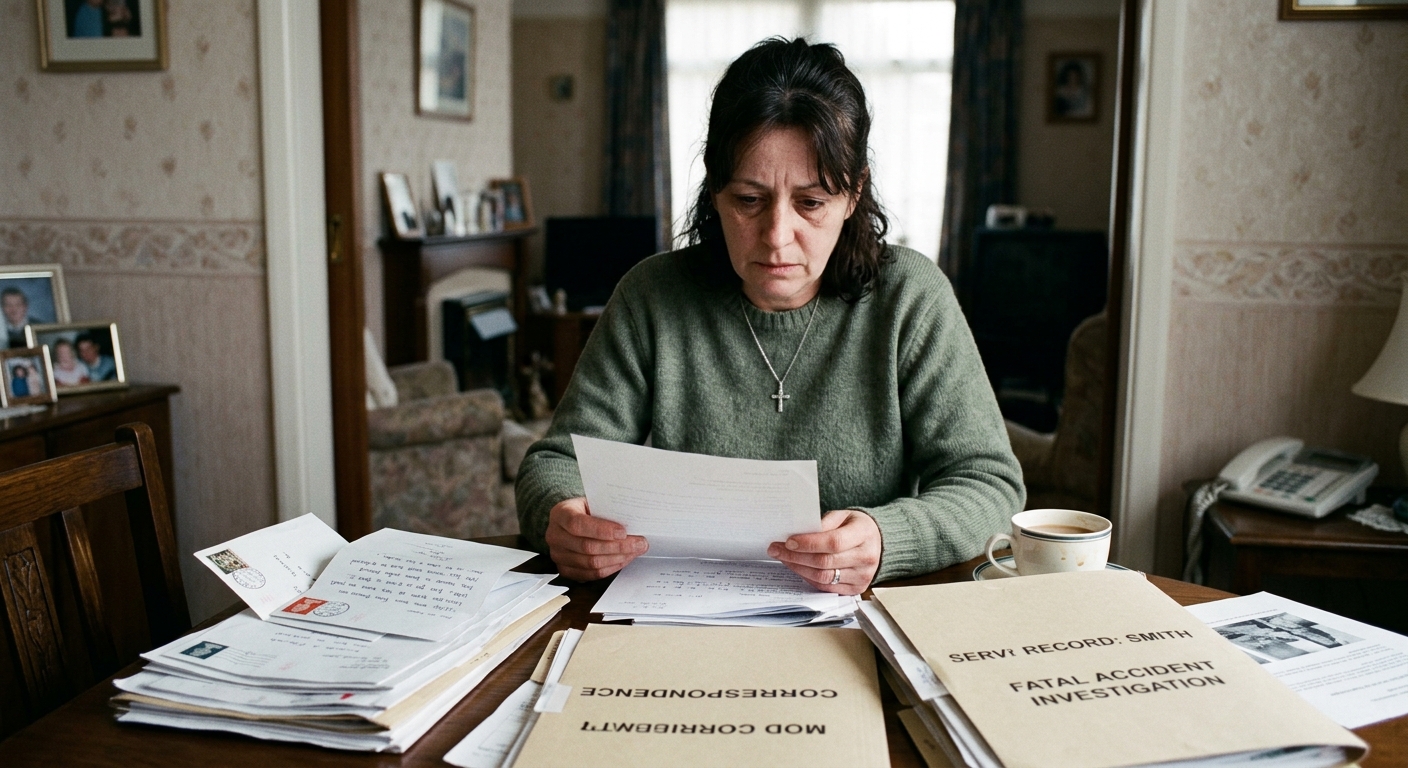
Susan Hull spent four years attempting to establish the facts of her husband’s death. She wrote directly to President George W. Bush. The British Ministry of Defence informed her that no cockpit recording existed. That statement was false. The Ministry subsequently apologised for the misinformation.
On 6 February 2007, The Sun published the cockpit footage. The recording also identified POPOV36 as Gus Kohntopp, who had left the military and was working as a commercial pilot for Southwest Airlines. From 2006 to 2007, coroner Andrew Walker presided over an inquest into Hull’s death. He found that the family had not been provided with the information to which they were entitled. On 16 March 2007, Walker delivered his verdict: unlawful killing.
Washington did not accept it. The official American position characterised the incident as a tragic accident and maintained that the pilots had acted correctly given the information available to them. No charges were ever filed. Two governments examined the same footage and arrived at irreconcilable conclusions.
The pattern extended beyond this incident. In 1994, American aircraft shot down two US Army helicopters over Iraq, killing 26; no charges followed. In 1988, the USS Vincennes destroyed an Iranian civilian airliner, killing 290 passengers including 66 children; its captain later received a commendation medal whose citation made no reference to the incident. Five days before Hull died, A-10s had struck US Marines near Nasiriyah, killing up to 10; no charges followed. In 1987, the USS Stark was struck by Iraqi missiles, killing 37 sailors; its captain was punished and retired at a reduced rank. Accountability, in these episodes, bore no consistent relationship to the scale of the harm.
The orange panels performed exactly as intended. They were visible. They were seen. The pilot who saw them called them rockets.
—
In the desert, orange is easy to see. British soldiers put orange panels on top of their vehicles. This told other soldiers: we are friendly. Do not shoot.
On 28 March 2003, British soldiers were on patrol in Iraq. They were about 25 miles north of a city called Basra. This area was a no engagement zone. That means: no one was allowed to attack here. There were four vehicles in the patrol. The soldiers were from a unit called the Household Cavalry. Orange panels were on top of every vehicle.
That night, two American aircraft were flying above them. The planes were called A-10 Thunderbolts. The A-10 is a plane that attacks vehicles on the ground. It has a very powerful gun. The first pilot’s call sign was POPOV35. He was a major. The second pilot’s call sign was POPOV36. He was a lieutenant colonel.
POPOV35 looked down and saw the British vehicles. He said by radio: “I see something on the ground, looks like a truck with orange rockets.” He was looking at the orange panels. But from 12,000 feet up, the panels looked like rockets to him. Both pilots agreed: the targets look dangerous.
The pilots called the Forward Air Controller. His call sign was Manila Hotel. A Forward Air Controller is a soldier on the ground. He gives pilots permission to fire. The pilots asked: are there any friendly soldiers near the Iraqi vehicles? But the British patrol was three miles away. The pilots did not give the correct location. Manila Hotel did not know about the British soldiers nearby.
POPOV35 asked for a marker round. This is a shell that marks the correct target with smoke. Pilots use it to check: am I looking at the right place? But they did not wait. POPOV35 was the flight lead. He directed the attack. Both planes opened fire. Manila Hotel did not give permission.
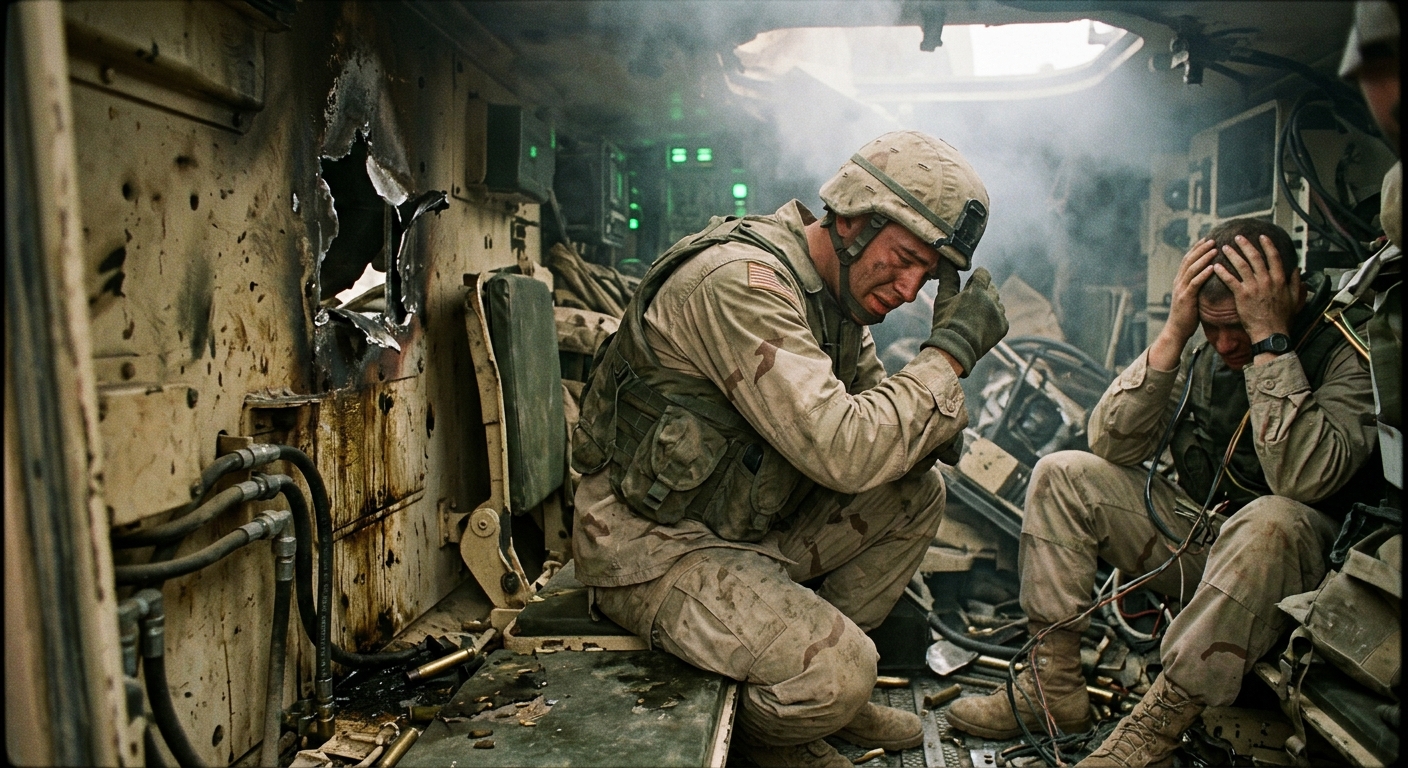
The bullets hit the first British vehicle. Lance-Corporal of Horse Matthew Hull was 25 years old. He died in the attack. His 26th birthday was only three days away. Other soldiers were hurt. The aircraft made two attack runs in total.
An 18-year-old Trooper named Christopher Finney was the driver of the first vehicle. After the attack, the vehicle was on fire. Finney went back inside the burning vehicle. He called for help by radio. Then he pulled out a hurt soldier named Trooper Tudball. He tried to help Hull too. This was very dangerous. Finney was very brave.
Because of what he did, the British government gave Finney the George Cross. This is one of the highest medals in the UK. On 31 October 2003, the government decided to give him the medal. On 25 February 2004, Queen Elizabeth II gave the medal to Finney at Buckingham Palace. He was only 18 years old. He was the youngest British soldier to ever receive this medal. He was later promoted to Lance-Corporal of Horse.
After the attack, the two pilots spoke in the cockpit. One said: “I’m gonna be sick.” The other said: “We’re in jail, dude.” A camera inside the cockpit recorded everything they said and did.
After the attack, the US Air Force did an investigation. They finished in 2003. But they did not share the results with the public. Some people said the investigation recommended punishment for the pilots. But senior officials said no. Both pilots returned to flying.
In 2004, the British military did their own investigation. They found that POPOV35 told POPOV36 to attack. But no one on the ground gave permission. A British officer said the pilots made many serious mistakes. He said: if the pilots followed British rules, this would not have happened.
Matthew Hull’s wife was Susan Hull. She wanted answers. For four years, she looked for the truth. She wrote a letter to US President George W. Bush. The British Ministry of Defence told her there was no cockpit recording. This was not true. Later, the Ministry of Defence said sorry for telling her the wrong thing.
On 6 February 2007, a British newspaper called The Sun showed the cockpit video to everyone. People could now see and hear what happened. They also found out who POPOV36 was. His name was Gus Kohntopp. After the military, he became a pilot for Southwest Airlines in the United States.
From 2006 to 2007, a coroner named Andrew Walker held an inquest about Matthew Hull’s death. A coroner is an official who investigates deaths. Walker said the Hull family did not receive all the information they needed. On 16 March 2007, Walker gave his verdict: unlawful killing.
The US government did not agree. They called it a tragic accident. They said the pilots did the right thing with the information they had. No one was ever charged with a crime. Two countries looked at the same video. They reached different conclusions.
This was not the only time something like this happened. In 1994, American pilots shot down two US Army helicopters in Iraq by mistake. 26 people died. No one was charged. In 1988, an American warship shot down an Iranian passenger plane. 290 people died, including 66 children. The captain of the ship later received a medal. The medal did not mention the plane. In 2003, the same type of A-10 aircraft also shot American Marines by mistake. This was near a city called Nasiriyah, just five days before Matthew Hull died. Up to 10 Marines died. No one was charged. In 1987, an American warship called the USS Stark was hit by Iraqi missiles. 37 sailors died. The captain of that ship was punished. He had to retire at a lower rank.
The orange panels were on the vehicles. POPOV35 saw them. But he did not understand what they meant. He saw orange and thought: rockets. He did not think: friendly soldiers. A small misunderstanding, from 12,000 feet up, killed a man three days before his birthday.
Susan Hull got her answer after four years. A British court said: unlawful killing. The United States said: tragic accident. Both countries used the same video. The orange panels did their job. But it was not enough.
—
Words to learn
Sentence patterns
“Scanning the ground below, POPOV35 reported by radio what he believed he had spotted: a truck fitted with orange rockets.”“Reviewing the preliminary data, the scientists concluded that the signal had originated from outside the solar system.”
“The George Cross — the highest British award for gallantry not in the face of the enemy — was conferred on Finney on 31 October 2003.”“The black box — the flight recorder that stores cockpit audio and instrument data — was recovered from the crash site the following morning.”
“Accountability, in these episodes, bore no consistent relationship to the scale of the harm.”“Progress, in cases of institutional wrongdoing, often depends on the persistence of those directly affected.”
“On 28 March 2003, British soldiers were on patrol in Iraq.”“On 4 June 1989, soldiers moved into a public square in Beijing.”
“POPOV35 looked down and saw the British vehicles.”“The soldier opened the door and called for help.”
“After the attack, the vehicle was on fire.”“After the investigation, the officials published their findings.”
Discussion questions
- POPOV35, the flight lead, directed the attack and both A-10s fired without a marker round or authorisation from Manila Hotel. What does this reveal about the tension between established protocol and a commander’s judgement in high-pressure military situations?
- The British coroner ruled Matthew Hull’s death unlawful killing. The United States called it a tragic accident. Both assessments were based on the same footage. What factors — legal, political, or institutional — might explain why two governments reached such different conclusions from identical evidence?
- Susan Hull was falsely told by the Ministry of Defence that no cockpit recording existed. She spent four years seeking the truth. What obligations, if any, do governments have toward the families of soldiers who die in their service? Where should the boundary lie between institutional accountability and national security?
- Christopher Finney went back into a burning vehicle to save his colleagues. This was very dangerous. Would you do the same thing? Why or why not?
- The British court said Matthew Hull’s death was unlawful killing. The American government said it was a tragic accident. Both sides used the same video. Why do you think they reached different answers?
- Susan Hull was told by her government that no video existed. This was not true. Do you think governments should always tell the truth to families of soldiers who die? What problems can happen when they do not?